Social Media Marketing Tactics That Actually Convert
Choose tactics that answer buyer questions. Connect demonstrations, community replies and creator work with qualified enquiries and a useful next test.
Introduction
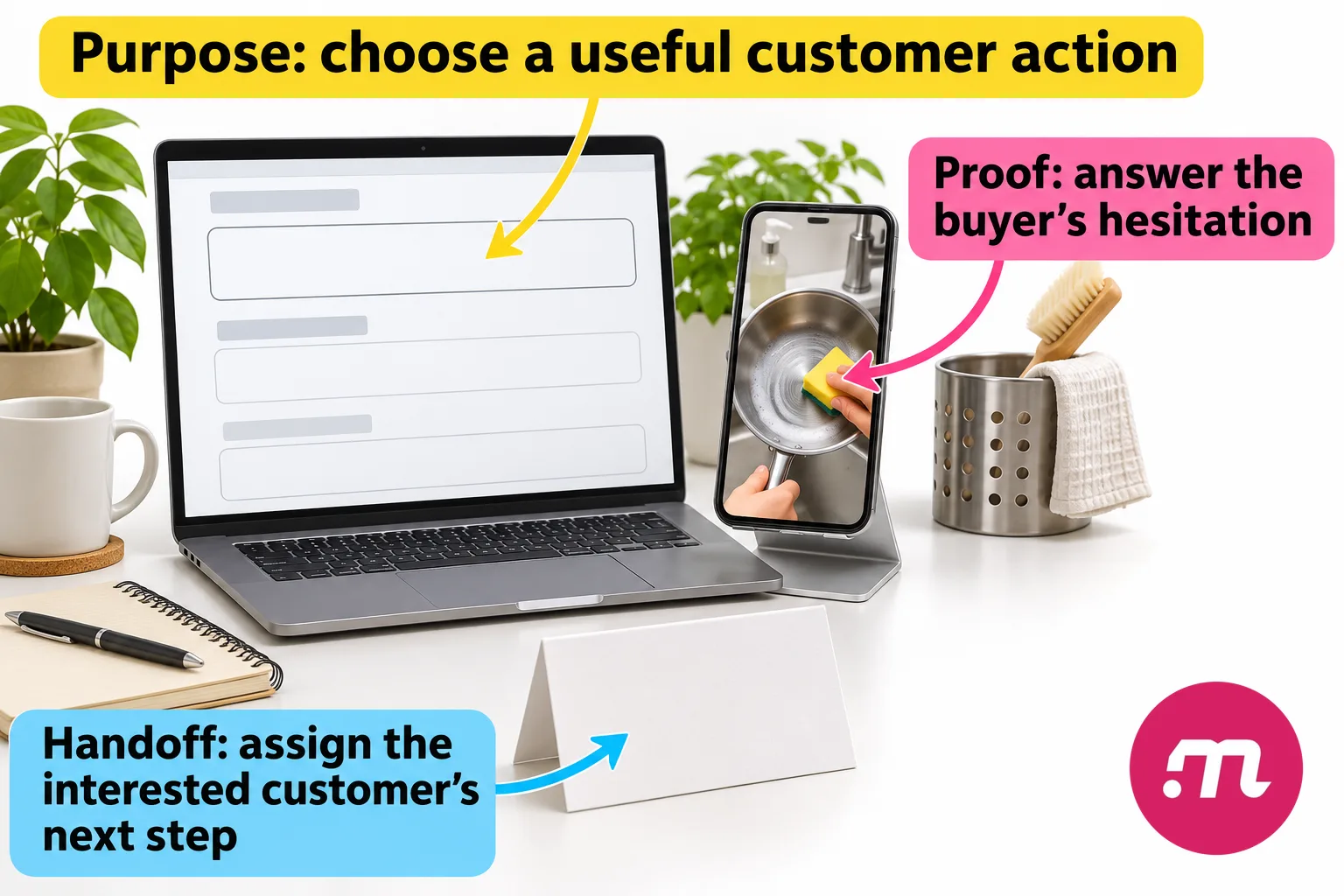
social media marketing tactics can fill your calendar without producing a useful customer conversation. The problem often starts when you choose the format before the buying question. A founder asks for Reels, the team delivers Reels, and the sales report stays disconnected from the content report.
We'd choose the customer action first. Then we'd select a tactic that helps someone take it, give that tactic a suitable channel and check the handoff after the click. The twelve actions below form a working playbook for Indian D2C brands and service businesses. They are tests to run with a clear purpose, rather than promises that every post will convert.
Table of Contents
- 1. Introduction
- 2. Give social media marketing tactics a business job
- 3. Match the channel to the action you need
- 4. Four tactics that earn relevant attention
- 5. Four tactics that help interested buyers decide
- 6. Four tactics that make execution repeatable
- 7. Use software to remove a defined bottleneck
- 8. Measure social media marketing tactics after the click
- 9. Conclusion: choose the next useful test
- 10. FAQs
Give social media marketing tactics a business job
Write the decision before the deliverable
Your social media marketing strategy records whom you want to reach and what should change for them. A tactic is an action that supports that choice. A calendar assigns the work. If your brief says only "increase engagement", ask what a relevant engaged person should do next.
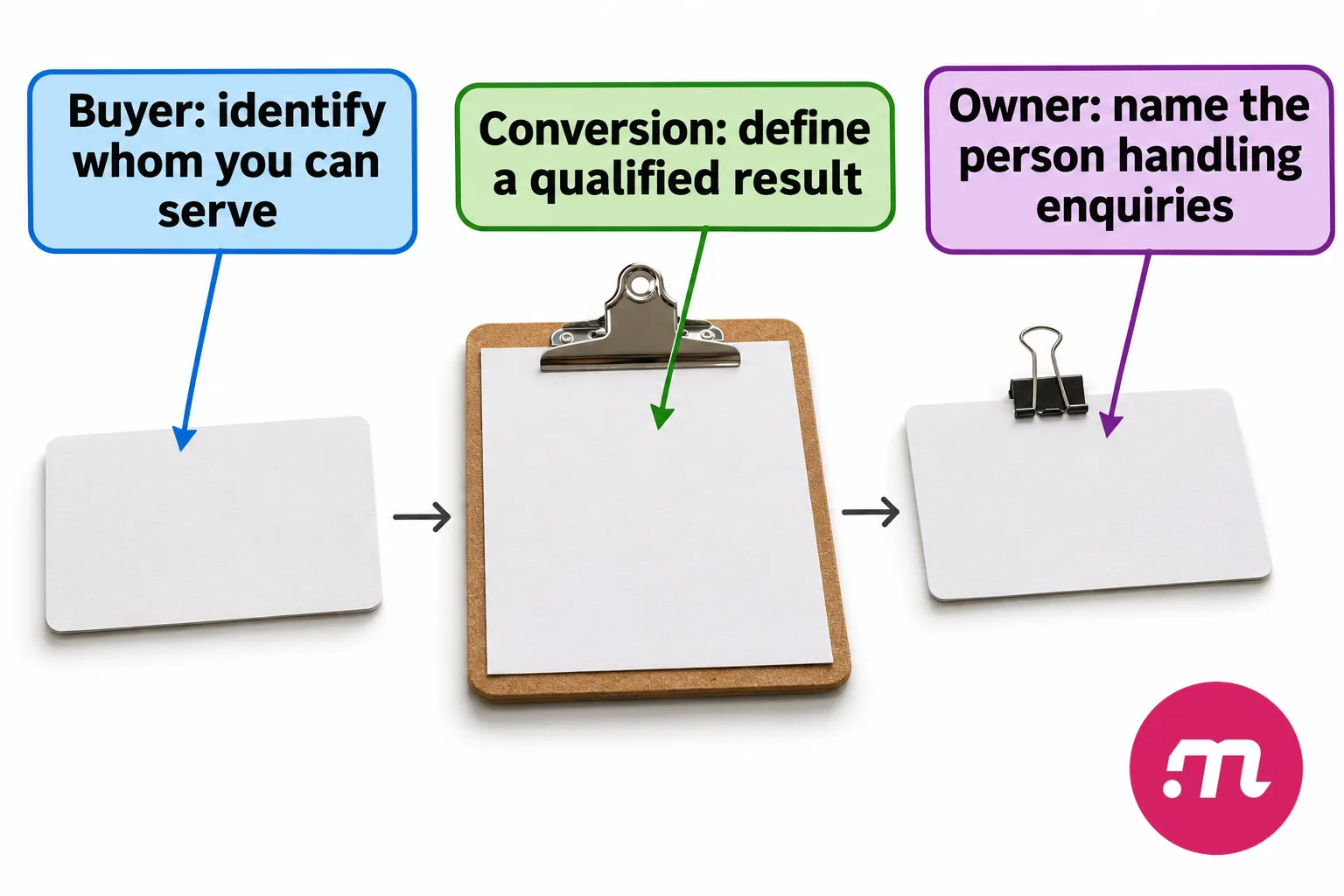
A skincare brand might need buyers to understand product suitability before visiting a product page. A local repair business might need customers to confirm their service area before requesting a quotation. Those situations need different messages even when both businesses publish short videos.
Define a useful conversion
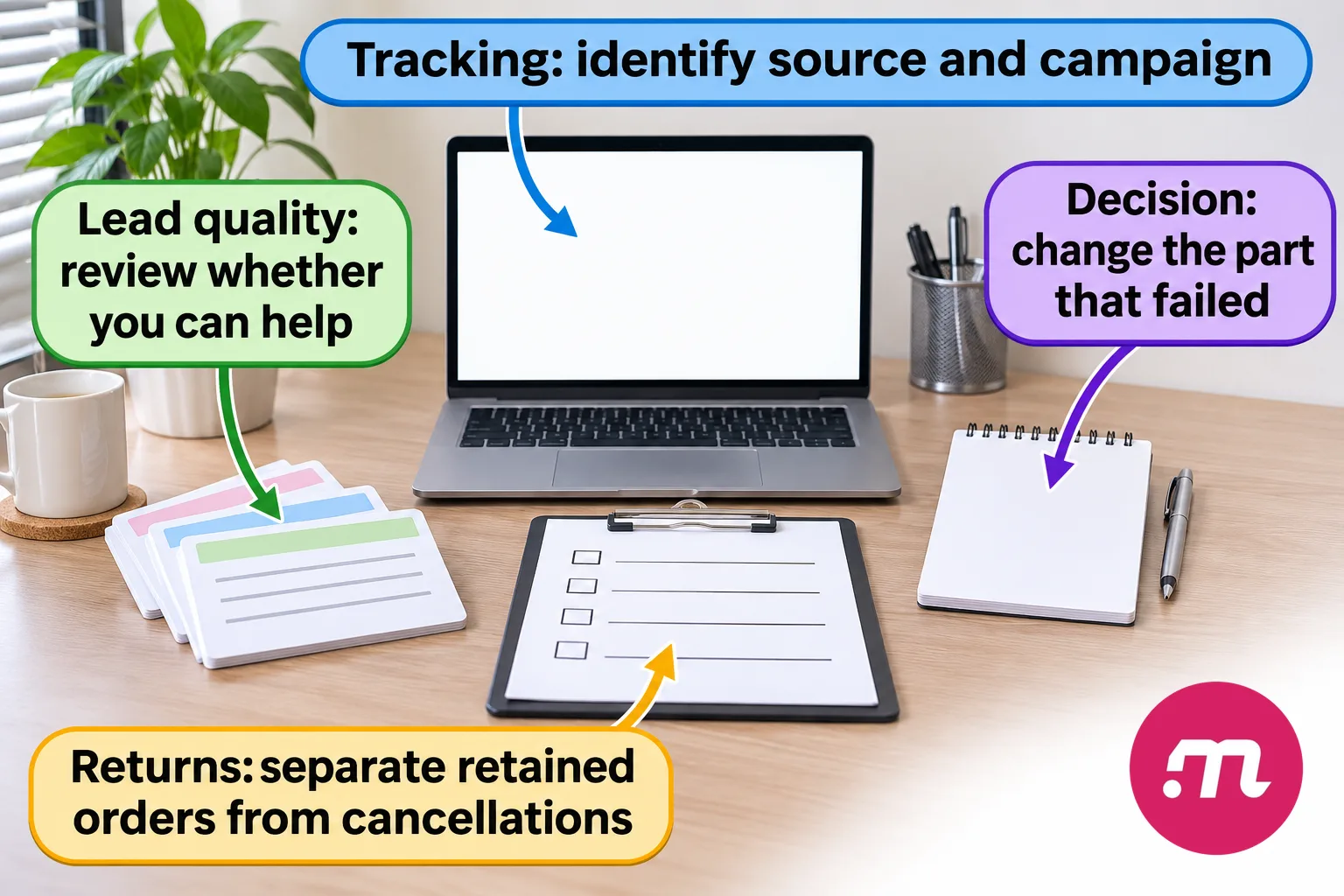
For ecommerce, separate placed orders from orders retained after cancellations and returns. For services, separate every submitted form from enquiries your team can actually serve. We wouldn't optimise production around cheap leads if most of them never qualify.
Read our explanation of what is a social media strategy before commissioning a larger calendar. The useful output is a brief that names a buyer hesitation and an observable next step. It should also say who will answer the interested customer.
Some content helps people trust you before they are ready to buy. Give it that role explicitly and record supporting evidence. Don't force every post into an immediate-sales promise, but don't use brand building as a reason to avoid measurement either.
Match the channel to the action you need
Choose where your explanation belongs
The best social media platforms depend on the buyer and the explanation you can sustain. We'd test visual demonstrations on Instagram, detailed tutorials on YouTube and professional explanations on LinkedIn when the audience evidence supports those choices. These are planning recommendations, not a ranking of guaranteed returns.
| Channel | Tactic to test | Useful next action | Watch the limitation |
|---|---|---|---|
| Product demonstration or comparison | Relevant product visit or enquiry | Views can come from unsuitable buyers | |
| YouTube | Searchable answer with a full demonstration | Watch the explanation and explore the offer | Production needs enough useful detail |
| Expert explanation of a business problem | Qualified professional conversation | A generic company announcement may offer little value | |
| Local explanation or community response | Relevant appointment or service query | Fit depends on your actual audience | |
| Answer an interested buyer's question | Confirmed next step | The inbox needs a responsible owner |
Keep language and response capacity aligned
Use the language buyers use when they ask about fit, delivery or price. A Hindi demonstration can be useful for an audience that prefers it, but the page and support reply must remain understandable too. Translation alone doesn't make an offer relevant.
We would begin with a discovery channel and a clear destination. Add another channel after you can explain its separate job. Copying everything everywhere can consume the time you need for meaningful replies.
Four tactics that earn relevant attention
Turn repeated questions into content
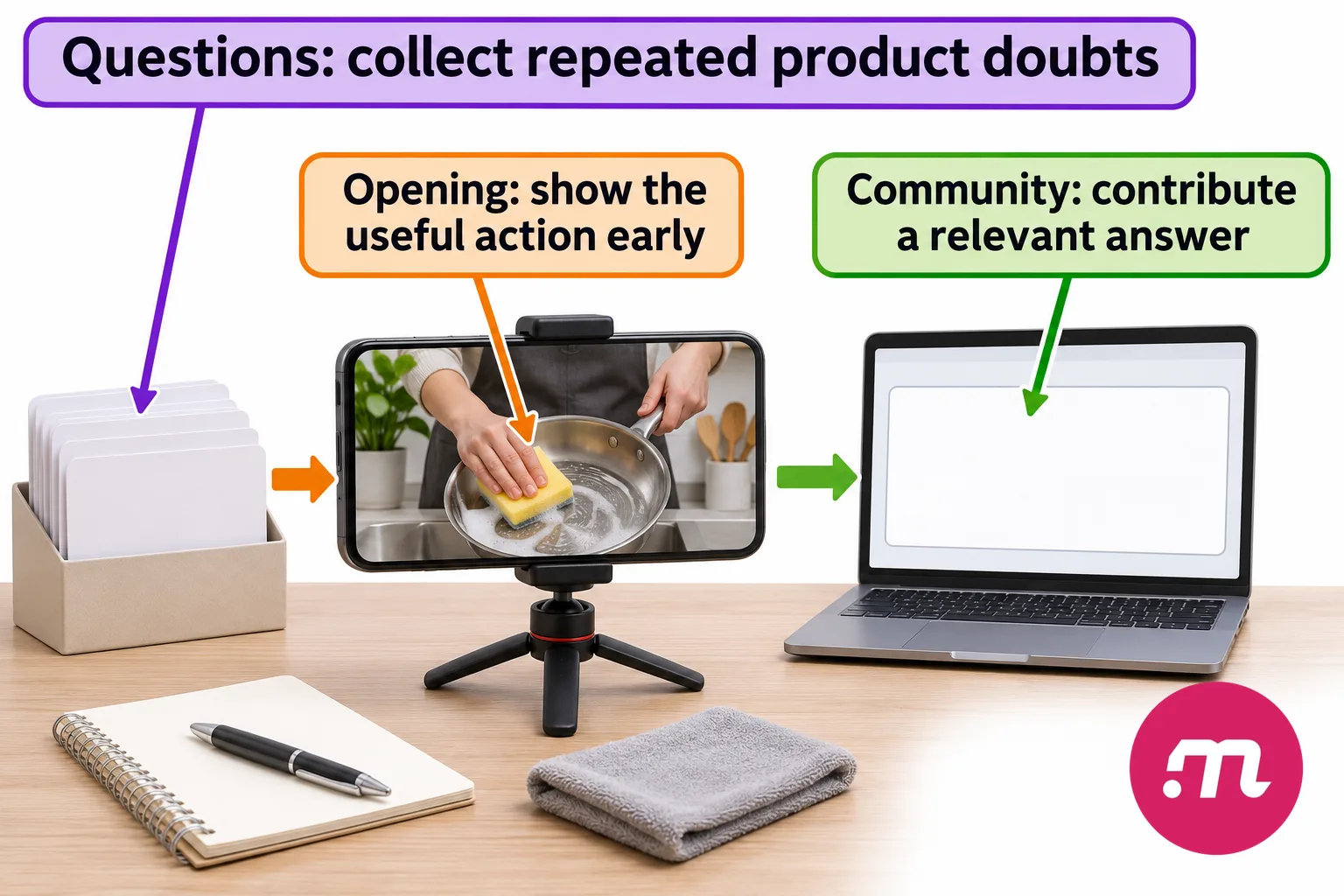
Collect recurring objections from reviews, enquiry records and public discussions. Remove private customer details, group the questions by the decision they block and choose a question you can answer with evidence. We prefer this to collecting popular posts and hoping the same creative will work for an unrelated product.
For a proposed kitchenware campaign, a question about cleaning becomes a real cleaning demonstration. Record whether viewers then ask more specific product questions. This is an illustrative test, not a claimed client result.
Open demonstrations with the useful action
Show the product doing the thing the buyer wants to understand before a long introduction. On YouTube, inspect the audience-retention report at video level. YouTube's retention guidance explains that dips can reflect skipping or abandonment, while spikes may reflect rewatching or sharing.
A spike can also mean the explanation was unclear. We'd replay the relevant segment before calling it a creative success. Retention helps diagnose the video; it doesn't prove someone intends to purchase.
Publish answers people can search for
Use a title that describes the actual problem and deliver the answer promised. A repair company could explain how to identify a serviceable fault without suggesting an unsafe repair. A product brand could show how to choose a suitable size. Don't hide the answer behind an unrelated promotional introduction.
Contribute expertise in relevant communities
Answer a genuine question where your buyers already discuss the problem. Follow the community's rules and disclose your connection when it matters. We wouldn't paste the same sales pitch across discussions. A helpful reply should remain useful even when the reader never visits your profile.
Save recurring unanswered questions for your next brief. Community work can improve the content itself, rather than functioning only as a distribution task.
Four tactics that help interested buyers decide
Compare options with a clear deciding factor
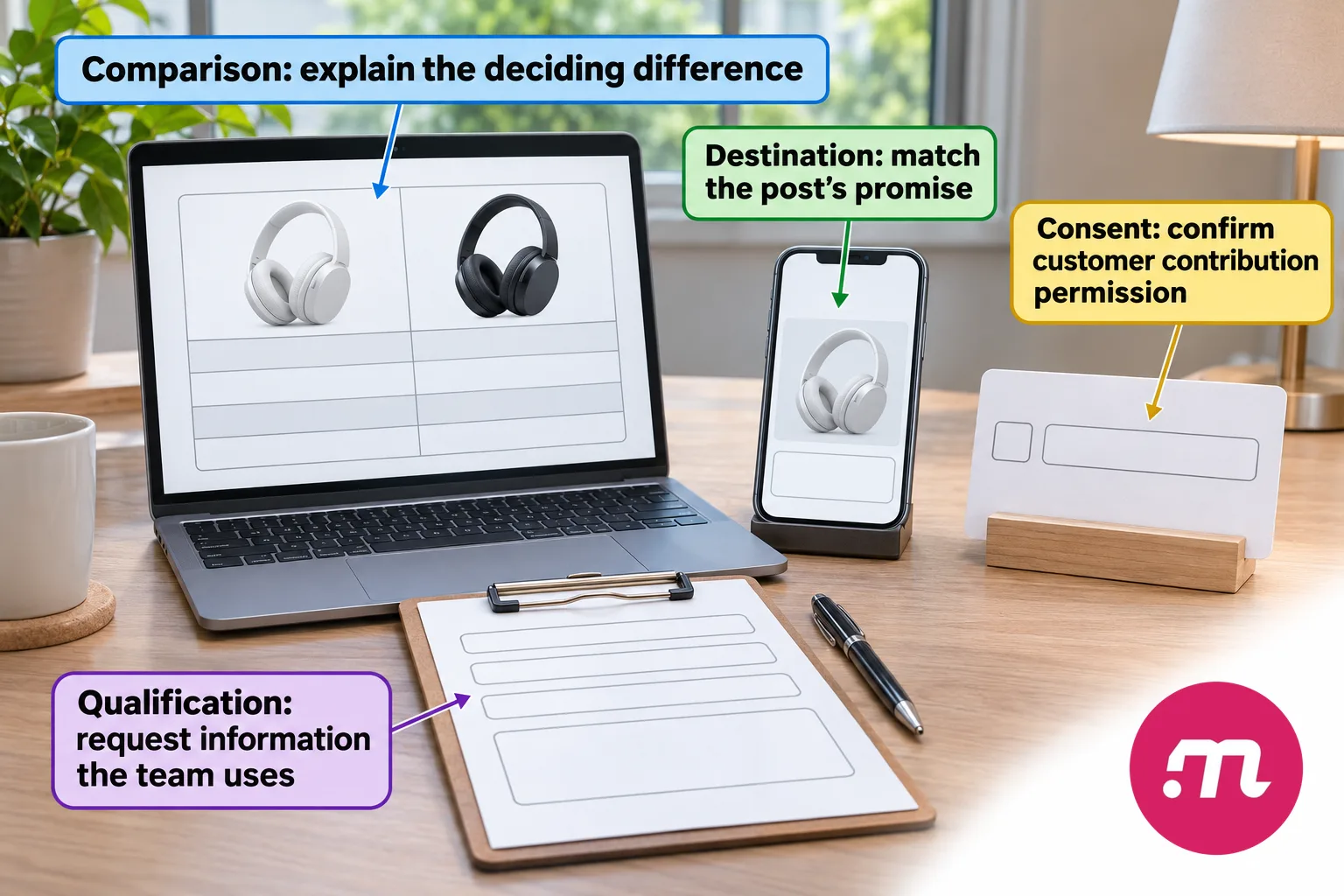
Explain who should choose each option and who should avoid it. For a clothing range, compare fit and use rather than saying every version is the best. A useful comparison can reduce an unsuitable purchase even if it doesn't maximise immediate orders. We consider that a worthwhile trade-off when returns are expensive.
Use customer evidence with permission
Ask customers whether you can use their contribution, agree its context and preserve what they meant. Show normal use or a specific experience without turning it into a result you cannot support. Don't fabricate a testimonial with AI or present an actor as an actual buyer.
For a service business, proof can include an approved explanation of the work and its limits. We would rather publish a narrow, credible example than an impressive claim the sales team cannot substantiate.
Match the destination to the promise
A post about a particular product should lead to that product or a directly relevant explanation. Check the mobile page, availability and delivery information before sending traffic. If the post makes a comparison, carry that decision context through to the destination.
For Indian ecommerce, state COD availability and delivery restrictions where the buyer needs them. Don't make someone begin checkout merely to discover that the offer doesn't apply to their address. The social post and product page share responsibility for the result.
Qualify enquiries without creating an obstacle course
Ask for information your team actually uses to decide the next step. A local service may need location and the nature of the job. A custom product may need dimensions. Explain why the information matters, and avoid a long form that the team never reads.
We'd test the enquiry as a customer before approving the campaign. A form submission should reach the right person with enough context to answer. Our social media marketing work includes that connection between the post and the response.
Four tactics that make execution repeatable
Brief creators around the buying question
Give a creator the product facts, the buyer hesitation and the claim they can demonstrate. Agree usage rights and disclosure before recording. Let the creator explain naturally within those boundaries. A script that could advertise any product wastes the reason you selected that person.
Build a series from a recurring problem
Use a repeatable format for questions that deserve separate answers. A workshop could explain measurement, installation access and care in distinct posts. Each episode should work on its own. Don't stretch a short answer into a series simply to occupy more calendar slots.
Batch related footage where it saves effort, then adapt the explanation to the channel. We would keep the useful demonstration intact instead of cropping it into an attractive but confusing clip.
Give follow-up an owner and a boundary
Record what an interested buyer asked, who will reply and what should happen afterwards. Use promotional follow-up only with appropriate permission. Respect a request to stop. A conversation about an order isn't a reason to send unrelated offers indefinitely.
For WhatsApp enquiries, provide a direct answer before asking for another action. If an automated reply cannot resolve suitability or an exception, hand the conversation to someone who can. Faster replies are useful only when they address the actual question.
Keep a record of the next experiment
Write down the hypothesis, the change and the outcome definition before production. Preserve failed tests with their context. A product that went out of stock or an enquiry queue nobody handled can distort your verdict on the creative.
Don't change every variable at once. We'd choose the smallest useful change that answers the current question, then decide whether the evidence supports repeating it. A calendar becomes more valuable when it records what the team learned.
Use software to remove a defined bottleneck
Separate publishing from paid campaign control
Social media advertising software and publishing tools have different jobs. A scheduler manages content delivery; a paid campaign tool manages advertising activity. Buying either doesn't replace the social media marketing strategy. First identify whether the problem is production, approval, reporting or spend management.
Buffer's publishing product supports planning and scheduling across connected channels. Hootsuite's publishing product describes scheduling and approval workflows. Trial the account types and actions you need. A supported channel doesn't automatically mean every post format or inbox action is available.
Test the awkward parts before committing
Run a corrected draft through approval, stop a scheduled post and inspect an exported report. Check who owns account access and who can change budgets. We would assess the manual work left behind, rather than compare subscription prices in isolation.
AI can suggest hooks or organise draft notes. Keep a person responsible for product claims and interpretation of results. Automated budget recommendations deserve scrutiny too: a confident explanation doesn't tell you whether the underlying conversion data is accurate.
If paid distribution becomes appropriate, connect it with your offer and tracking through performance marketing planning. We wouldn't pay to distribute a message that the team hasn't connected to a useful customer action.
Measure social media marketing tactics after the click
Make the campaign identifiable
Google's campaign URL guidance explains the use of source, medium and campaign parameters, with utm_content available to distinguish creative versions. Keep those names consistent and check that the destination works on a phone. Don't add campaign tags to ordinary internal navigation links.
- Choose the outcome and record the current performance.
- Test the link and complete the intended enquiry or purchase path.
- Publish the approved version and record what changed.
- Review qualified outcomes alongside attention and clicks.
- Choose the next change and document the reason.
Use metrics to locate the problem
Watch reach and retention when you need to diagnose attention. Use click-through rate to understand the move towards a destination, then inspect conversion rate and lead quality. Cost per acquisition needs a consistent definition of customer and included cost.
ROAS compares attributed revenue with ad spend. It isn't profit. Margin, fulfilment and returns still matter, and different reporting systems may credit the same sale differently. We'd investigate those differences instead of adding all claimed conversions together.
Review on a schedule that fits your buying cycle and evidence volume. A service enquiry may take time to become revenue. Keep customer-reported discovery beside analytics without pretending either captures every influence on the purchase.
Conclusion: choose the next useful test
Choose a buyer hesitation and a tactic that can answer it with evidence. Give the viewer a relevant next step, assign the response and review what happened after the click. The twelve tactics are options to select from, not an instruction to run every format at once.
Book a free strategy call with Mommantum's social media team and bring your current calendar and enquiry records. We'd use them to choose the next useful test before adding production volume or another software subscription.
Frequently Asked Questions
Key takeaways and practical details on this topic.
Create a social media marketing strategy by choosing a business outcome, identifying the buyer and recording the hesitation your content should answer. Then assign channel roles and the next customer action. We would build the calendar after those choices and give somebody responsibility for handling the enquiries the content produces.
Social media marketing strategies can focus on explaining product suitability, building trust in specialist expertise or supporting qualified local enquiries. Choose the approach that fits your buyer's decision. We would then select tactics such as demonstrations or comparisons, rather than treat a list of post formats as the strategy itself.
Social media marketing can support discovery, trust and customer enquiries when the audience, offer and response process fit together. Its effectiveness depends on the outcome you measure and the resources it consumes. We'd inspect qualified leads or retained orders alongside attention, because a busy feed alone doesn't prove commercial value.
A social media strategy records whom the business wants to reach, what those buyers need to understand and how social activity should support a business outcome. The calendar assigns execution; tactics are the individual actions. We would also record what you are postponing, so every new platform doesn't become another obligation.
A useful social media marketing strategy template records the buyer, objective, buying hesitation, evidence, channel role and outcome measure. Add the owner for production and replies. We would copy those fields into your working document first; the format matters less than whether it helps the team choose and evaluate a specific action.
Choose a social media platform according to your buyers and the kind of explanation you can maintain. A visual product demonstration may suit Instagram; a detailed answer may justify YouTube. We would review existing enquiries and the destination before expanding, rather than assume the platform with the largest audience is best.
The best social media management tool is the one that supports your actual accounts and removes a defined workflow problem. Buffer and Hootsuite are options to trial for publishing work. We would test corrections, approvals and reporting before committing, and check what manual work remains outside the subscription.
Social media staffing decisions should consider the outcome the team was asked to support and the work required to produce it. Review qualified conversations, production effort and response quality alongside reach. We wouldn't blame staff for weak leads before checking the channel choice, brief and sales handoff they were given.
Your content tactics support a strategy when each recurring format has a defined buyer hesitation, useful next action and outcome measure. Ask the client what the business needs, then connect the work to that decision. We would stop defending a polished idea on appearance alone if nobody can explain its job.
A team producing regular content with few leads needs a review of audience fit and the conversion path before a staffing verdict. Check whether the brief targets a serviceable buyer and whether enquiries reach the right person. We'd separate weak distribution from weak qualification, then change the part for which you have evidence.
Compare social tools for your Facebook, Instagram and LinkedIn accounts by testing the exact actions your team needs. Run a draft through approval and inspect the report you would send to the business. We'd check inbox support separately, because channel connectivity doesn't guarantee every comment or messaging action is available.
Start social planning by asking what customer action the business needs and what hesitation prevents it. Read recent enquiries, choose a question you can answer with evidence and assign the next step. We would use that brief to select posts, so your first calendar has a purpose beyond regular publication.
Ready to implement this for your brand?
Connect with our Jaipur growth studio to turn these strategies into revenue for your D2C or ecommerce business.