Social Media Marketing Strategy: Build One That Actually Works
Give every social channel a job. Connect buyer questions, content and qualified enquiries before you spend more on posts or tools.
Introduction
social media marketing strategy often fails before the first post goes live: nobody has agreed what a useful customer action looks like. Your team can produce attractive Reels, answer comments and grow followers while the sales team still asks where the enquiries are. More content won't resolve that disagreement.
We'd start with a business outcome, choose a reachable buyer, then give each channel a specific job. The plan below connects content to the next purchase or qualified conversation. For an Indian D2C brand, that means thinking about the product page and COD cancellations alongside Instagram. For a local business, it means checking actual appointments rather than celebrating every message.
Table of Contents
- 1. Introduction
- 2. Build a social media marketing strategy with a job
- 3. Research the buyer before copying competitors
- 4. Choose the best social media platforms by task
- 5. Turn social media marketing tactics into a test
- 6. Buy software only after naming the bottleneck
- 7. Measure the path from attention to retained revenue
- 8. Review your social media marketing strategy
- 9. Conclusion: choose a result before another channel
- 10. FAQs
Build a social media marketing strategy with a job
Separate the decision from the calendar
A strategy records who you want to reach, why they should choose you and how social activity will support a business outcome. A calendar records when the work happens. Posting tutorials is a tactic; choosing first-time buyers who need help comparing products is a strategic decision.
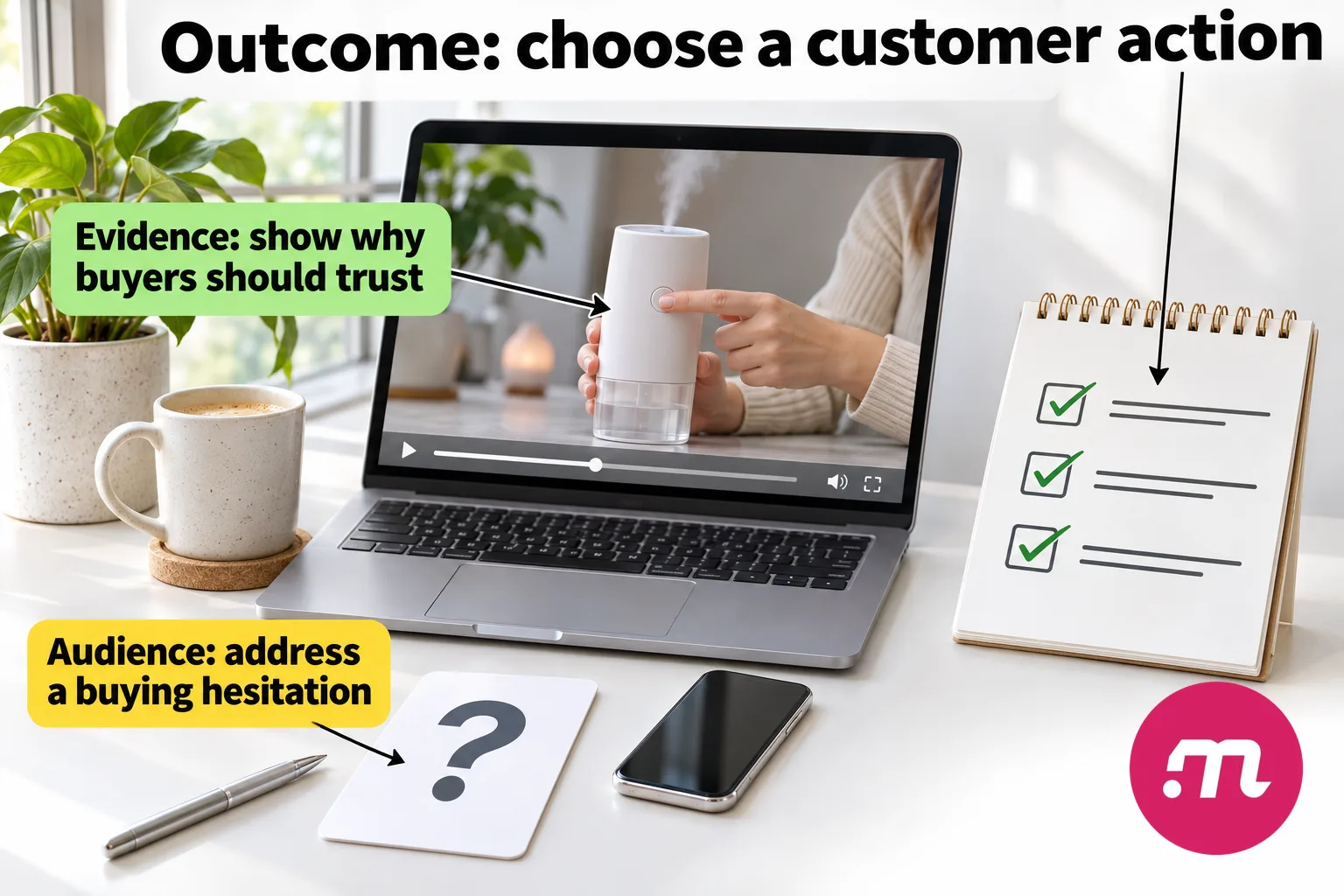
Write a short brief before you commission another shoot. Name the customer, their buying hesitation, your evidence and the action you want. Then record what you won't prioritise. A small team that chooses product demonstrations over daily entertainment has made a useful trade-off. It can now reject attractive ideas that don't serve the buyer.
Choose a result you can verify
For ecommerce, you might prioritise acquired customers whose orders remain valid after cancellations and returns. For a service company, use qualified enquiries that reach a booked consultation. Neither goal requires you to ignore reach; reach is an early signal rather than proof of commercial success.
We don't promise that every organic post will produce a sale. Some content answers doubts before a buyer searches your name later. Record those supporting actions, but keep them separate from confirmed revenue. Your account should have a reason to exist beyond keeping the feed busy.
The broader Mommantum growth approach connects social activity with the rest of the buying process. A content brief should do the same. If your brief cannot name the next customer action, the calendar is premature.
Research the buyer before copying competitors
Use questions as creative material
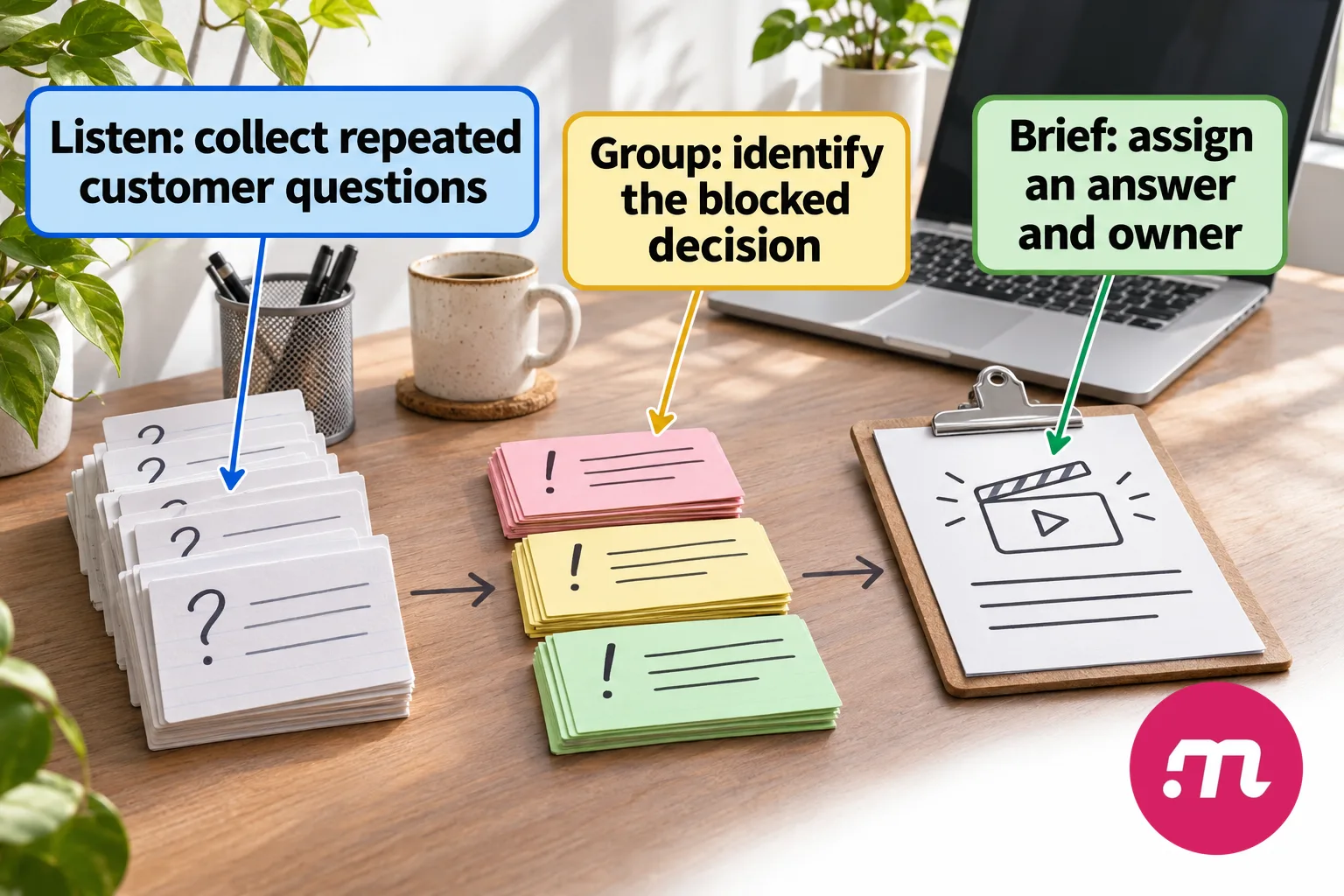
Read your order queries, lost-deal notes, product reviews and comments. Capture the customer's own wording without carrying private customer details into a public brief. Group questions by the decision they block: suitability, trust, delivery, price or after-sales support.
Reddit's social listening guidance recommends connecting research to defined objectives and tracking recurring pain points. We prefer that approach to collecting screenshots of popular posts. A complaint that explains why someone didn't buy is usually more useful than a trend your team enjoyed.
Audit competitors for unanswered doubts
Look at competing offers, comments and landing pages together. Check what customers ask repeatedly and whether the page answers it. An active ad can give you a creative hypothesis; it doesn't reveal the advertiser's profitability. Don't present its longevity as proof of ROAS.
For example, a clothing brand could discover that buyers repeatedly ask about fit after washing. Film the measurement process and state the care instructions. That is a proposed content test, not a claimed client result. Compare the resulting product visits and size-related enquiries with your existing content.
Regional-language content deserves the same discipline. Test the language your customers actually use when asking about the product. Don't assume a Hindi voiceover alone makes an irrelevant offer local. The message, delivery area and support response must fit too.
Finish the audit with a short decision log. Record the observed objection, the proposed answer and what evidence would change your view. Otherwise research becomes a folder of inspiration that nobody uses.
Choose the best social media platforms by task
Match the channel to buying behaviour
The best social media platforms are the ones where you can reach relevant buyers and deliver useful content consistently. We wouldn't select a channel purely because its national audience is large. A restaurant and a specialised B2B supplier need different conversations, even in the same city.
Use this decision table as our planning recommendation, not a platform performance ranking. Validate each choice against your own enquiries and account data.
| Channel | Useful task to test | What you need | Main limitation |
|---|---|---|---|
| Visual discovery and product explanation | Demonstrations and comment replies | Attention may not become purchases | |
| YouTube | Detailed answers and demonstrations | Clear explanations worth watching | Production needs sustained effort |
| Relevant local audiences and community contact | Offers matched to the audience | Your buyer may prefer another channel | |
| Business expertise and qualified conversations | Specific professional experience | Broad lifestyle content may miss the buyer | |
| Answering interested customers and follow-up | Permission and a staffed response process | An unattended inbox loses intent |
Start where you can maintain quality
Choose a primary discovery channel and a clear response route before expanding. Instagram content could lead to a product page or a relevant WhatsApp conversation. A business selling technical services might use LinkedIn for discovery and a consultation page for qualification.
WhatsApp should support people who want the conversation. Don't treat an uploaded contact list as permission to send promotional messages. We also wouldn't make it the only buying route if your customers prefer completing checkout independently.
Expansion has a cost. Add another platform when you can explain its different role and assign someone to maintain it. Reposting everywhere can increase output while reducing the time available for replies.
Turn social media marketing tactics into a test
Give each piece one buying question
Useful social media marketing tactics include product demonstrations, customer explanations used with permission, creator collaborations and thoughtful community replies. Choose them because they answer a buying question. A short video should show the product doing something the buyer cares about, rather than simply announcing that it exists.
For a proposed homeware campaign, film the same product in the space where it will be used. Show its scale and explain the delivery constraints. A founder explanation can address the material choice. A customer contribution can show everyday use. These are different sources of evidence, not interchangeable ways to fill a posting slot.
Build a repeatable production brief
- Select a repeated customer objection from your research.
- Write the claim you can prove and gather that evidence.
- Choose a format that shows the answer clearly.
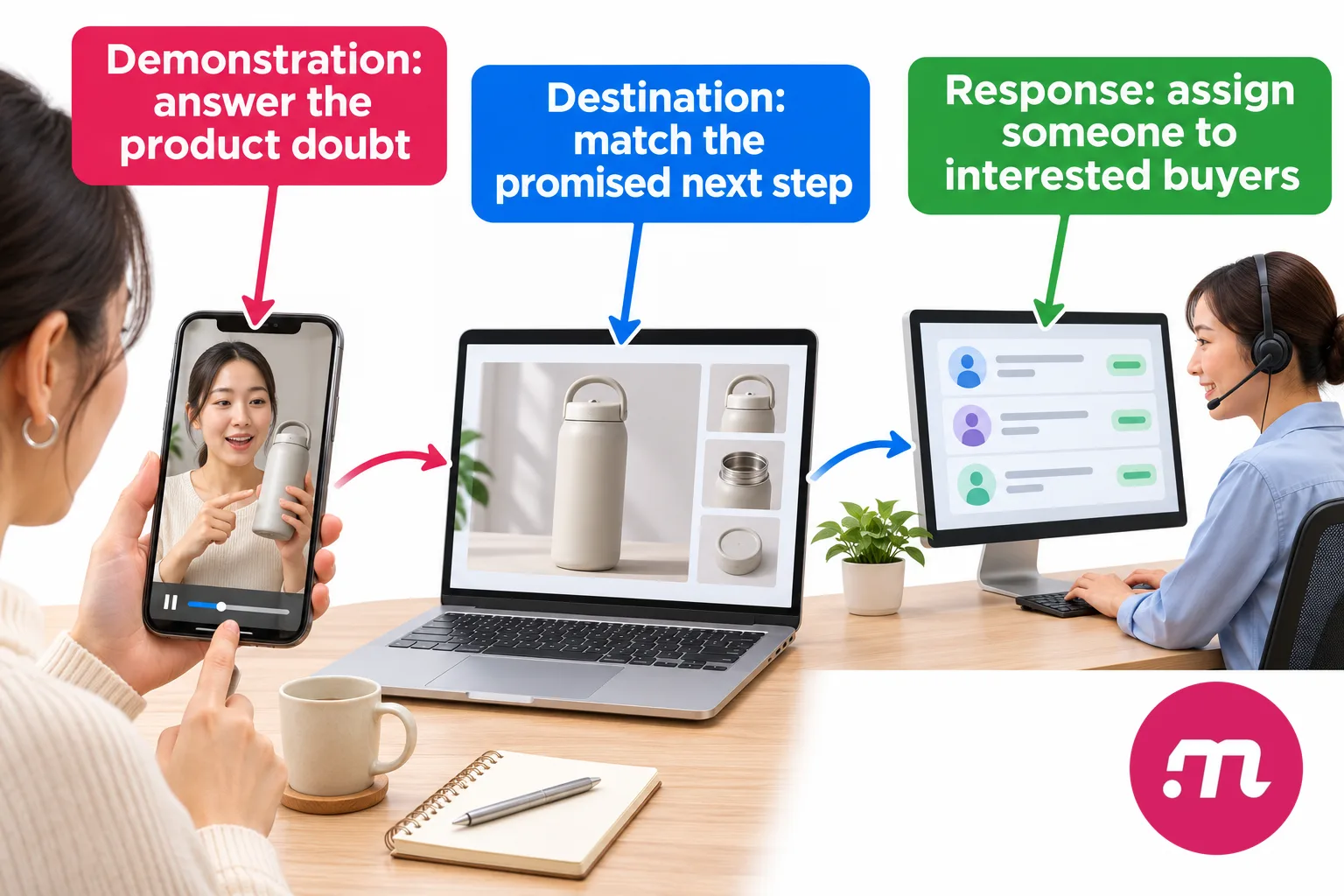
- Give the viewer a next step that matches their intent.
- Assign an owner for approval, publication and replies.
- Record what happened and what the next version should test.
Batch related material during a shoot, then adapt it to each channel. Don't crop away the demonstration just to reuse an asset. We would rather publish less often than maintain a schedule that forces unsupported claims or rushed work.
Creator selection needs commercial judgement too. Review the relevance of their audience and the quality of product questions in their comments. Agree usage rights and disclosure before recording. A small collaboration can be a sensible test; a small follower count by itself doesn't make it good value.
Our social media marketing work treats the brief and response process as part of content production. A strong post still needs someone to handle the interested buyer.
Buy software only after naming the bottleneck
Separate publishing from advertising
Social media advertising software and content scheduling software solve different problems. A scheduler helps a team plan and distribute posts. Advertising tools handle paid campaigns. Neither repairs an unclear offer. We wouldn't buy an automation subscription because the current calendar feels unproductive.
Buffer's publishing product describes planning and scheduling content across connected channels. That can help if manual posting is the actual bottleneck. If approval is the delay, fix who can approve content before adding another dashboard. Check current channel support and permissions during a trial rather than relying on an old comparison article.
Test the workflow before paying
Write your requirements in plain language: the channels you use, who drafts, who approves, who answers comments and what reporting you need. Run a normal piece of content through the proposed tool. Include a rejected draft and a last-minute correction. The awkward cases reveal more than a polished demo.
For paid growth, keep business ownership of accounts and access. Ask how campaign changes are recorded and who can stop spend. We prefer a smaller, understood workflow to automatic budget changes that the founder cannot explain.
AI can suggest alternative hooks or organise research notes. A human still needs to verify product claims and customer permissions. Don't give a generated testimonial the appearance of a real customer experience.
Judge a subscription by the work it removes and the mistakes it prevents. If your team still exports, repairs and rebuilds every report manually, the advertised dashboard hasn't solved your reporting problem. Software should follow the process you need.
Measure the path from attention to retained revenue
Make traffic identifiable
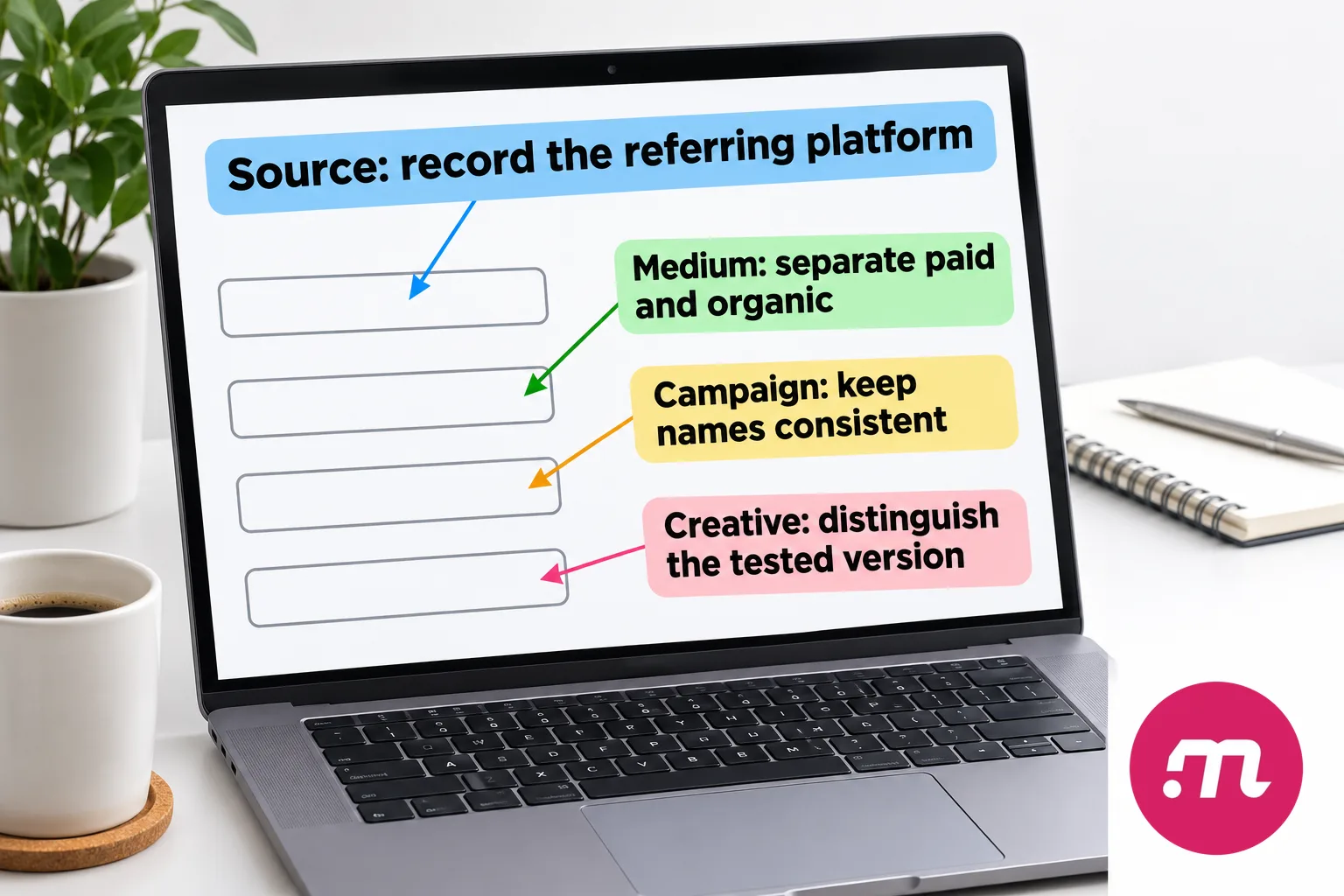
Google's campaign URL guidance explains how UTM parameters identify referring campaigns. Use a consistent source, medium and campaign name, then distinguish creative versions with utm_content. Keep naming consistent so the same campaign doesn't split into unrelated report rows.
For example, record Instagram as the source, organic_social as the medium and your product campaign as the campaign value. Keep paid activity separately identifiable. Check that the destination loads correctly on a phone and that the expected purchase or enquiry is recorded. Don't assume the presence of tracking code proves the whole path works.
Keep cost definitions consistent
Report media-only acquisition cost separately from fully loaded acquisition cost. The latter can include creative production and agency fees when those costs belong to acquisition. State the reporting period and what counts as a new customer. Compare like with like.
ROAS is attributed revenue divided by advertising spend. It isn't profit. Product margin, fulfilment, COD failures and returns still affect the money you keep. Platform and analytics reports can also attribute the same sale differently. Pick a consistent operating report and investigate differences rather than adding all reported conversions together.
When clicks look healthy but purchases don't follow, inspect the offer and page before buying more traffic. Our conversion rate optimisation work addresses that handoff. A slow page or unanswered sizing question can waste the interest your content earned.
We wouldn't set a universal CAC target here. Your margin and repeat purchase evidence should decide what you can afford. A borrowed industry average won't pay your fulfilment bill.
Review your social media marketing strategy
Find the failure before changing the channel
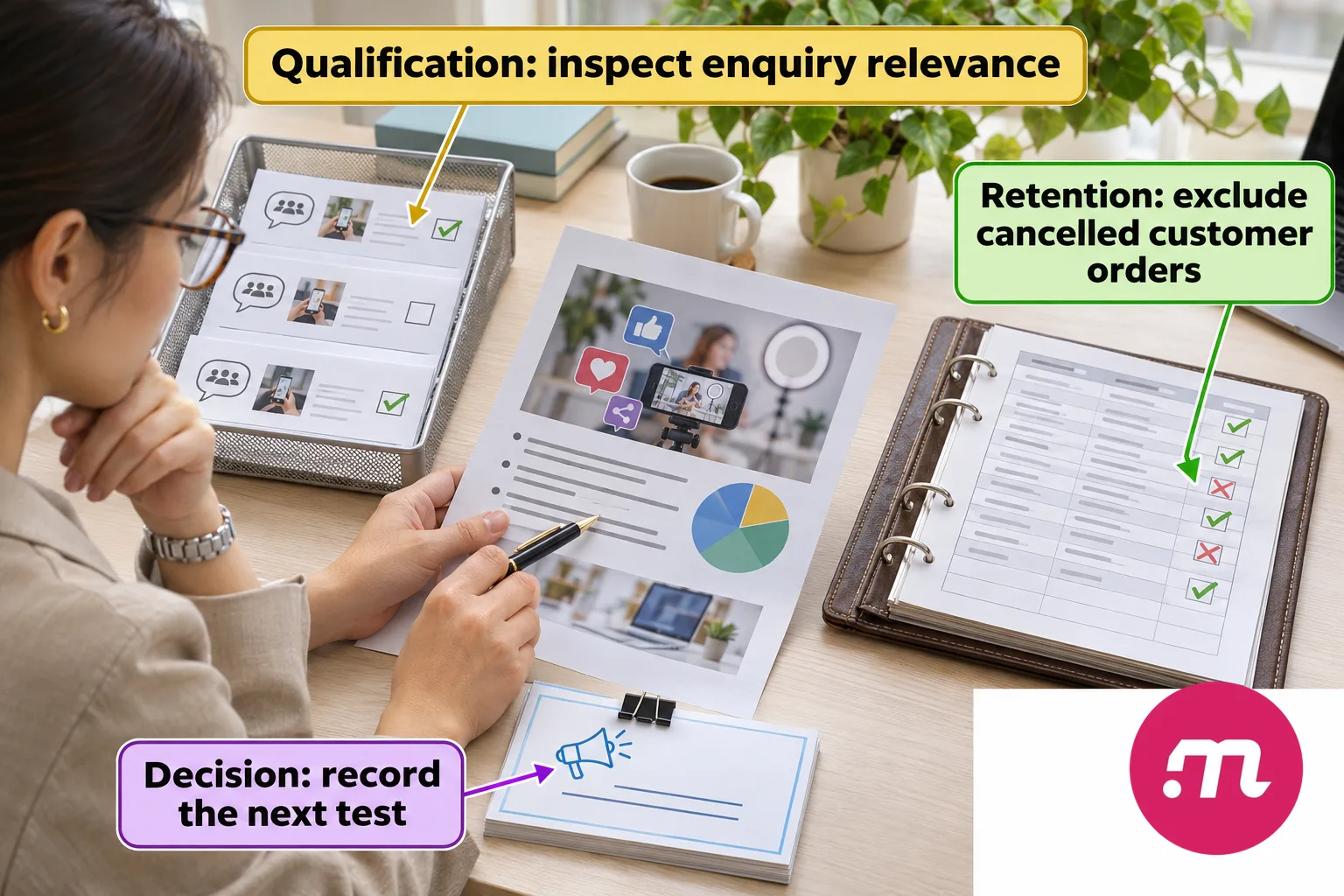
If relevant people aren't seeing the content, revisit distribution and audience fit. If people watch but don't act, examine the answer and next step. If enquiries arrive but don't qualify, check the offer and qualification process. These failures need different fixes.
A founder who changes the creative, targeting and page together won't know which change mattered. We prefer a written hypothesis and a limited change that can be evaluated against a comparable period. Allow for the buying cycle and the amount of evidence you actually have. A quiet afternoon isn't proof that a platform has stopped working.
Use a working checklist
- Confirm that the stated business outcome still matters.
- Review qualified enquiries or retained orders alongside reach.
- Read unanswered comments and inspect the response backlog.
- Check links and the mobile destination.
- Choose the next test and assign its owner.
Separate routine maintenance from decisions about strategy. Correcting a broken link should happen immediately. Moving your production effort to another channel needs evidence that the existing choice cannot do its assigned job.
We'd also preserve a record of unsuccessful tests. It saves your next hire from repeating an idea that already failed for a specific reason. Record the context, not just the result: a product that was unavailable or a delayed sales response can distort the verdict on a post.
The practical advantage of this system is accountability. Its limit is that some brand effects take time and won't be captured by a last-click report. Keep qualitative customer feedback beside the numbers without pretending it is confirmed revenue.
Conclusion: choose a result before another channel
Your next useful step is a written brief with a buyer, a buying hesitation and a measurable next action. Choose a channel you can maintain, produce evidence that answers the hesitation, then check where interest turns into a qualified conversation or retained order. Expand only when the work supports that decision.
We can help connect the content plan with your offer and response process. Book a free strategy call through Mommantum's social media service and bring your current calendar, enquiry records and sales report. Those inputs give us a better starting point than a follower target.
Frequently Asked Questions
Key takeaways and practical details on this topic.
A social media strategy records who you want to reach, what buying problem you will address and how activity supports a business outcome. We use the calendar to execute those choices. Start with a measurable next action, such as a qualified consultation, rather than making follower growth the entire brief.
Create a social media strategy by choosing a business outcome, researching buyer objections and assigning a job to each channel. Then build content that answers those objections and define how you will review results. We'd document what you won't do too, so every new trend doesn't become another production request.
Choose a social media platform according to your buyer's behaviour and the content your team can maintain. Visual demonstrations may suit Instagram; detailed explanations may justify YouTube. We'd start with a primary discovery channel and a response route, then expand when enquiry quality supports the extra work.
Social media strategies work when the audience, offer and next action fit together and you can verify the result. Product demonstrations, useful replies and customer evidence are sensible tests. We wouldn't call any tactic universally effective: compare qualified enquiries or retained orders rather than judging it by views alone.
The best social media advertising software is the tool that solves your current campaign bottleneck without hiding account control. Separate paid campaign management from scheduling organic posts. Write down your approval and reporting requirements first, then trial the workflow. We wouldn't pay for automation before the underlying process makes sense.
A small business should post at a pace it can sustain while still producing useful answers and handling replies. There isn't a universal frequency that guarantees sales. We would start with a manageable schedule, review buyer response and increase output only when production quality and response capacity can keep up.
Measure social media success against the business outcome assigned to the channel, such as qualified enquiries or retained orders. Use reach and clicks to diagnose the path rather than replace the outcome. Keep cost definitions consistent and review cancellations, returns or lead quality before calling a campaign commercially successful.
A useful social media strategy template records the buyer, objection, evidence, channel role, next action and measurement method. Add an owner and review date for each test. We'd keep the template short enough to use during production; a large presentation that doesn't change decisions has little practical value.
Turn attractive client posts into a strategy by connecting each proposed content theme to a defined buyer decision and business outcome. Ask what hesitation the post resolves and what the viewer should do next. We'd pause work that cannot answer those questions, even if the design is polished and the team likes it.
A Reels plan with views but little business growth needs a check of audience relevance and the next action. Compare entertainment-led posts with content that answers a product objection. We'd inspect profile visits, qualified conversations and the destination page before concluding that your account needs more reach or another platform.
Build a client calendar from the customer questions that block the chosen business outcome. Give each piece a question to answer, supporting evidence and a next step. Then assign approval and response owners. We'd review the content against the brief before filling dates, so the schedule doesn't become the strategy.
A manageable social content plan starts with fewer formats and a clear production process your team can repeat. Batch related demonstrations and adapt them for the chosen channel. We'd protect time for customer replies before adding posting days, because an unanswered buying question can waste the attention your content has already earned.
Ready to implement this for your brand?
Connect with our Jaipur growth studio to turn these strategies into revenue for your D2C or ecommerce business.