Social Media Marketing Plan: 8 Steps to Turn Posts into Customers
Build a social media plan around customer questions and a working buying path. Use eight steps to assign the work, compare costs and decide what to test next.
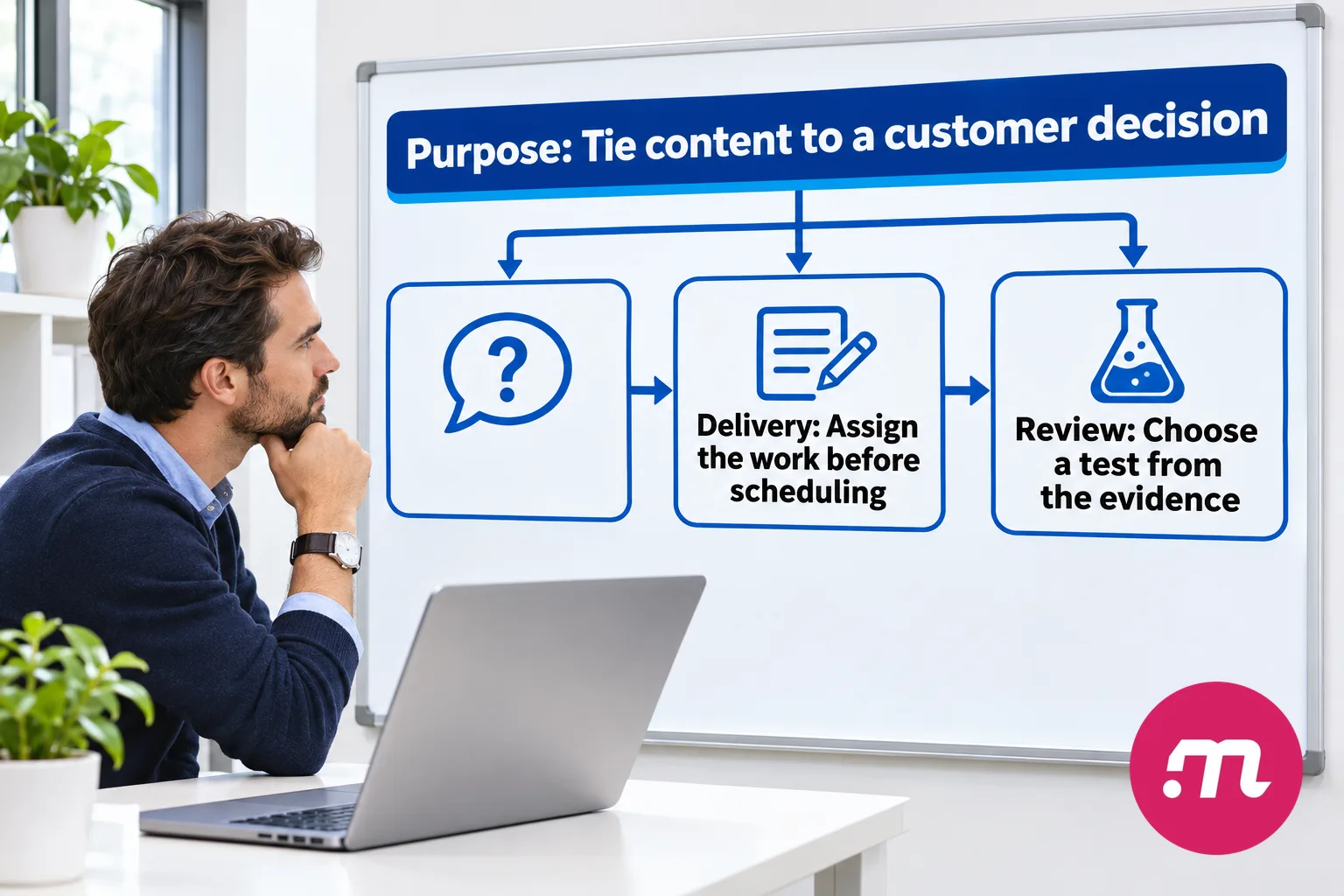
Introduction
A social media marketing plan can look busy while leaving the customer no closer to buying. You have posts scheduled, videos approved and a report full of views, but nobody has decided which buying hesitation the work should resolve. That is where we'd start.
The practical answer is to connect a business objective with a buyer question, choose a channel you can support and prepare the next action. Then assign the production and replies, budget for the complete work and review what customers actually do. The eight steps below turn those choices into a plan a small Indian business can run.
Table of Contents
- 1. Introduction
- 2. What a social media marketing plan must explain
- 3. Set the outcome and understand the buyer
- 4. Choose the channel and prepare the next action
- 5. Build content around questions and assign delivery
- 6. Give the budget a clear boundary
- 7. Review your social media marketing plan with evidence
- 8. Decide what to do yourself and what to hire
- 9. Conclusion: make every assignment support a decision
- 10. FAQs
What a social media marketing plan must explain
Separate the decision from the calendar
A strategy explains who you want to reach and why your approach should help the business. The plan turns that direction into assignments and review decisions. A calendar records when the work happens. They belong together, but a full calendar doesn't answer the earlier questions.
In a Reddit discussion, a freelancer described regular product photography, videos and posting, yet still wondered whether this counted as strategy. The useful concern is familiar: polished execution can continue without an agreed commercial purpose. We'd ask what customer decision that content is meant to change.
Mailchimp's planning guide includes goals, customer profiles, channels, metrics and a calendar. Your working version should explain the connection between them, rather than simply use those words as document headings.
Start with the information you already have
Collect recent enquiries, common objections and accurate product or service details. Open your profile and purchase destination on a phone. Note missing information and broken steps. If customers can't confirm delivery, answer that before commissioning an elaborate audience presentation.
Our guide to what a social media strategy involves covers the choices behind execution. For this plan, keep a brief that someone else can act on. We'd rather see a plain document with owners than a beautiful deck whose recommendations never become work.
Set the outcome and understand the buyer
Step 1: choose an outcome you can judge
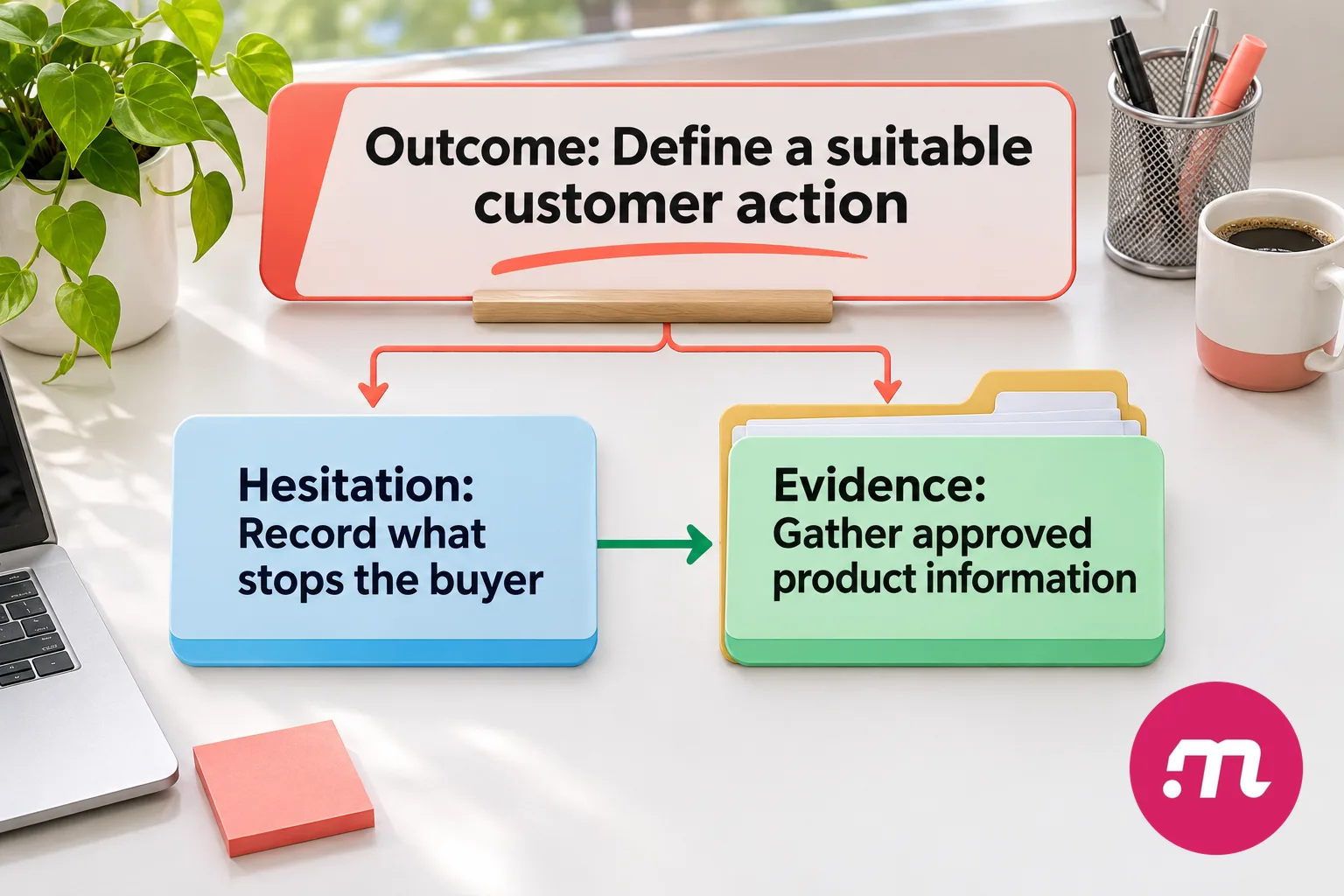
Define the business action before selecting a format. For a local service, it might be suitable appointment enquiries. For an online store, it might be completed orders that remain after cancellations. Record how you currently measure that action and what would make progress worthwhile.
Don't invent a target because a template asks for one. Use your current records and capacity to set it. A shop that cannot answer incoming questions needs a response process before a more ambitious lead target. We'd write that constraint into the plan rather than hide it behind reach.
Step 2: identify the hesitation before the action
Ask what customers need to know before taking that step. For an illustrative kidswear store, a parent may need help choosing a size. The useful input is the exact question customers ask, together with approved sizing information. This example is a proposed workflow, not a client result.
Keep audience descriptions practical. State the service area, buying situation and language you can support. Social media management in India may require Hindi or regional-language replies as well as translated posts. Ask who can check the meaning and answer follow-up questions.
The fundamentals of social media marketing begin with relevance. Your content has to give a suitable customer a reason to take the next action. We wouldn't begin with broad labels such as everyone interested in fashion. They don't help your editor decide what to show.
Choose the channel and prepare the next action
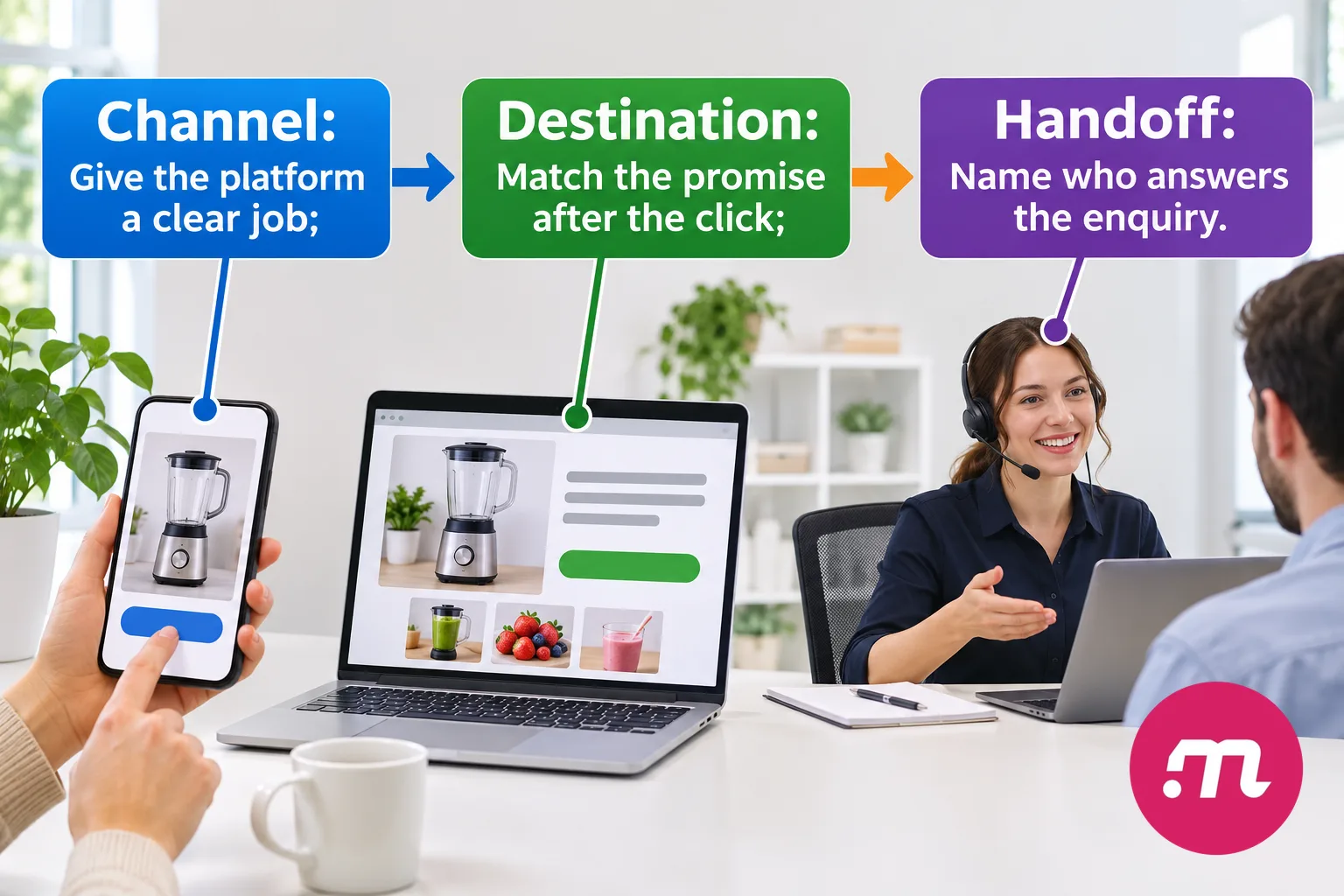
Step 3: give each platform a job
Choose a primary channel using customer behaviour and your production capacity. Instagram may be worth testing for visual demonstrations. Facebook may suit a business with an existing responsive community. YouTube can support explanations people need to understand a product. These are possible roles, not a ranking of platforms for every Indian buyer.
Check your own enquiries and account history before expanding. If another platform requires a different production effort, name that effort. We'd support one useful channel first when the alternative is duplicating posts and leaving messages unanswered.
Short video deserves a test when motion clarifies the product. It doesn't deserve automatic priority over an accurate comparison or a clear still photograph. Match the format to the question.
Step 4: test where the customer goes
Choose the destination for the intended action: a relevant product page, appointment form or staffed conversation. Open it from the actual profile or post link. Check that the promise in the content matches what appears after the click.
For ecommerce, make serviceable locations and payment choices clear. If COD is restricted, say so before checkout becomes a surprise. If UPI is offered, check the real payment flow. For services, explain the area covered and what information confirms an appointment.
Use WhatsApp when discussion helps, with a named reply owner and a handoff to fulfilment. Don't force a conversation on someone ready to purchase directly. At Mommantum, we'd inspect this connection before recommending more production. Try the route yourself before sending customers through it.
Build content around questions and assign delivery
Step 5: turn buyer questions into content briefs
Organise content around actual questions, rather than a fixed ratio of promotion and education. A product demonstration can also sell when it explains suitability. A promotional post can still be useful when the offer terms are clear. We wouldn't defend an arbitrary mix while customers keep asking an unanswered question.
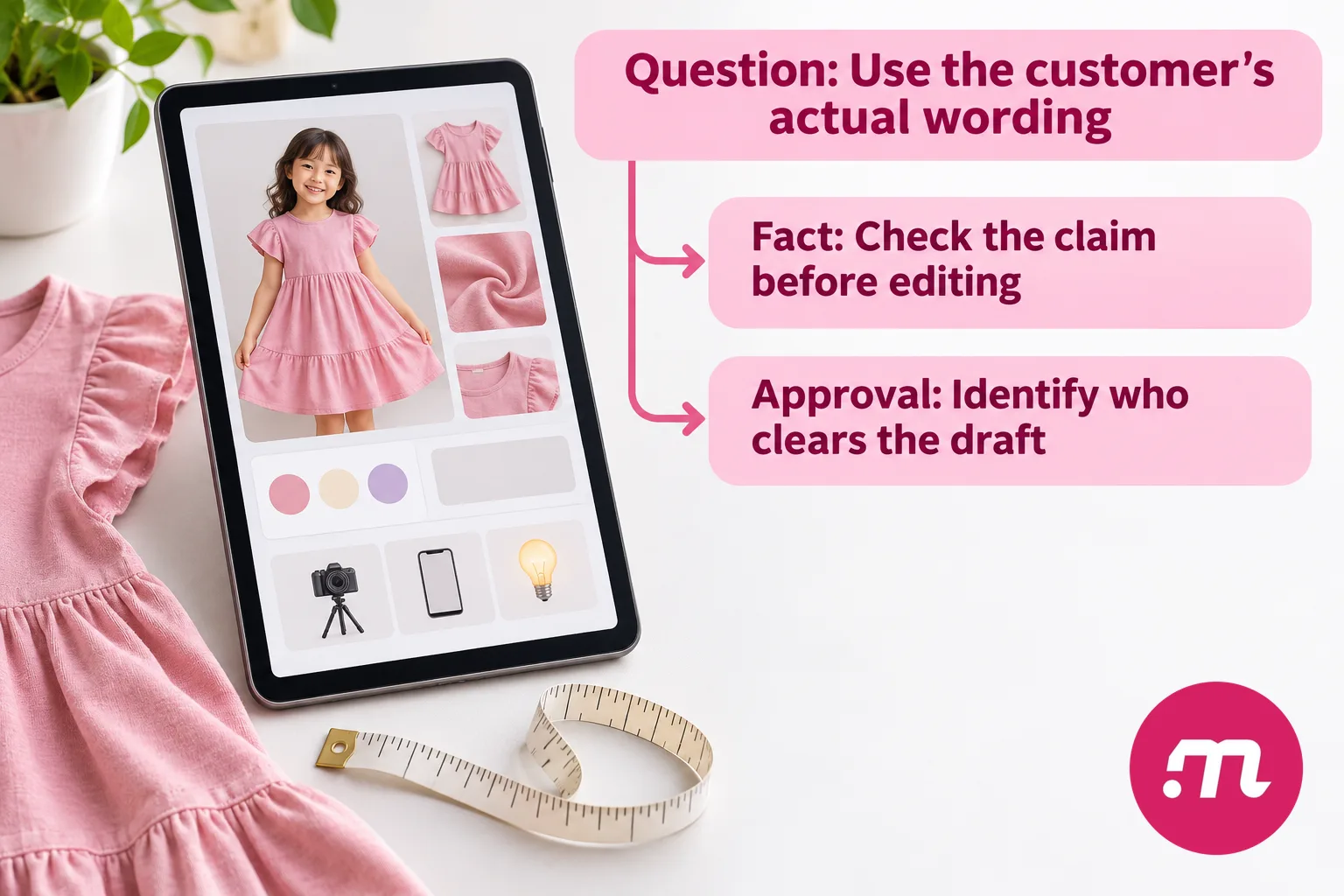
For the kidswear example, prepare a measurement demonstration, a comparison of fits and a factual delivery explanation. Each brief should name the question, required evidence and next action. Get permission before using customer material; don't invent testimonials to fill the calendar.
YouTube's Shorts guidance allows eligible square or vertical videos up to three minutes. That is a format limit, not a recommended length for every explanation. Use only the time the question needs, and check rights for any audio you use.
Step 6: assign production, approval and replies
The calendar needs an owner for each assignment, an approver and a destination. Include the factual input needed before editing starts. If the shop team supplies footage, say who checks whether it contains the required demonstration.
Batch filming when it saves setup time, but keep stock and offer details current. A festival theme doesn't excuse scheduling unavailable products. Define what happens when information changes after approval and who can correct the post.
Leave room to answer questions the content produces. We'd publish less if the alternative were a feed with no response capacity. Marketing through social media includes the conversation after publication.
Give the budget a clear boundary
Step 7: cost the work before buying tools
Separate management, production and distribution costs. Your staff's time also counts, even when you don't pay a supplier for it. Record who researches and films, then identify editing, creator fees or software that must be purchased.
For a concrete price reference checked on 8 November 2026, Digital Online Solution lists social media plans at ₹12,000, ₹22,000, ₹35,000 and ₹55,000 monthly. These are one provider's published packages, not a national average or a Mommantum quotation. Its page states that GST and advertising spend are separate.
A price becomes useful only beside its scope. Ask whether footage is supplied, how revisions work and who answers enquiries. We'd compare quotations against the same brief rather than assume that a platform count describes the amount of work.
For a limited budget, reduce the scope explicitly. Keep one repeatable filming setup, answer the strongest buying question and retain time for replies. Adding software subscriptions won't solve missing footage or unclear claims. If a supplier proposes a lower fee, check which task moves back to your staff. That transfer can be sensible, provided someone has the time to do it.
Use a simple cost record
| Cost area | What to record | Question before approval |
|---|---|---|
| Management | Planning, publishing and review scope | Who owns each responsibility? |
| Production | Filming, editing and approved revisions | What must your staff supply? |
| Distribution | Advertising spend kept separate | What outcome is the test intended to support? |
| Operations | Reply time and fulfilment capacity | Can the business handle the response? |
Set an affordable test boundary using your own margins and cash commitments. Don't infer an advertising budget from a desired revenue figure alone. We wouldn't buy reach to compensate for a purchase path you already know is failing.
Review your social media marketing plan with evidence
Step 8: connect the report to the next decision
Define useful actions consistently. A qualified enquiry should fit the service or product offered, not merely appear in an inbox. For orders, separate placed orders from retained purchases. Track reach and viewing behaviour as attention signals, then examine the customer response.
Google's campaign URL documentation explains source, medium and campaign parameters; utm_content can distinguish creative versions. Use consistent names and test the link before publishing. Where customers complete orders through conversation, keep an operational record rather than expect a website report to capture everything.
Review monthly, with quicker checks for broken links or incorrect offers. That's a proposed working rhythm, not a universal time-to-results claim. Compare a suitable period with your baseline and note changes in price or availability before crediting the content.
Diagnose before increasing production
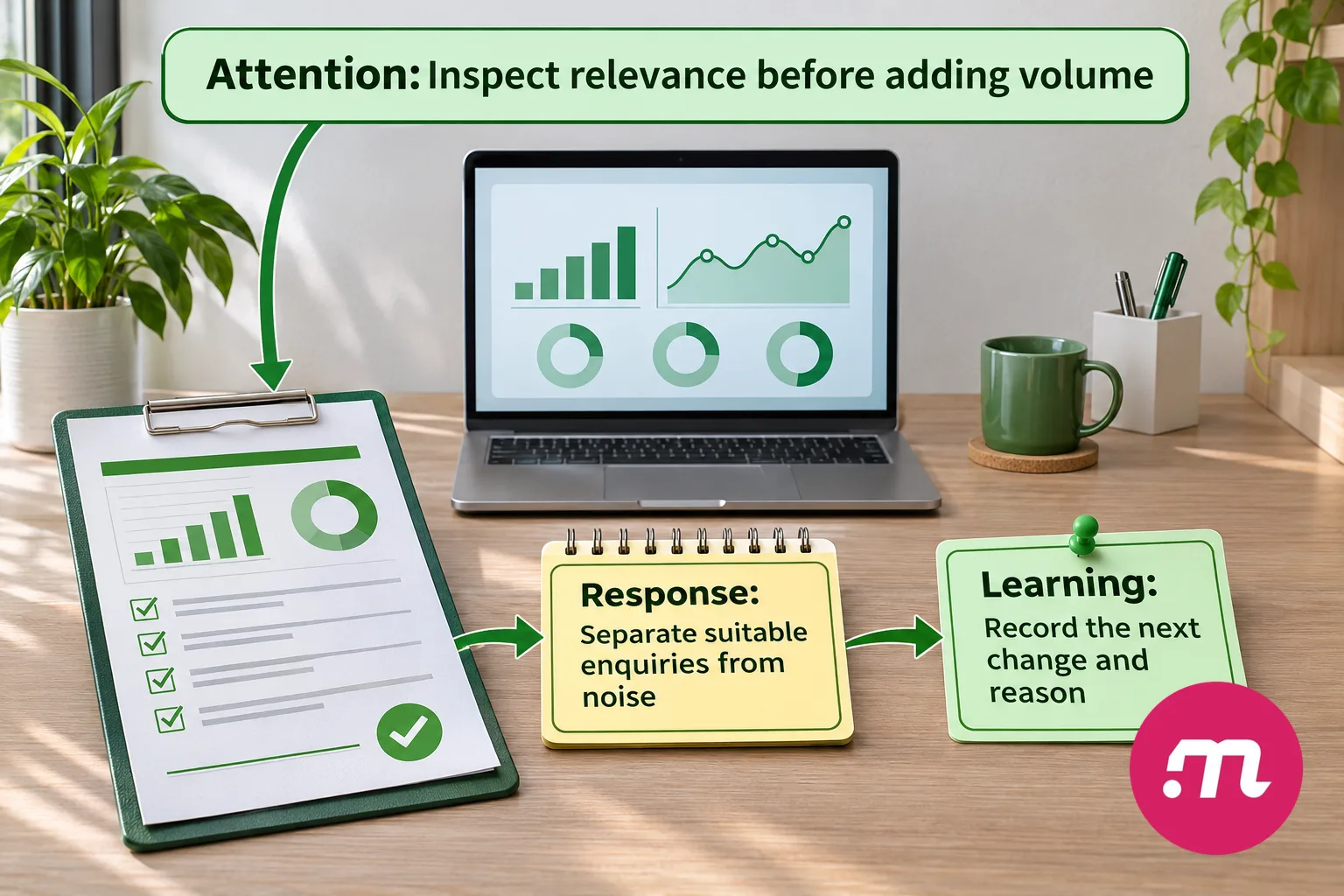
If attention is weak, inspect the opening and relevance. If visits arrive but buyers don't proceed, examine the destination and objections. If messages are suitable but orders stall, check response handling. These are starting questions, not automatic explanations.
ROAS compares attributed revenue with advertising spend; it isn't profit after all costs. CAC concerns acquisition cost per customer, and the costs included must be explicit. We'd avoid a report that combines incompatible definitions simply to show an improvement.
Finish the review with one test, its reason and its owner. A quiet afternoon doesn't prove failure, but repeated requests to wait without a diagnosis aren't a plan either.
Decide what to do yourself and what to hire
Buy the missing work
A social media marketing company can coordinate several roles, while a freelancer may fill an editing or production gap. An internal person can stay close to product information. Each model still needs a business owner who can approve facts and resolve operational questions.
If staff can film clear demonstrations, compare editing and planning support before paying for another shoot team. If no one owns the brief, an editor alone won't resolve that gap. We'd name the problem first and ask providers how their scope addresses it.
Use this compact template for each proposed assignment. Copy it into your existing working document; a separate platform is optional. The example fields are prompts, not promises of performance.
| Planning field | What your team fills in |
|---|---|
| Customer question | The wording from a real enquiry or sales conversation |
| Evidence needed | The approved fact or demonstration that answers it |
| Action and destination | What the customer can do and where it happens |
| Delivery responsibility | The producer, approver and reply owner |
| Review decision | What you will inspect and what could change |
For the sizing demonstration, the evidence might be a garment measured correctly against the published guide. The destination must let someone select the appropriate product, while the reply owner handles questions the demonstration doesn't answer. If any field is blank, resolve it before asking an editor to make the content look better.
Use this launch checklist
- Write the outcome and define a suitable customer action.
- Record the buyer question using real enquiries.
- Choose a channel your team can support.
- Test the destination and response handoff on a phone.
- Prepare a brief with approved product evidence.
- Name production, approval and reply owners.
- Record the complete cost and test boundary.
- Agree the review date and decision record.
This is enough to begin a controlled test without a large software stack. Don't confuse a lean plan with informal responsibility, though. When a task belongs to everyone, it is easy for an interested customer to receive no answer.
Conclusion: make every assignment support a decision
Your plan should explain what the customer needs to understand and how your team will respond when interest arrives. Choose manageable channels, cost the complete work and use the report to decide what changes next. The calendar follows those choices.
Book a free strategy call through our social media marketing service. Bring your current calendar and recent customer questions. We'd use them to identify the next useful test before recommending more production.
Frequently Asked Questions
Key takeaways and practical details on this topic.
Create a social media strategy by connecting a business objective with a buyer problem and a justified channel choice. Then describe the content and next action that should support that objective. We'd use real customer questions before building a calendar. The plan should also identify who produces the work, answers enquiries and reviews the evidence.
A social media strategy explains whom you want to reach, what decision you want to influence and why your approach should help. Posting consistently is execution, but doesn't establish those choices. We'd ask what customer hesitation each assignment addresses. A calendar becomes useful after the commercial purpose and the destination for interested customers are clear.
Beginners should start with one customer question and a channel they can support reliably. Gather accurate information, create a useful explanation and test the next action on a phone. We'd postpone extra tools until the basic process works. Someone must also own the replies, because attention won't help if suitable enquiries sit unanswered.
Social media management costs depend on the scope and people supplying it. One published provider lists monthly packages from ₹12,000 to ₹55,000, with GST and ad spend separate. These are examples, not a national average. We'd compare the same brief across providers and check filming, revisions and response ownership before accepting a price.
The best platform is the one where relevant buyers can encounter useful content and complete the next action you can support. Check existing enquiries and account history before expanding. We'd test a primary channel first when resources are limited, then add another only with a clear role and enough production and reply capacity.
Your posting frequency should fit the useful material and response capacity you actually have. Choose a manageable schedule, record the work involved and review whether it answers customer questions. We'd publish less rather than fill gaps with unsupported claims. Increase volume when production and replies can keep up, not because a generic calendar demands it.
Social media KPIs should connect attention with your chosen business action. Review relevant visits, suitable enquiries or retained orders alongside reach and viewing behaviour. We'd define each measure before launch and keep acquisition cost separate from advertising return. A report becomes useful when it explains what you should test next, rather than simply list activity.
A social media marketing plan should include the objective, buyer question, channel role and intended next action. Add production and approval owners, reply handling, complete costs and a review process. We'd keep the document short enough to use during delivery. A template with all the headings filled still fails if nobody owns a customer's response.
Turn your posting routine into a strategy by agreeing the client's business objective and identifying the customer decision the work should influence. Keep the useful production habits, but attach each brief to an evidence-backed buyer question. We'd also define the destination and review measure, so the next discussion concerns customer response rather than whether another post was published.
An offline kidswear shop needs accurate product and sizing information, a clear ordering route and someone to answer questions before paying for more attention. Test the route on a phone and confirm delivery terms. We'd also decide who supplies footage and edits it, because those responsibilities affect the budget as much as the advertising spend.
A useful first social media test answers a real customer question on a channel you can maintain. Choose using current enquiries and the content you can produce, then agree the next action and reply owner. We'd review what suitable customers do before expanding. You don't need to prove every format works before learning from one clear assignment.
Your shop may need an editing freelancer if the brief, filming and customer replies already have reliable owners. A company becomes worth comparing when coordination and planning are also missing. We'd ask both options to quote against the same responsibilities. The cheaper offer is only useful when the work left with your staff is realistic.
Ready to implement this for your brand?
Connect with our Jaipur growth studio to turn these strategies into revenue for your D2C or ecommerce business.