Social Media Marketing Company in India: How to Choose Right
Compare the people, scope and reporting behind an agency proposal. Use practical checks to choose a social media company you can evaluate.
Introduction
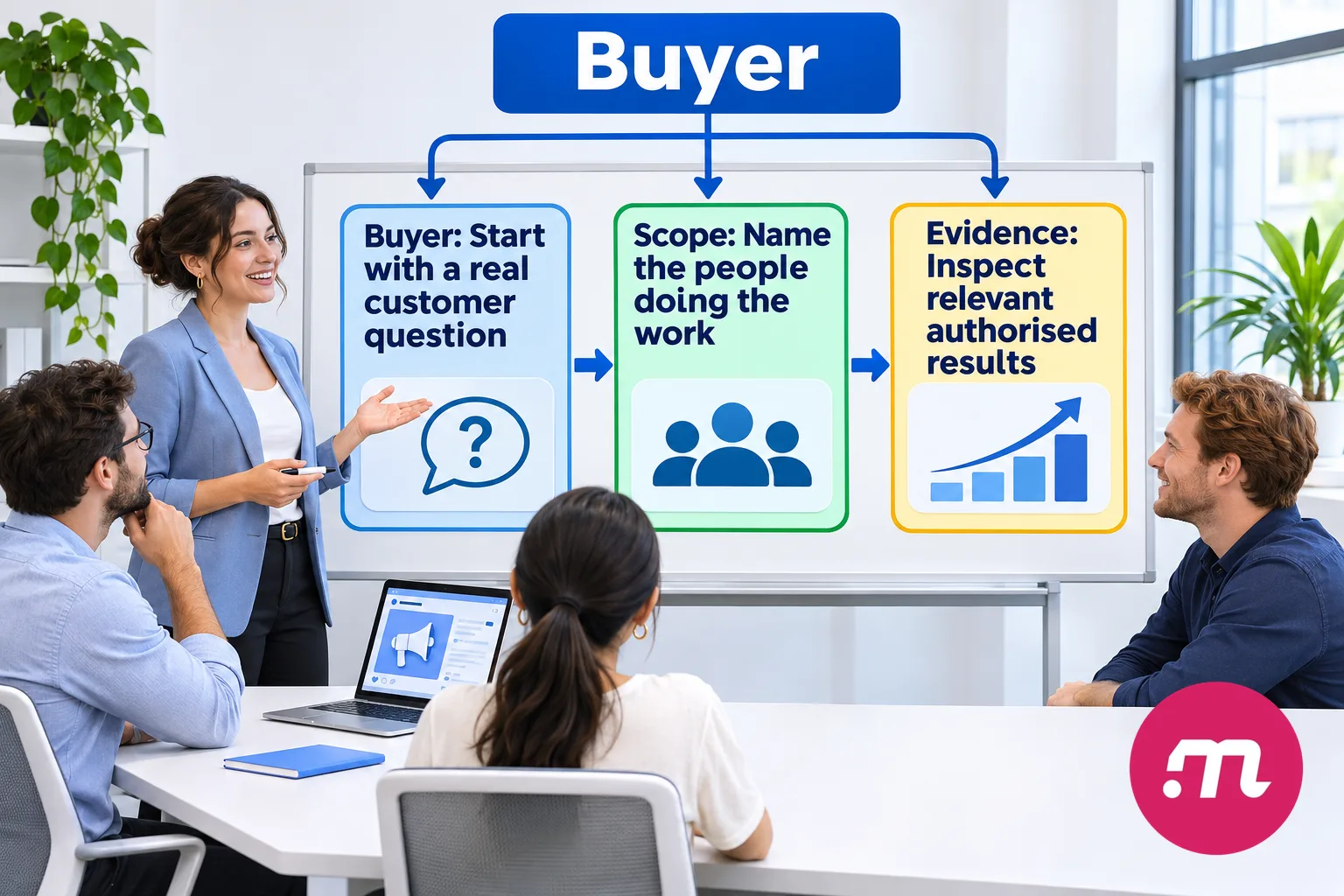
A social media marketing company should be able to explain what it will do for your business before it explains how many posts you will receive. A polished portfolio helps you assess execution. It doesn't tell you whether the team understands your buyer, can handle enquiries or knows how to judge the work.
We'd choose a company by its decisions and working process. Ask it to connect a real buying hesitation with content, a suitable destination and a measurable outcome. Then compare the scope, people and full cost. That gives an Indian founder something more useful than another list of agencies claiming expertise.
Table of Contents
- 1. Introduction
- 2. What a social media marketing company should own
- 3. Check the realities of serving Indian buyers
- 4. Compare fees against the complete scope
- 5. Ten checks for a social media marketing company
- 6. Ask for a working plan at the start
- 7. Decide whether you need a company or a specialist
- 8. Judge the report by the decisions it supports
- 9. Conclusion: choose the team you can evaluate
- 10. FAQs
What a social media marketing company should own
Strategy gives the production work a purpose
The fundamentals of social media marketing start with a buyer and a decision. Your provider should identify whom the content serves, what that person needs to understand and what should happen afterwards. A calendar assigns the work; it doesn't make those choices by itself.
A homeware brand may need buyers to understand product scale. A service business may need prospective customers to check suitability before booking. We'd expect different briefs for those businesses. Having a video editor available doesn't make a short video the answer to every question.
Make the responsibilities visible
Ask who researches, writes, designs, films, edits and publishes. Establish who answers comments and who takes over a sales enquiry. If paid campaigns are included, define that responsibility separately. If you supply the footage, the company may only edit it. Organising a shoot adds planning and production work that the quotation should identify.
Our social media marketing service connects content with community responses and the next business action. We would agree that handoff before judging a calendar complete.
Ask the company to show how a customer question becomes an assignment. That reveals more about its approach than asking whether it is creative. The useful answer names the question, the evidence needed and the person responsible for moving the work forward.
Check the realities of serving Indian buyers
Language support continues after the post
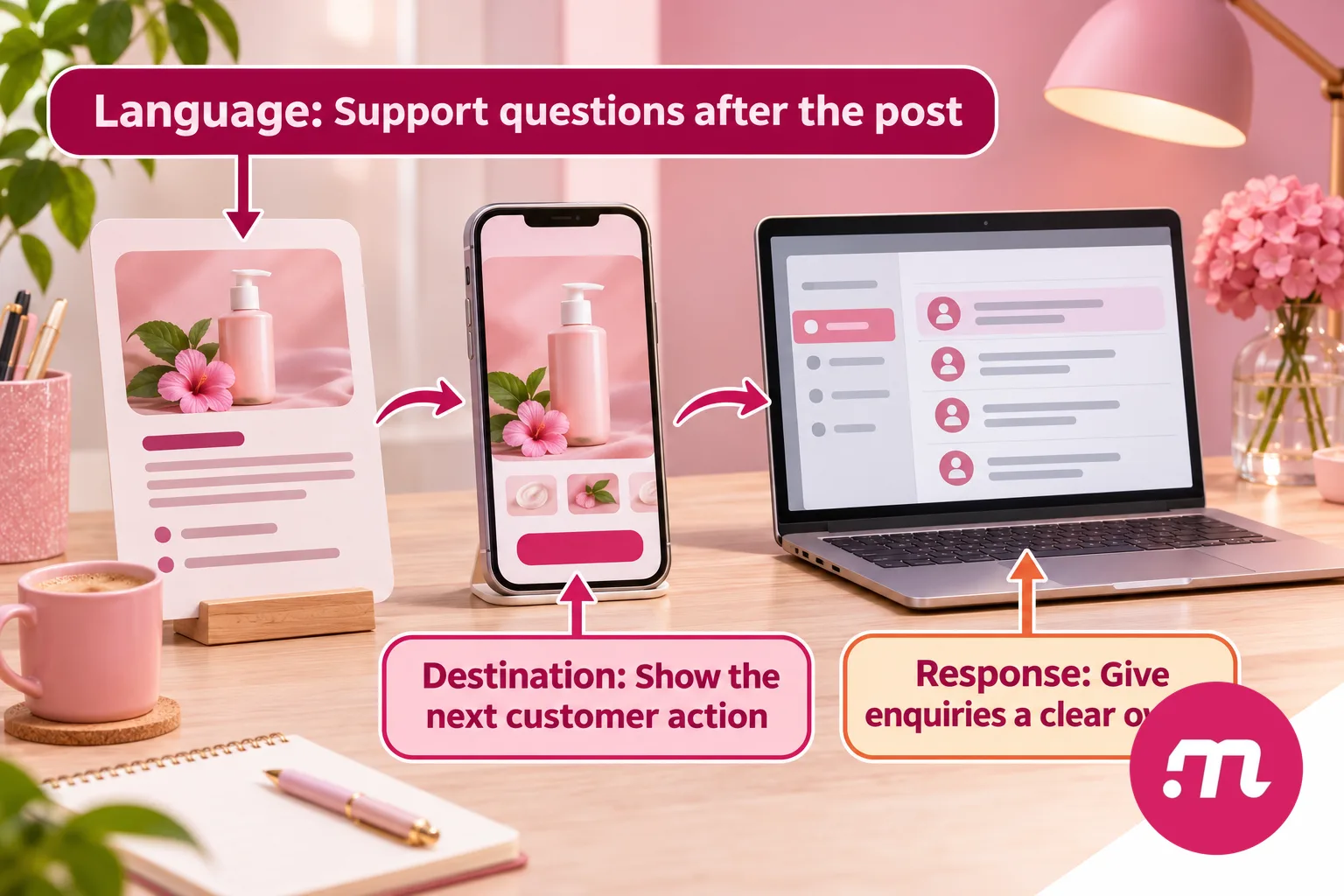
Social media management in India needs a clear view of the customers you can serve. A Hindi or regional-language video should lead to information and replies that the buyer can understand. Translation alone doesn't create a working customer experience.
Ask who checks the meaning of local-language copy and who handles questions in that language. If the provider relies on your staff for replies, include that work in the plan. We prefer a narrower audience that the business can support over reach that produces unanswered enquiries.
Test the purchase or appointment path
For ecommerce, make delivery restrictions and COD availability clear where the buyer needs them. For a local service, state the area covered and the information required to confirm an appointment. A campaign can attract attention while creating unsuitable enquiries.
Use WhatsApp when a conversation genuinely helps, and give the inbox an owner. Keep a direct purchase route for customers who prefer checkout. Agree appropriate permission for promotional follow-up and respect requests to stop.
We wouldn't choose a company because it promises presence on every platform. Ask why each channel deserves production effort. Visual demonstrations, searchable explanations and professional conversations can require different work. Your company's resources should support those choices.
Festival campaigns need a real offer and available stock. Check whether the team confirms these inputs before scheduling. A timely graphic won't compensate for a page that advertises an unavailable product.
Compare fees against the complete scope
Use published prices as examples
There is no single national retainer that fits every business. In a public price page checked on 7 November 2026, Digital Online Solution listed social media packages at ₹12,000, ₹22,000, ₹35,000 and ₹55,000 per month. These are that provider's examples, not a market average or Mommantum quotation.
| Published plan | Monthly fee | Listed platforms |
|---|---|---|
| Starter | ₹12,000 | 2 |
| Growth | ₹22,000 | 3 |
| Pro | ₹35,000 | 4 |
| Enterprise | ₹55,000 | 5 |
The page also separates ad spend from fees and states that GST is extra. The point is the comparison method: read the deliverables and exclusions before deciding that similarly named packages are equivalent.
Request a complete quotation
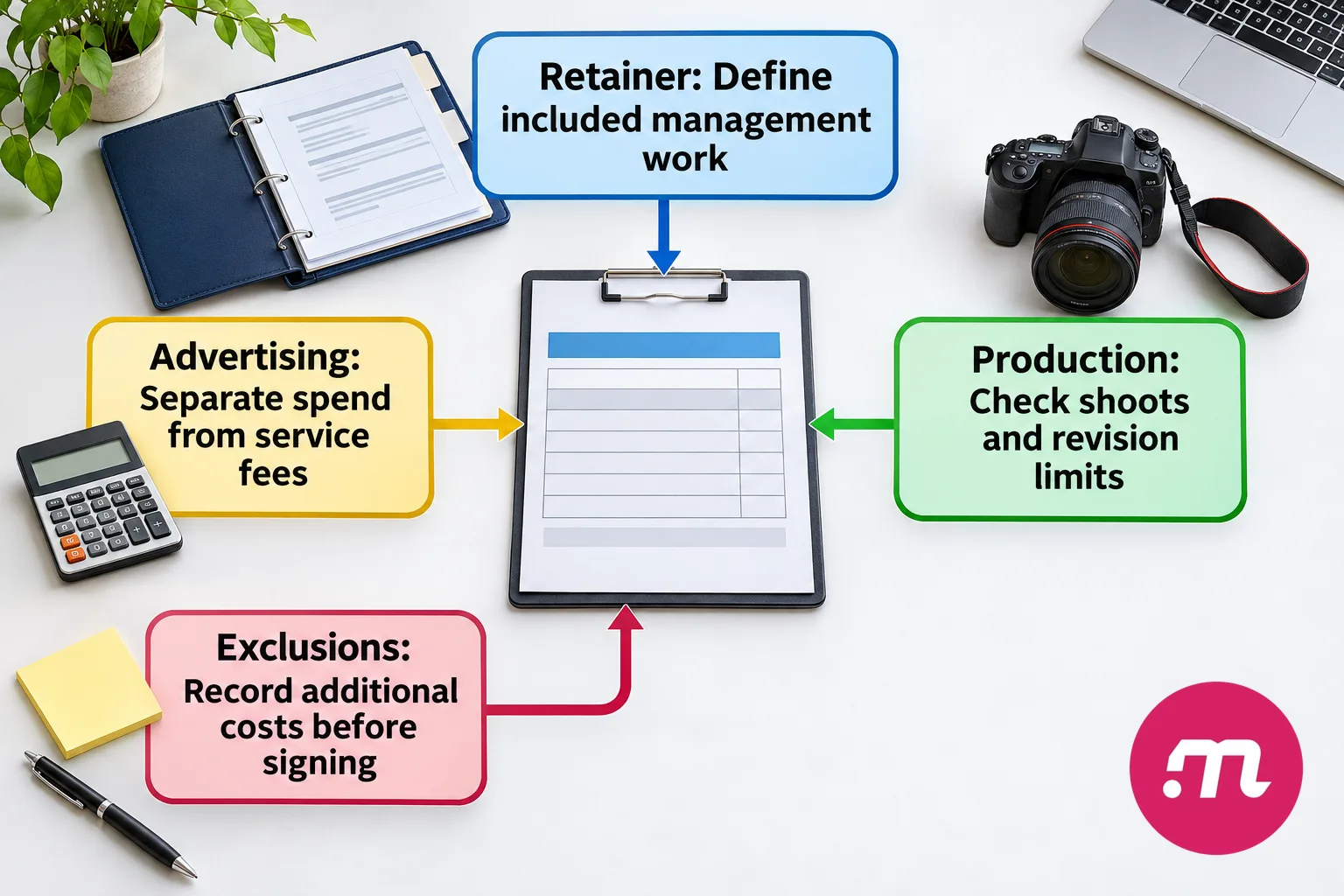
Separate strategy and management from shoots, creators, software and advertising. Confirm who supplies footage, how revisions work and whether travel or special production changes the fee. Ask whether a stated monthly rate depends on a longer payment commitment.
We would send the same brief to every shortlisted provider. Otherwise a lower quote may simply leave more work with your staff. A cheaper editing service can be appropriate when you can film internally, but it shouldn't be compared with a complete production team as though the scopes match.
Don't choose by promised revenue from the retainer alone. Product economics, availability and the buying process affect the outcome too. The company should explain what the proposed budget allows it to test.
Ten checks for a social media marketing company
Ask for evidence you can inspect
Use these questions in a discovery call and record the answers. We wouldn't turn the list into a score that pretends every weakness is equally important. Missing ownership of your accounts deserves more attention than a presentation you dislike.
- Can the team state your business outcome in plain language? A response about posting volume alone leaves the commercial purpose unresolved.
- Who is the intended buyer? Ask about suitability and service area, rather than accept a broad demographic description.
- What evidence supports the creative claim? The provider should distinguish approved product facts from ideas that still need verification.
- Who will do the work? Meet the people responsible for strategy and day-to-day delivery, rather than evaluate only the sales representative.
- What did the company actually contribute to a case study? Ask about the scope, reporting period and other changes during the programme.
- Can it show a useful content brief? Look for the buyer question, supporting material and next action.
- How do approval and correction work? Ask what happens when a scheduled offer changes or a claim needs fixing.
- Who owns the response to an interested customer? A message count is not useful if nobody handles the conversation.
- What will the report help you decide? Ask the team to explain a disappointing result and the next test it would choose.
- What do you receive at handover? Confirm access, working records and the assets covered by the agreement before work begins.
For a reference conversation, ask the previous client what the company owned, how approvals worked and whether the people stayed consistent. Get permission for that introduction. A useful reference can describe a difficult delivery week and how the team handled it. Praise without a clear scope tells you less.
Notice evasive answers
Be cautious when a company avoids discussing its actual work, relies on guaranteed sales claims or refuses to explain cost exclusions. Ask follow-up questions before concluding that a badge, review or recommendation settles suitability.
Reviews and referrals can help you find candidates. They don't replace checking whether the proposed team can handle your business. We'd ask for a relevant example with its limits explained. An impressive revenue figure needs context before you can judge it.
Don't demand confidential client data as proof. A provider can explain its process and share authorised evidence without exposing another customer's private information.
Ask for a working plan at the start
Use a short brief you can challenge
The early social media marketing plan should record the objective, buyer and buying hesitation, followed by channel roles and proposed content. It should also list missing information and the decisions that depend on it. We wouldn't expect certainty about every creative idea before the account has been reviewed.
Mailchimp's planning guide connects goals, audience, an account audit, content choices and performance review. For a company-selection exercise, ask the provider to turn those components into specific assignments for your business.
Check a proposed example end to end
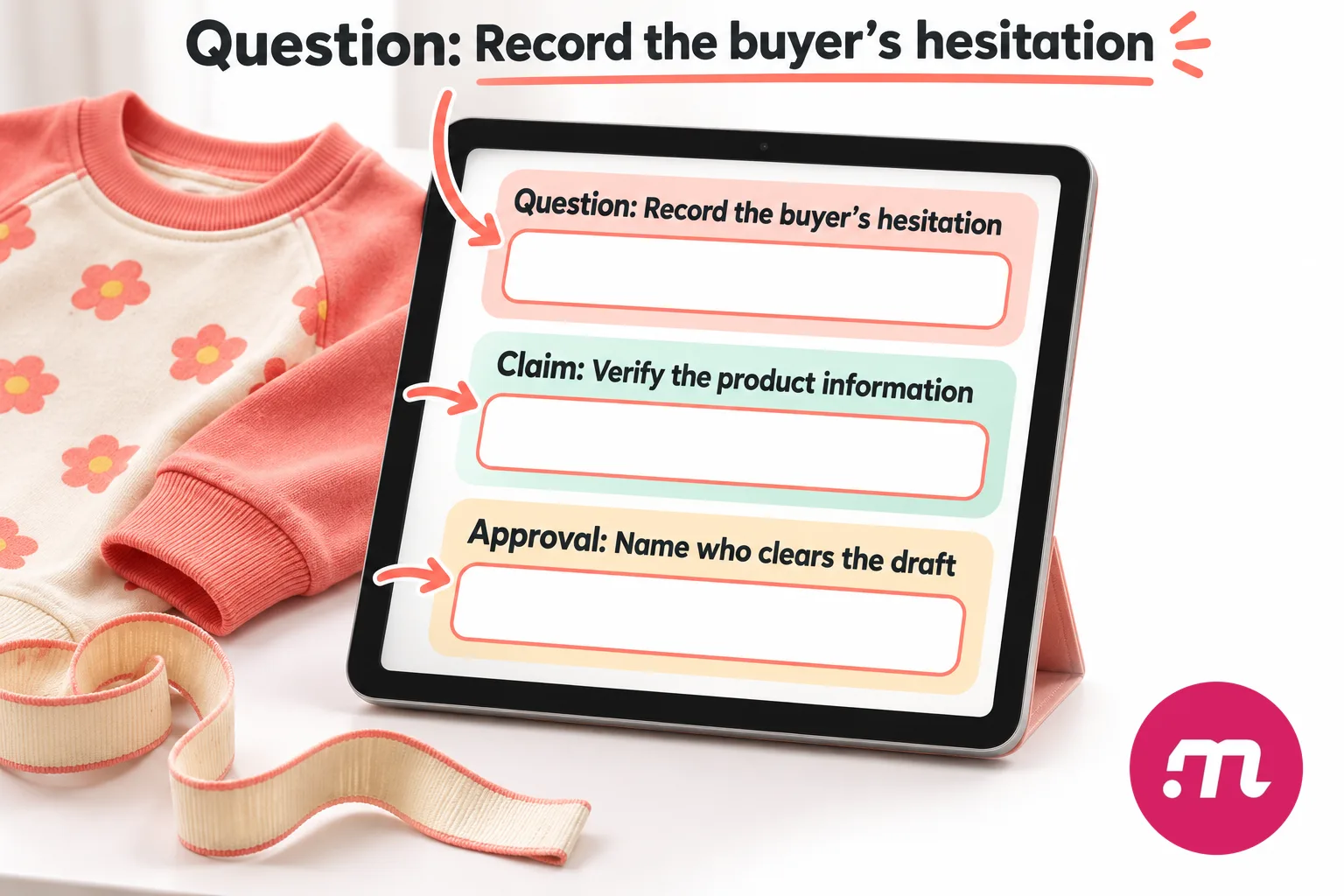
For an illustrative kidswear campaign, the buying hesitation could concern choosing a size. The brief might call for a measurement demonstration, accurate product information and a prepared response to fit questions. That is a proposed plan, not a claimed client result.
The calendar should name the owner and approver for that work. Test the product destination and enquiry route before scheduling. If the question remains unanswered after the click, the plan hasn't completed its job.
Our guide to building a social media strategy explains the choices behind a useful calendar. We prefer a smaller set of clear tests to a full month of generic content that nobody can defend.
Ask how feedback is recorded. Zoho Social's approval documentation describes roles and approval workflows, including publishers who submit drafts for approval. The tool is optional; explicit responsibility isn't.
At the first working review, ask the team to demonstrate one complete assignment. Open the brief, inspect the approved claim and follow the destination on a phone. Send a test enquiry and check who receives it. Record anything missing, assign an owner and agree when to review the correction. Don't fill the calendar around unresolved product facts just to appear busy.
Also agree what counts as a revision. Correcting an inaccurate claim is different from requesting a new shoot after approving the concept. A written boundary protects your budget and the team's capacity. We'd settle it before production starts.
Decide whether you need a company or a specialist
Match the model to the missing work
An internal hire can be close to daily product information and customer questions. A freelancer can supply a particular skill such as editing. A company can coordinate several roles. Each option still needs direction and a business contact who can approve accurate claims.
| Option | Useful fit | Responsibility to check |
|---|---|---|
| Internal hire | Ongoing work needs daily product access | Who supplies strategy and specialist support? |
| Freelancer | A defined production or execution gap | Who coordinates the rest of the plan? |
| Company | Several tasks need coordinated delivery | Who actually owns each task and the outcome review? |
Preserve the work you already do well
If your team can film useful product footage, you may need editing and planning support rather than another shoot crew. If nobody owns the commercial brief, hiring an editor won't resolve that gap. We wouldn't buy a larger package simply to avoid deciding what help is missing.
Marketing through social media also depends on operations. The person who knows stock or service availability must be reachable by the production team. Even a capable external company cannot correct information it hasn't been given.
Judge the report by the decisions it supports
Connect attention with suitable customer actions
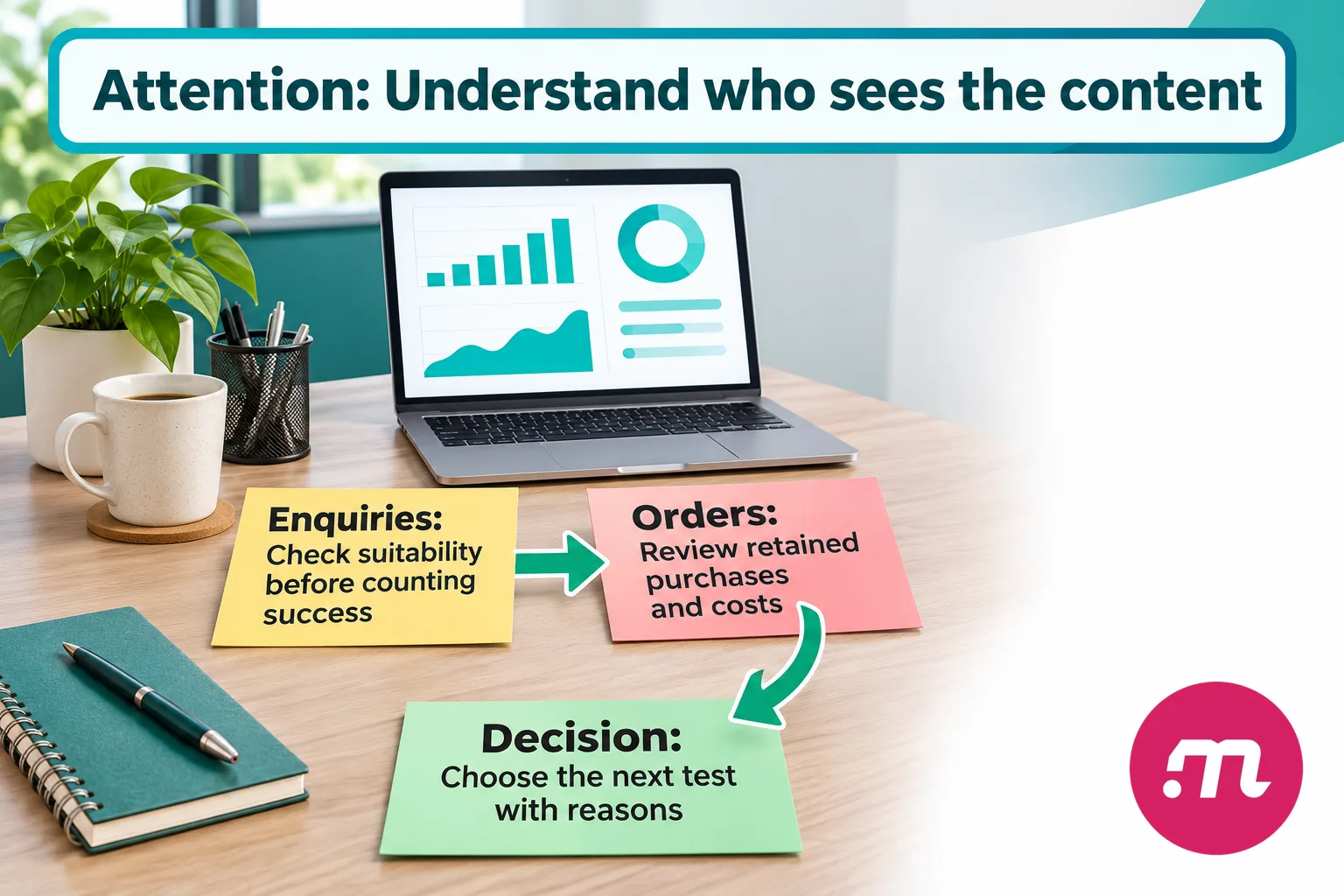
Reach and viewing behaviour help explain attention. Relevant product visits, qualified enquiries and retained orders help explain the business response. Establish the definitions before launch. A cheap enquiry outside your service area shouldn't count as a successful sales opportunity.
Google's campaign URL guidance explains source, medium and campaign parameters, with utm_content available to distinguish creative versions. Ask how the company keeps names consistent and tests the intended action. Test that path yourself.
Read client results in context
In Mommantum's Jalvayu Wellness case study, the documented programme reports monthly revenue moving from ₹1.1L to ₹5.8L and CAC from ₹920 to ₹310. Those are results from that business and programme, not a forecast or evidence that organic posts alone caused the change.
ROAS compares attributed revenue with advertising spend. It isn't profit after fulfilment, returns and all management costs. Ask the company to keep those distinctions visible instead of adding every platform's claimed conversions together.
Before a renewal discussion, review whether enquiries are suitable, whether the team answers them and what changed in stock or delivery. Then ask for the next test and its reason. We wouldn't accept repeated requests to wait without a diagnosis, but a considered purchase also shouldn't be judged by a quiet afternoon.
For example, if a demonstration brings relevant visits but few completed purchases, inspect the product page and delivery information before commissioning more videos. If visits barely arrive, review the creative promise and destination first. These are diagnostic questions, not guaranteed explanations. Change a clear variable, record the reason and use the next review to judge what you learned.
Conclusion: choose the team you can evaluate
Choose a company that can explain the buyer decision, show the work it proposes and make responsibility visible. Compare the complete scope and cost, then agree how progress will be reviewed. A credible process gives you something concrete to inspect when results disappoint.
Book a free strategy call through Mommantum and bring your current calendar, enquiry records and shortlisted scopes. We'd use them to identify the work your business needs before recommending a larger production commitment.
Frequently Asked Questions
Key takeaways and practical details on this topic.
Start with candidates whose relevant work you can inspect, then meet the proposed delivery team. Ask what each company owned in its case studies and how it handled approvals or disappointing results. We wouldn't treat a directory position as proof of suitability. Check references with permission, compare complete scopes and confirm who owns your accounts before signing.
A firm usually coordinates agreed parts of research, planning, content production, publishing and reporting. Community replies and paid advertising may be separate services. In India, ask about language support, service areas and the handoff to WhatsApp or checkout. We'd put each responsibility in writing because the phrase social media management can hide very different scopes.
Costs depend on the people and production included. One published provider lists monthly examples from ₹12,000 to ₹55,000, with ad spend separate and GST extra. That isn't a national average. We would compare the same brief across providers and check filming, revisions, creators and software before deciding whether a quote fits your budget.
Start with a business objective and the buyer question preventing action. Choose channels you can support, define the content needed and assign production, approval and reply owners. Then test the destination and decide how to review results. We'd use a small, clear working brief before filling a calendar with ideas that have no agreed purpose.
Choose one customer problem you understand and one channel you can maintain. Gather accurate product information, answer that problem in useful content and check the next step on a phone. We wouldn't start by buying every tool. Learn from customer questions and relevant responses before increasing the amount of production or adding another platform.
Choose by the buyer's behaviour and the work you can supply. A product demonstration, a searchable explanation and a professional discussion require different content. Ask the proposed company to justify each channel and show the next customer action. We prefer fewer supported channels over a broad presence that leaves enquiries unanswered or repeats unsuitable content.
A freelancer can suit a defined gap when you already own the brief and coordination. A company may help when several roles need organised delivery. Neither removes your responsibility for accurate product information and approvals. We'd identify the missing work first, then compare the people proposed for it instead of buying the largest package available.
Agree what counts as a useful customer action before work starts. Use attention metrics to understand distribution, then examine suitable enquiries, product visits or retained orders. Keep campaign naming consistent and inspect the buying path. We wouldn't add every platform's claimed sales together or call ROAS profit, because attribution and business costs need separate interpretation.
Start by checking who can provide accurate sizing information, film products and answer customer questions. If your staff can do those tasks, outside planning or editing support may cover the gap. If coordination is also missing, compare company scopes. We'd test the enquiry and checkout route before committing to more content, since attention alone won't complete an order.
Ask each candidate to explain a buyer hesitation from your business and show how it would address it. Meet the people doing the work, inspect an authorised case study and request a complete scope. We would focus your time on those checks and the approval process. A polished sales deck doesn't establish who will take responsibility after the contract begins.
Bring your offer, customer questions and the destination where people currently buy or enquire. Explain what your staff can produce and who can approve claims. You don't need a finished strategy to start that discussion. We'd expect a useful company to identify missing inputs and explain its choices in plain language, rather than make you purchase a complicated tool stack first.
Possibly, but first separate the work your staff can reliably handle from the work you need supplied. Ask for a scope covering the brief, editing, approvals and reporting, with filming responsibilities explicit. We'd compare that with a fuller package using the same objective. Paying for another shoot crew makes little sense if your existing footage already answers the buyer's question.
Ready to implement this for your brand?
Connect with our Jaipur growth studio to turn these strategies into revenue for your D2C or ecommerce business.