Social Media Content Calendar: Build One in 2026 (Free Template)
Build a planning-only calendar with a free copyable template. Turn customer questions into briefs, make approvals clear and add scheduling when it helps.
Introduction
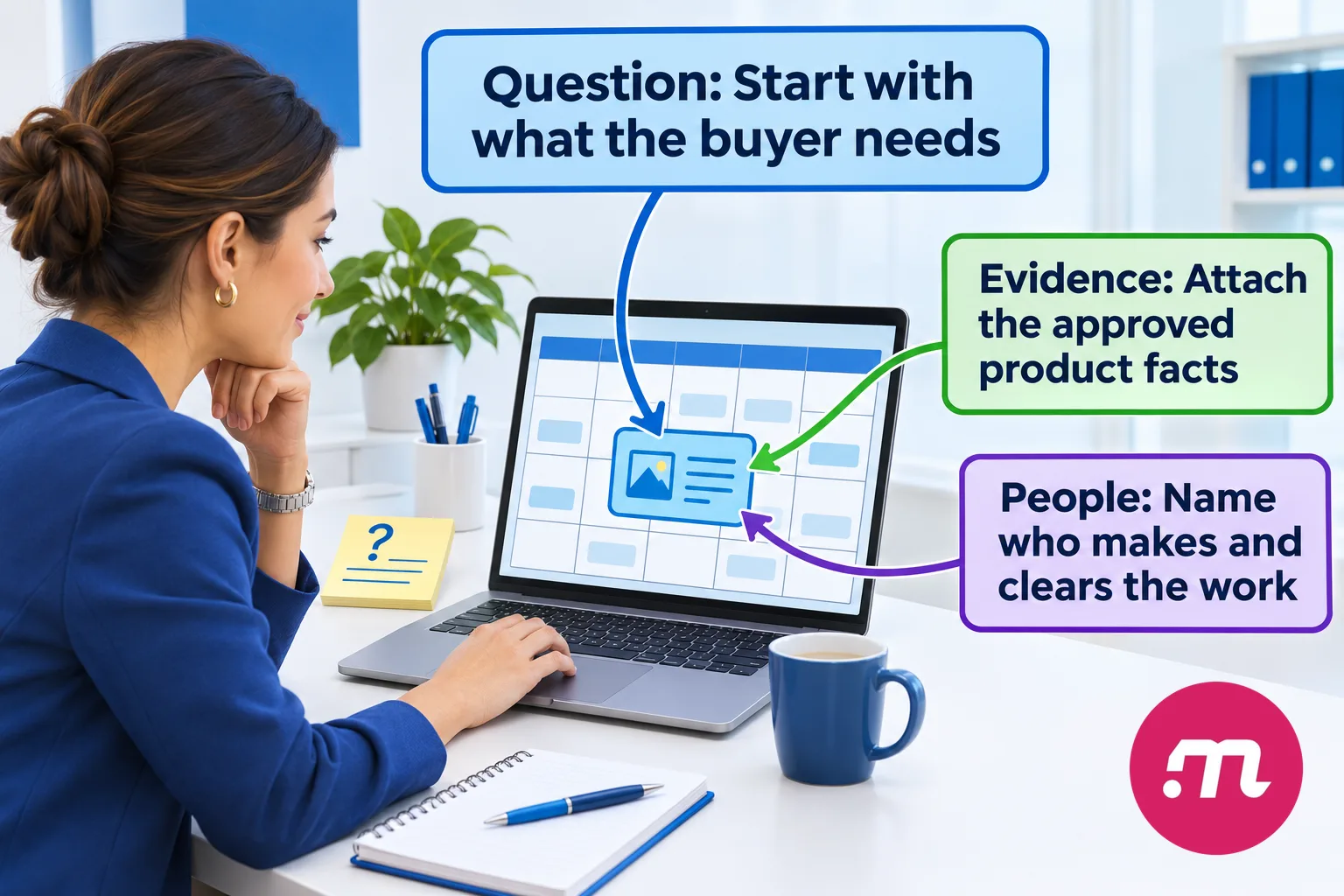
A social media content calendar should make the next assignment obvious. If you still have to search messages to find the approved caption or ask who is supplying the footage, the calendar is missing information. The missing brief or approval still needs someone to finish it.
We'd build a simple planning record first, with the buyer question and evidence attached to each draft. Then test how the work moves through approval and replies. The free template and worked example below can live in a document or planner; you don't need automatic publishing to make them useful.
Table of Contents
- 1. Introduction
- 2. Define what the social media content calendar must do
- 3. Choose a format your team can maintain
- 4. Build your free template around the decisions
- 5. Find content pillars and fill a working batch
- 6. Add occasions and reserve space for new questions
- 7. Clear approval before connecting the publishing queue
- 8. Review the social media content calendar as a system
- 9. Conclusion: make each assignment clear before expanding
- 10. FAQs
Define what the social media content calendar must do
Keep strategy visible inside the assignment
A content calendar for social media records planned work, responsibility and publication timing. It should connect each assignment to a customer question and an intended action. The strategic choices happen before the calendar is full.
Choose the business response that matters. A service business may need suitable appointment enquiries; a retailer may need buyers to understand product suitability before ordering. The calendar should tell your creator what the explanation needs to achieve.
We wouldn't approve a topic merely because it belongs to a popular format. A video is useful when motion helps explain something. A clear comparison may be better when the customer is choosing between options.
Allow planning without automatic scheduling
A Reddit contributor working across several roles asked specifically for a free visual planner, not another scheduling service. That is a legitimate need. You can organise ideas and approvals without connecting social accounts to a new platform.
Our social media marketing service treats planning and delivery as connected responsibilities. We'd solve the planning gap first when drafts are scattered. A publishing queue can come later if it removes a task you actually need automated.
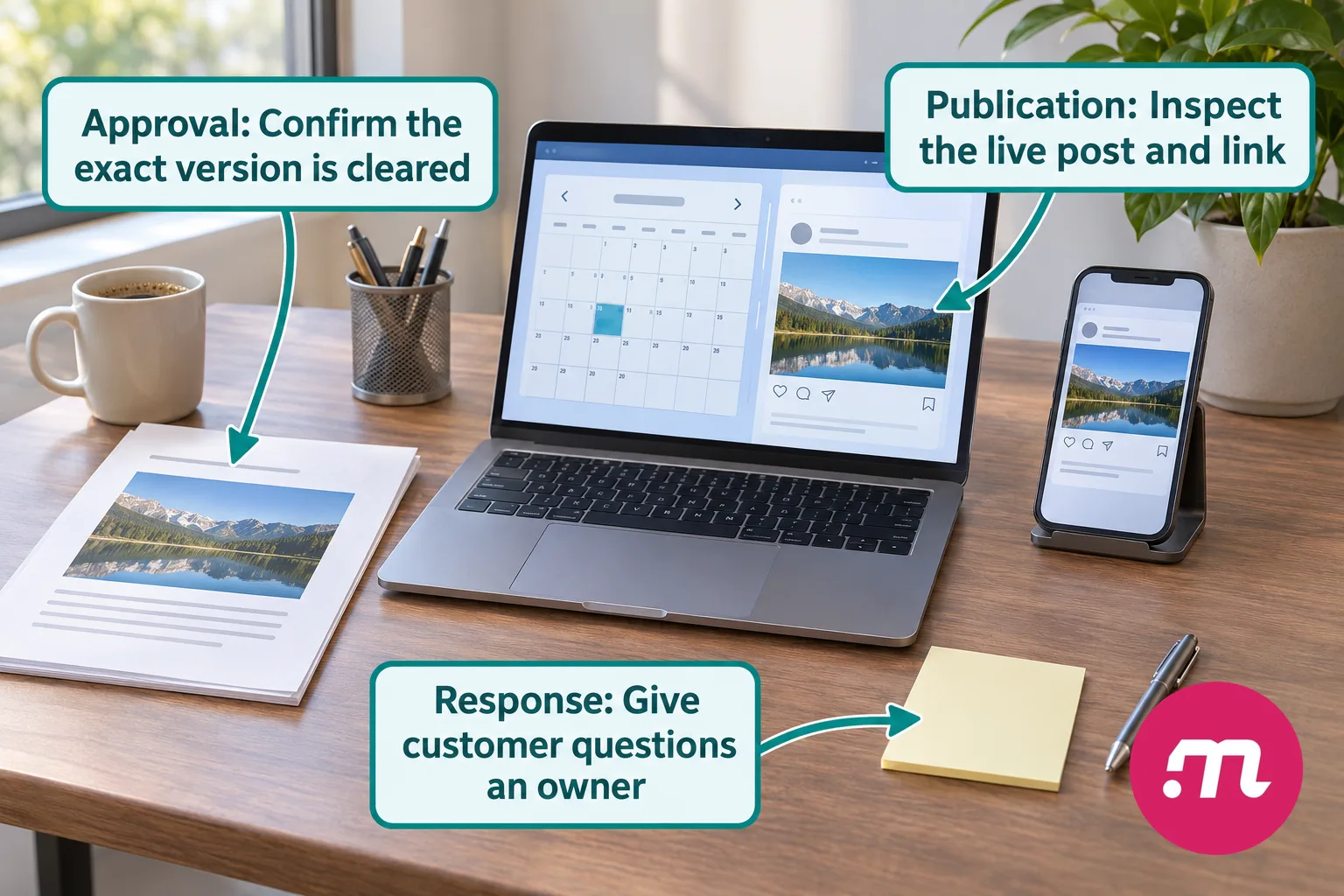
Keep the boundaries clear: a planned date is an intention, an approval clears a particular version, and a published status records a result somebody checked.
Choose a format your team can maintain
Step 1: match the tool to the working problem
Use a document or spreadsheet when you mainly need a shared list of assignments. Use a database when linked briefs and different views help the team. Consider social media scheduling software when approved content needs a publishing queue.
| Format | Good starting point for | Responsibility it doesn't remove |
|---|---|---|
| Document table | A small batch with simple review | Keeping the approved version clear |
| Spreadsheet | Filtering assignments by status or owner | Checking the facts behind each row |
| Notion database | Dated cards connected with detailed briefs | Maintaining the properties accurately |
| Publishing tool | Queued delivery to supported accounts | Verifying the live result and handling replies |
Set up a useful calendar view
Notion's calendar guidance says the database needs a Date property. To add the view to an existing database, use the plus beside the current view and choose Calendar. Its layout settings also support a weekly view.
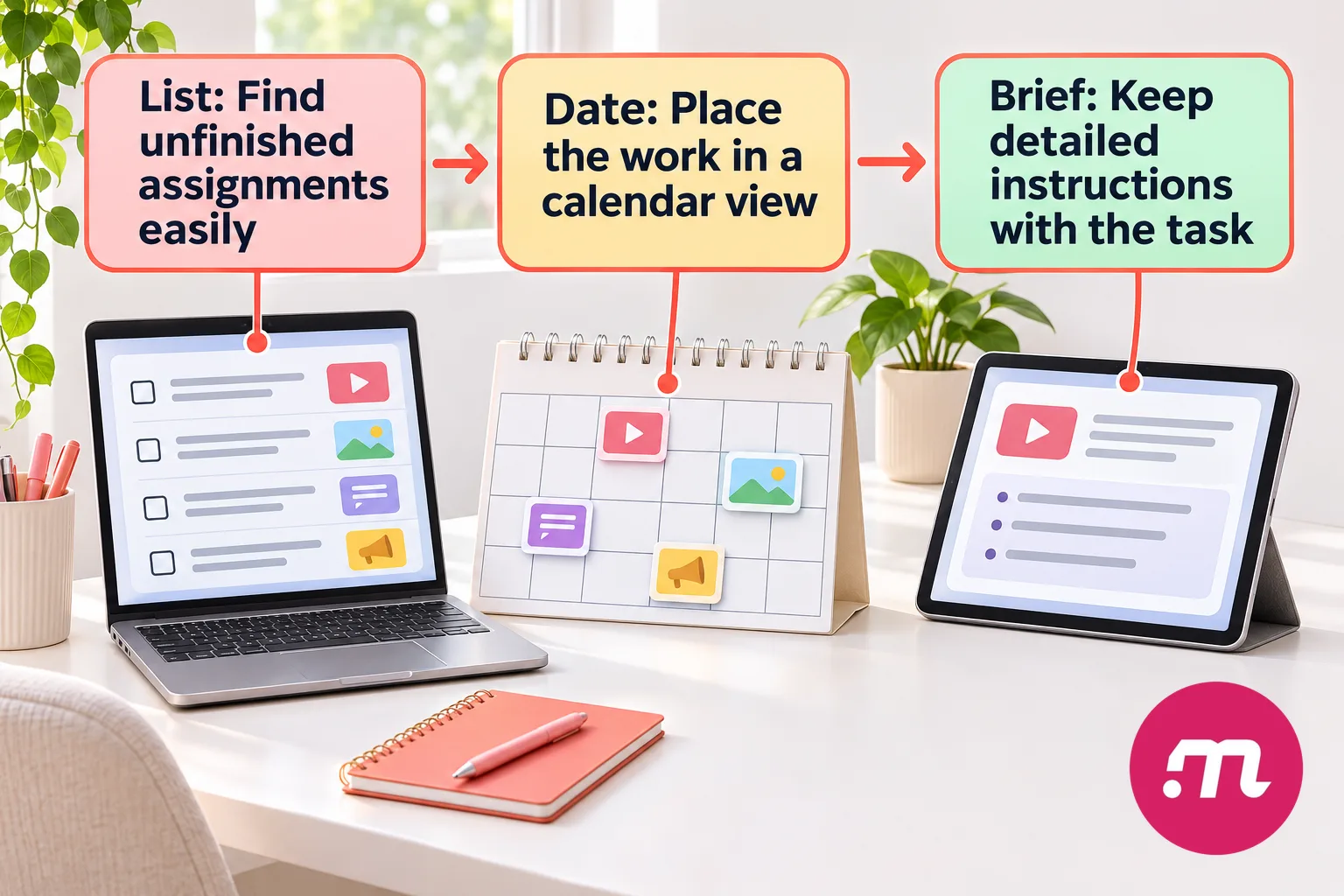
We'd show status and owner on the card, with the full brief available when you open it. Don't make every detail visible on the monthly grid if the result becomes hard to read.
Keep a list view for unfinished work too. A draft with no publication date still needs attention, and moving cards between dates doesn't resolve a missing product fact.
Build your free template around the decisions
Step 2: copy these fields into your planner
This social media calendar template is included in the article. Copy the table into your working document and replace the prompts with actual assignments. Each row should represent work somebody can produce and review.
| Field | What belongs there |
|---|---|
| Assignment and pillar | A clear task and its reusable topic group |
| Buyer question | The wording from an enquiry or sales conversation |
| Evidence | Approved facts and material the creator must use |
| Format and channel | What you will make and the intended account |
| Draft version | The exact creative and caption being reviewed |
| People | Producer, factual approver and reply owner |
| Slot | Publication date, time and explicit time zone |
| Status | Idea, drafting, review, approved, scheduled or published |
| Next action | The destination and what the buyer can do there |
| Review note | The observed response and next decision |
Make status mean the same thing to everyone
Use drafting while production is underway and review when the approver has the complete version. Mark approved only after that person clears it. Scheduled and published stay separate because a queued post can fail to appear.
We'd define these terms before importing a month of work. If an editor uses approved to mean ready for review, the tool can make a misunderstanding look official.
Remove fields nobody uses, but keep the evidence and ownership visible. Start with this record, then remove detail that adds maintenance without helping anyone decide what to do next.
Find content pillars and fill a working batch
Step 3: collect the questions before choosing dates
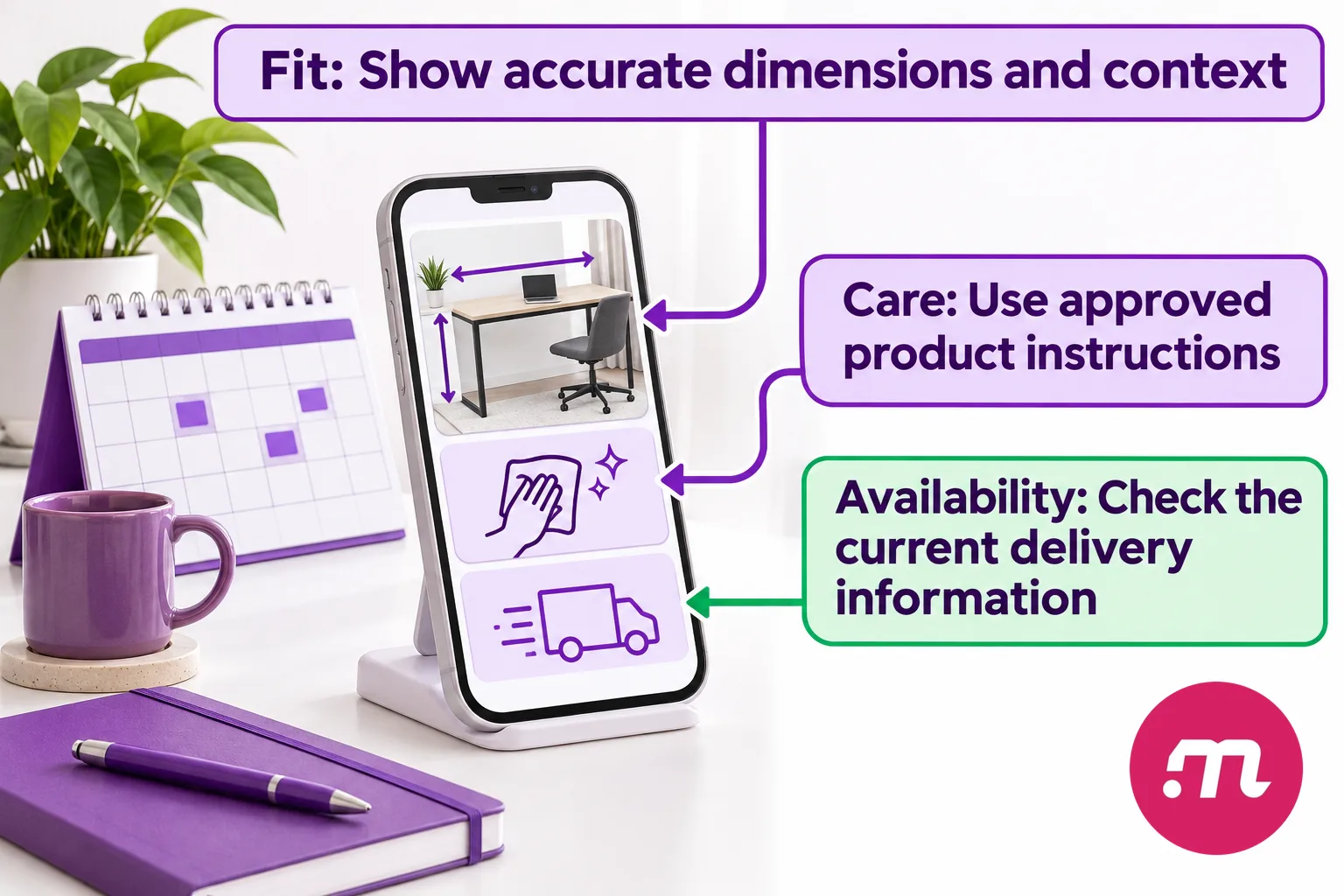
Read recent enquiries and ask the people who answer customers what keeps coming up. Group related questions into reusable pillars. For an illustrative desk retailer, size and fit, everyday use and care could each produce useful assignments.
Use the pillar to group questions the creator can actually answer. Choose it because customers need the information. We'd avoid filling a video quota and then looking for products to fit it.
Map each question to the buying decision. Someone recognising a workspace problem may need a demonstration. Someone shortlisting desks may need verified dimensions and a factual comparison. Both can belong in the same pillar without repeating the same post.
Step 4: use this worked example
| Assignment | Evidence needed | Next action and owner |
|---|---|---|
| Show whether the desk fits a small room | Actual dimensions and a correctly scaled demonstration | Matching product page; product support handles fit questions |
| Explain the care routine | Approved care instructions | Relevant explanation; support checks any follow-up advice |
| Clarify delivery availability | Current serviceable locations and terms | Order route; operations confirms the promise |
This is a proposed example, not a reported client outcome. The care assignment may be prepared early. Delivery information needs a fresh check nearer publication. Record that difference so the approver knows what could change.
We'd test this batch before copying the structure across the month. If the creator still has to guess what to show, improve the brief rather than add another date.
Add occasions and reserve space for new questions
Use a social media calendar 2026 selectively
The Government of India's Pr. CCA Delhi 2026 holiday list includes Diwali on 8 November, Guru Nanak's Birthday on 24 November and Christmas Day on 25 December. It states a central-government office context. These dates help planning but don't establish your operating hours or courier cutoff.
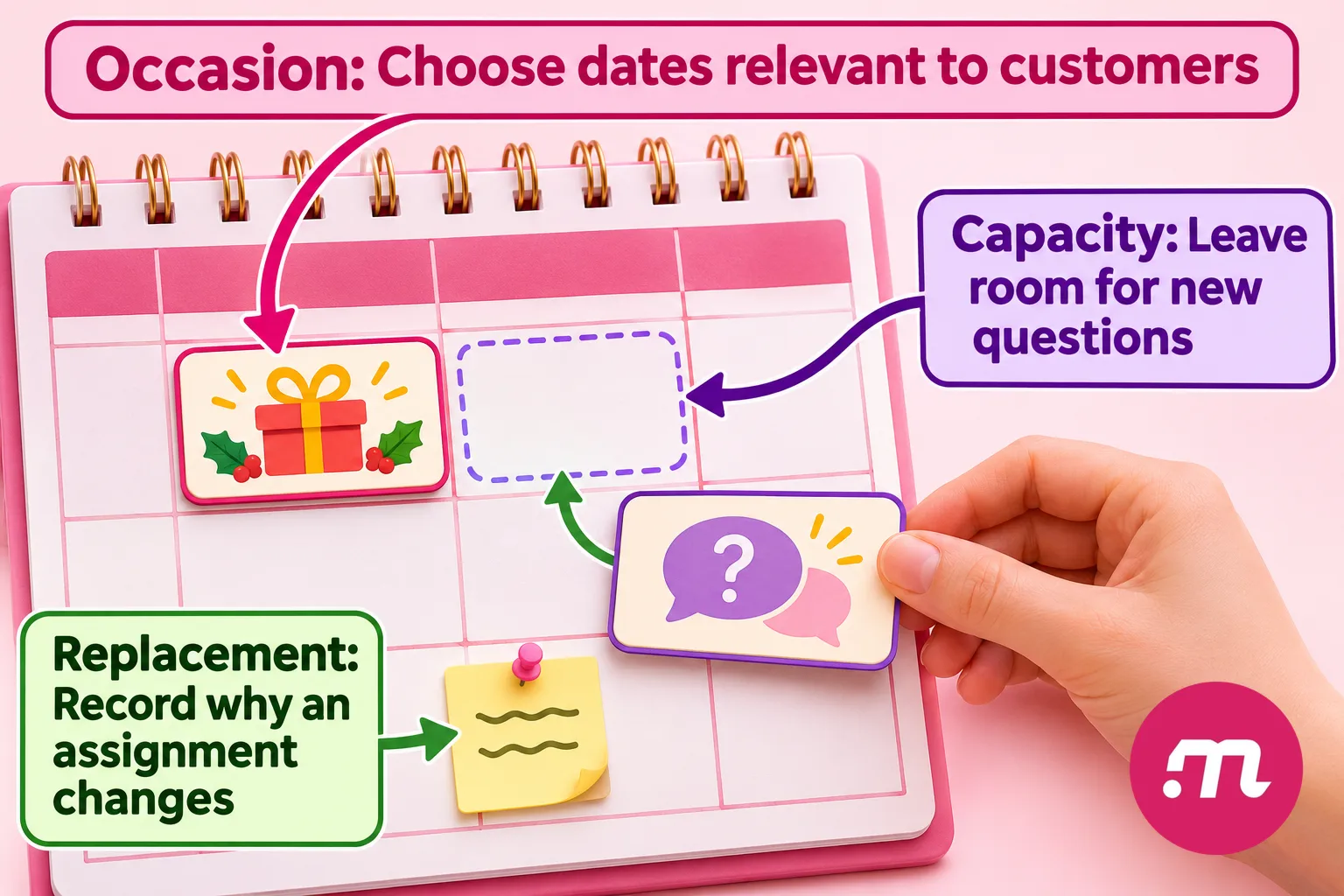
Choose occasions that matter to your audience and offer. A greeting doesn't need an unrelated promotion. For a commercial message, confirm availability and the next step before scheduling.
Check language with someone who understands the local context. A regional-language post needs supported replies, not just translated copy. We'd rather narrow the message than attract questions nobody can answer accurately.
Keep buffer capacity instead of a rigid grid
Leave some production and review capacity uncommitted. A new customer question, changed offer or urgent correction may deserve space. There is no universal percentage that fits every team's workload.
The calendar-is-dead debate challenges rigid planning. It doesn't prove that preparation is obsolete or validate the performance claims made in the thread. We would keep the brief and approval process while allowing priorities to change.
When a timely idea qualifies, record what it replaces and why. Keep the displaced evergreen draft if it remains useful. A flexible calendar changes the order of work without making responsibility disappear.
Clear approval before connecting the publishing queue
Step 5: approve the version and its destination
The approver should see the creative, caption and destination together. A changed product image or offer can invalidate an earlier approval. Keep the version under review identifiable and ask for a fresh check when needed.
Zoho Social's approval documentation describes limited publishers who submit drafts rather than schedule or publish directly. That permission boundary can help a team even when the planning record lives elsewhere.
We'd confirm who can stop a scheduled message if stock changes. The person discovering the problem needs a reliable route to someone with the required permission.
Step 6: test the actual publishing workflow
Open the destination on a phone, verify the time zone and confirm the scheduled draft matches the approved version. After publication, inspect the live post. If completion is manual for the chosen account or format, assign that step explicitly.
For a small queue, Buffer's limit documentation lists ten scheduled posts per channel on its Free plan, up to thirty total across three channels. This is capacity at a time, not a monthly allowance. The limit was checked on 8 November 2026.
We'd test required formats and approval needs before paying for more capacity. A larger queue doesn't remove a factual bottleneck. Keep the planning-only version when that is all your team needs.
Review the social media content calendar as a system
Inspect missed handoffs and customer responses
At Mommantum, we'd use a weekly working review to inspect delayed drafts, failed publications and unanswered questions. A monthly outcome review can consider the broader direction. That is a proposed working rhythm, not a promise of results within a month.
If dimensions repeatedly arrive late, improve the product-information handoff before filming. If replies sit unanswered, change ownership before increasing reach. The next useful action may be operational rather than another creative format.
Review the intended customer action separately from attention. Relevant visits or suitable enquiries may matter more than a large engagement total for a particular assignment. Educational content can support a later choice without producing an immediate order.
Run this readiness check before expanding the next batch:
- Ask the creator to explain the buyer question without opening a separate chat.
- Confirm the factual evidence is present and the person approving it is named.
- Open the draft version the calendar describes and compare its destination.
- Check whether the intended slot leaves enough time for the actual review.
- Identify who can pause incorrect work and who receives the customer's response.
If a check fails, improve that part of the record before making more assignments. For example, feedback such as make it more premium doesn't tell a designer which information is missing. Ask the reviewer to name the buyer concern or factual problem. That makes the revision actionable and reduces the chance of approving a different version by mistake.
Keep a correction note when a live post is changed. The note should explain what was wrong and what was replaced, so a later reviewer doesn't interpret the amended result as the original plan. This is useful working context, not an extra performance report.
Use AI for options, then verify them
Give an assistant approved facts and real buyer questions, then ask for possible angles. Review every suggestion against the actual offer. Remove invented testimonials, unsupported results and generic topics that don't answer a customer need.
We wouldn't auto-fill a year and call it approved. AI can help draft possibilities; your business still owns the facts and delivery promise. Keep the reason for each selected idea in the brief so the next person can understand it.
Expand only when the current batch can be produced, approved and answered. A free planner still consumes staff time, and adding a tool subscription won't create that capacity.
Conclusion: make each assignment clear before expanding
Start with a buyer question and put the evidence, draft version and responsible people in the same record. Test the template with a small batch, then add scheduling when it solves a delivery task. Keep room to change the work when customer needs or business facts change.
Book a free strategy call through our social media marketing service. Bring your current planner and a draft that got stuck. We'd use them to identify the next practical fix.
Frequently Asked Questions
Key takeaways and practical details on this topic.
Create a social media calendar by choosing a customer question and intended action, then recording the evidence and draft needed. Add the account, time zone and responsible people before assigning the publication slot. We'd test a small batch first. Each assignment should also identify who approves the exact version and who answers questions after publication.
A content calendar should include the buyer question, evidence, draft version and intended next action. Record the producer, approver and reply owner, alongside the channel and publication slot. We'd keep status definitions consistent and distinguish scheduled from published. A date and caption alone don't establish whether the correct version was cleared or appeared live.
Use the content calendar tool your team can maintain accurately during normal work. A document or spreadsheet can cover a simple planning need, while a database can connect dated cards with detailed briefs. We'd add publishing software only when it solves delivery work. Test how the approver finds the current version before changing tools.
The best scheduler for a small business supports its actual accounts, formats and approval requirements at a manageable complete cost. We'd test an approved assignment before choosing a subscription. If the main problem is missing product facts or scattered feedback, solve that planning issue first; a larger publishing queue won't remove the delay.
A free social media planner can organise content without scheduling it automatically. Copy the template in this article into a document or spreadsheet and give each draft clear ownership. We'd start there when coordination is the main gap. You can add a publishing tool later while keeping somebody responsible for checking the live post and handling replies.
Plan social media content according to how stable its information is and how much preparation the work needs. Evergreen explanations can be ready early, while prices and delivery promises need later checks. We'd leave capacity for new questions and record replacements. A fixed monthly grid shouldn't force you to publish an offer that has become inaccurate.
A content calendar is useful in 2026 when it records decisions and can change with customer needs. Criticism of rigid grids doesn't prove that preparation is obsolete. We'd retain clear briefs and factual approvals while allowing justified replacements. A planned slot should help coordinate work, rather than prevent correcting a message that no longer fits.
Find content calendar ideas in repeated customer questions, buying hesitations and information needed to compare options. Group related questions into pillars, then choose the evidence and format for each assignment. We'd use AI for possible angles after supplying approved facts. The selected idea still needs a business purpose, factual review and a supported next action.
Plan your organisation's posts in a simple document with the current draft and next action visible. Use only the template fields that help you deliver or verify the work, and give review a clear owner. We'd avoid connecting another publishing platform when you mainly need a visual planning aid. Start with a batch you can maintain alongside your other responsibilities.
Test whether your client's creator and approver can find the exact draft, evidence and destination in the proposed calendar. Then check the actual account formats and publishing process if scheduling is required. We'd record any manual steps before paying. A tool fits only when your team can complete normal work without guessing who owns the next handoff.
Respond by separating stable assignments from messages that need a late factual check. Name who can stop unsuitable work, record the replacement and obtain approval for the revised version. We'd preserve the displaced evergreen draft when it remains useful. Flexibility should change priorities while keeping evidence and publishing responsibility visible to the team.
Start your visual planner with a buyer question, current draft and named owner, adding dates and approval status as the work develops. A document table can be enough for basic needs. We'd test the structure with a small batch before adding columns or moving platforms. The goal is to find the next task clearly, without creating another administrative job.
Ready to implement this for your brand?
Connect with our Jaipur growth studio to turn these strategies into revenue for your D2C or ecommerce business.