Social Media Advertising Software: How to Pick the Right One (2026)
Separate ad management from publishing tools. Compare software by your platform mix, recurring tasks and total cost before buying another dashboard.
Introduction
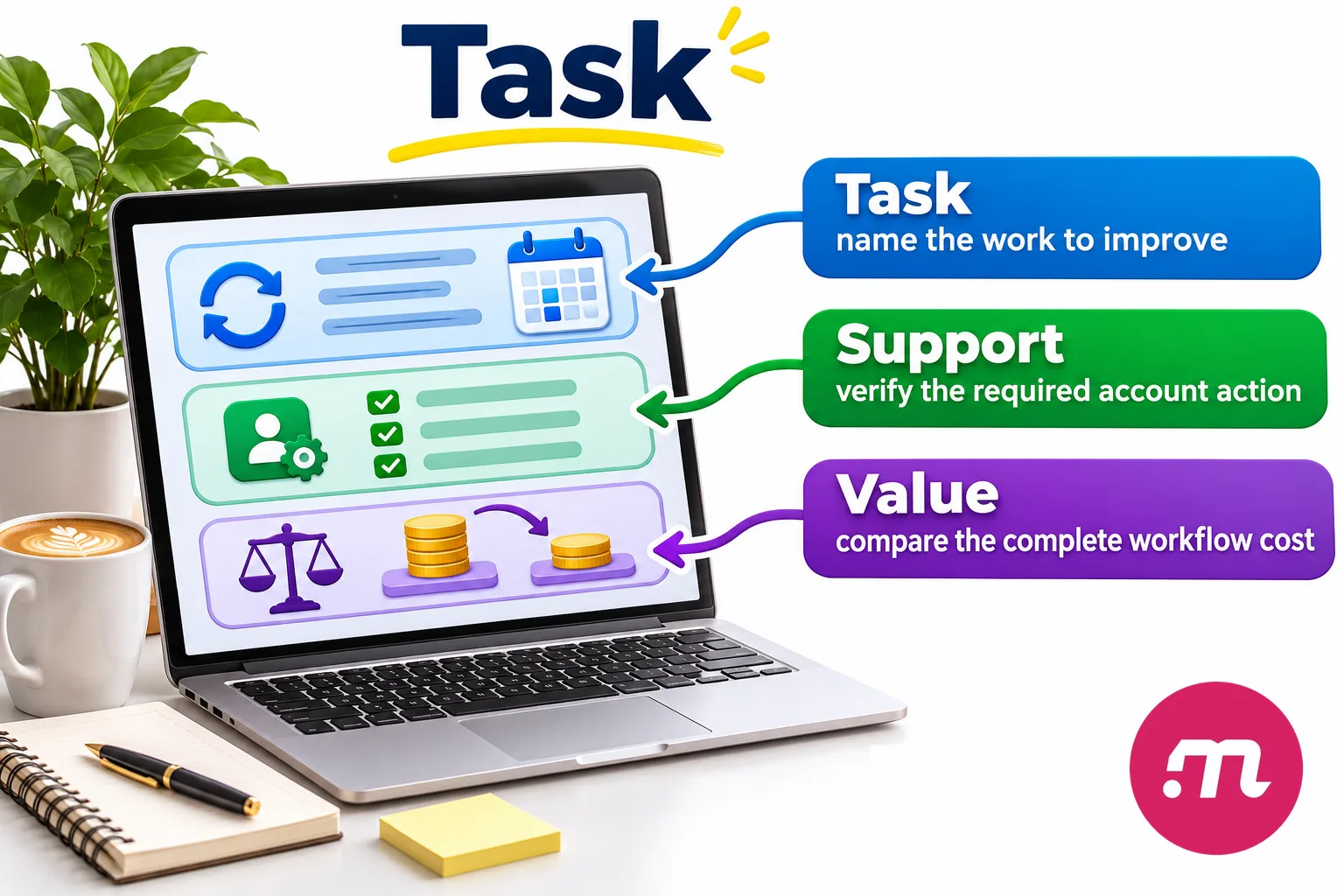
social media advertising software becomes expensive when it solves a problem your team doesn't have. A publishing calendar won't fix weak campaign decisions. An AI optimisation tool won't repair an offer nobody understands. Before buying another dashboard, name the recurring task you need to improve and the business result that task should support.
We'd start with the platform's own campaign tools, then add software when a specific limitation justifies it. A solo D2C founder, an agency handling many accounts and a brand coordinating creative across channels need different systems. This guide compares those jobs, explains the cost questions and gives you a practical trial process before you commit.
Table of Contents
- 1. Introduction
- 2. Separate social media advertising software by job
- 3. Write the strategy before the software brief
- 4. Let the platform mix shape your shortlist
- 5. Shortlist tools by the task they need to perform
- 6. Match social media advertising software to your budget
- 7. Test the tactics and automation you plan to use
- 8. Run a trial that supports a buying decision
- 9. Conclusion: buy the missing workflow
- 10. FAQs
Separate social media advertising software by job
Campaign control and publishing are different purchases
Ad management software helps teams work with paid campaigns: launching approved assets, reviewing performance or managing repeat actions. Publishing software organises organic posts, calendars and approvals. Some products cover parts of both, but the overlap doesn't make them interchangeable.
If your problem is late Instagram posts, test a publishing workflow. If your problem is reviewing campaign spend across client accounts, test a paid-media workflow. We wouldn't pay for an enterprise reporting suite merely because the team is tired of switching tabs.
Automation needs a defined decision
Distinguish a tool that reports an issue from one that can change a campaign. Then distinguish both from a tool that recommends a change somebody must execute elsewhere. Those differences affect daily workload and account control.
During a demo, ask the vendor to complete the exact action you need on a supported account type. Can it apply an approved change, or only display a recommendation? Can your team see what happened afterwards? We prefer a clear answer to a long capability list.
Keep creative production separate in the evaluation too. Generating an image is useful only if it answers the buyer's question, meets the placement requirements and uses a claim you can support. More variants aren't evidence that the campaign is better.
Write the strategy before the software brief
Connect the purchase to a commercial outcome
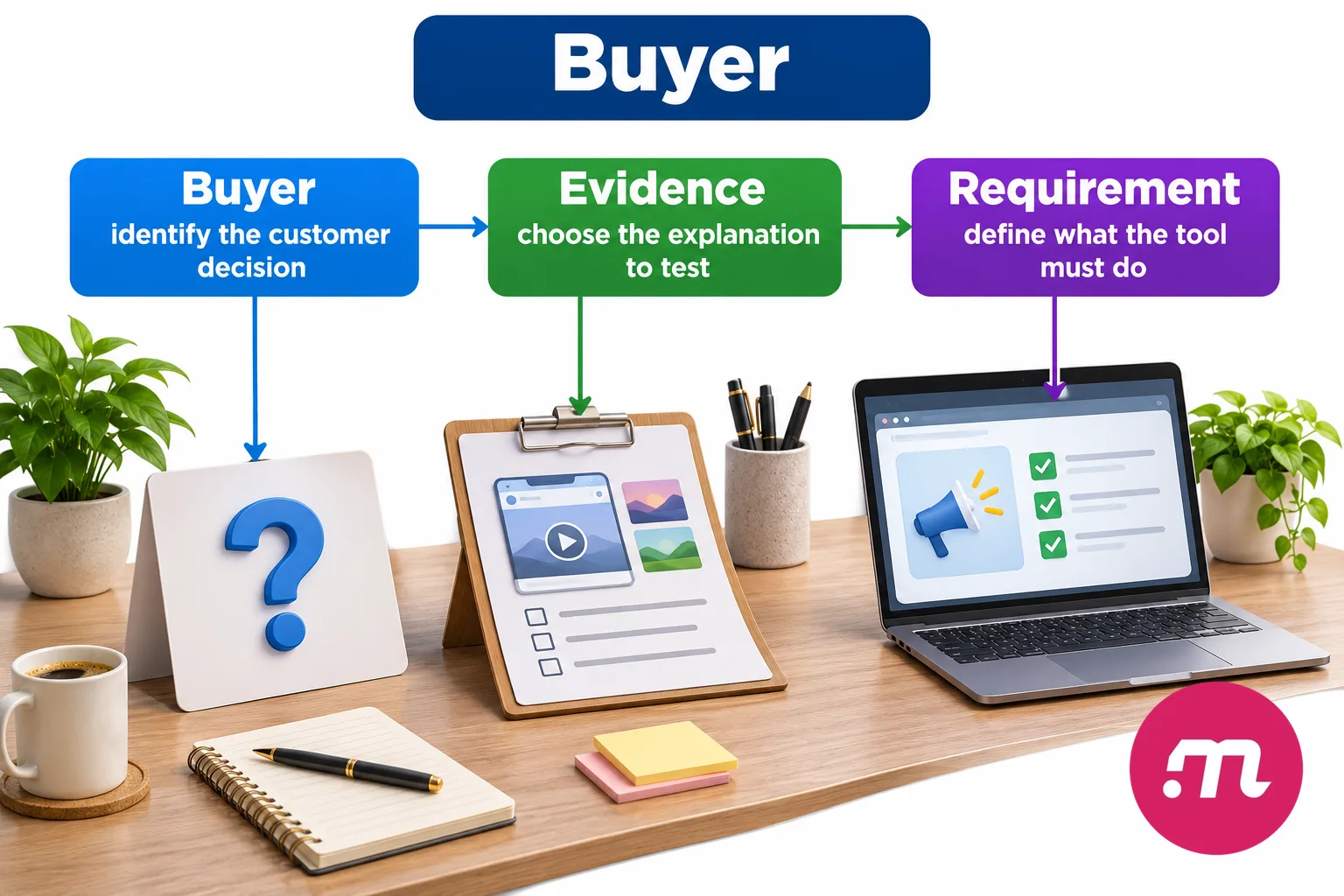
If you're still asking what is a social media strategy, begin with the customer and the decision you need to influence. Define the offer, the hesitation and the useful next action. The software should help execute those choices.
A D2C brand might need to compare creative concepts against retained purchases. A service business might need to distinguish suitable consultation requests from unserviceable enquiries. A dashboard that reports every submitted form as success can make a poor campaign look productive.
List the work that consumes time
Record the task, who does it, how often it happens and what goes wrong. Examples include rebuilding client reports, chasing creative approval or missing an account review. Then decide whether a better process could resolve the problem without a subscription.
Read our guide to building a social media strategy before choosing a tool around a favourite format. We would ask the team to write a short acceptance test for the purchase: what should become easier, and how will you know?
For example, a proposed clothing campaign could compare a fit demonstration with a material explanation. The software requirement might be preserving the creative names and comparing retained orders, not generating more images. This is an illustrative brief, not a client result. It makes the buying requirement specific enough for a vendor to demonstrate.
Don't make software responsible for choosing your proposition. If customers repeatedly ask whether the product suits them, improve the explanation first. Automation can distribute an unclear message faster while leaving the buying problem intact.
Let the platform mix shape your shortlist
Verify the exact account and campaign support
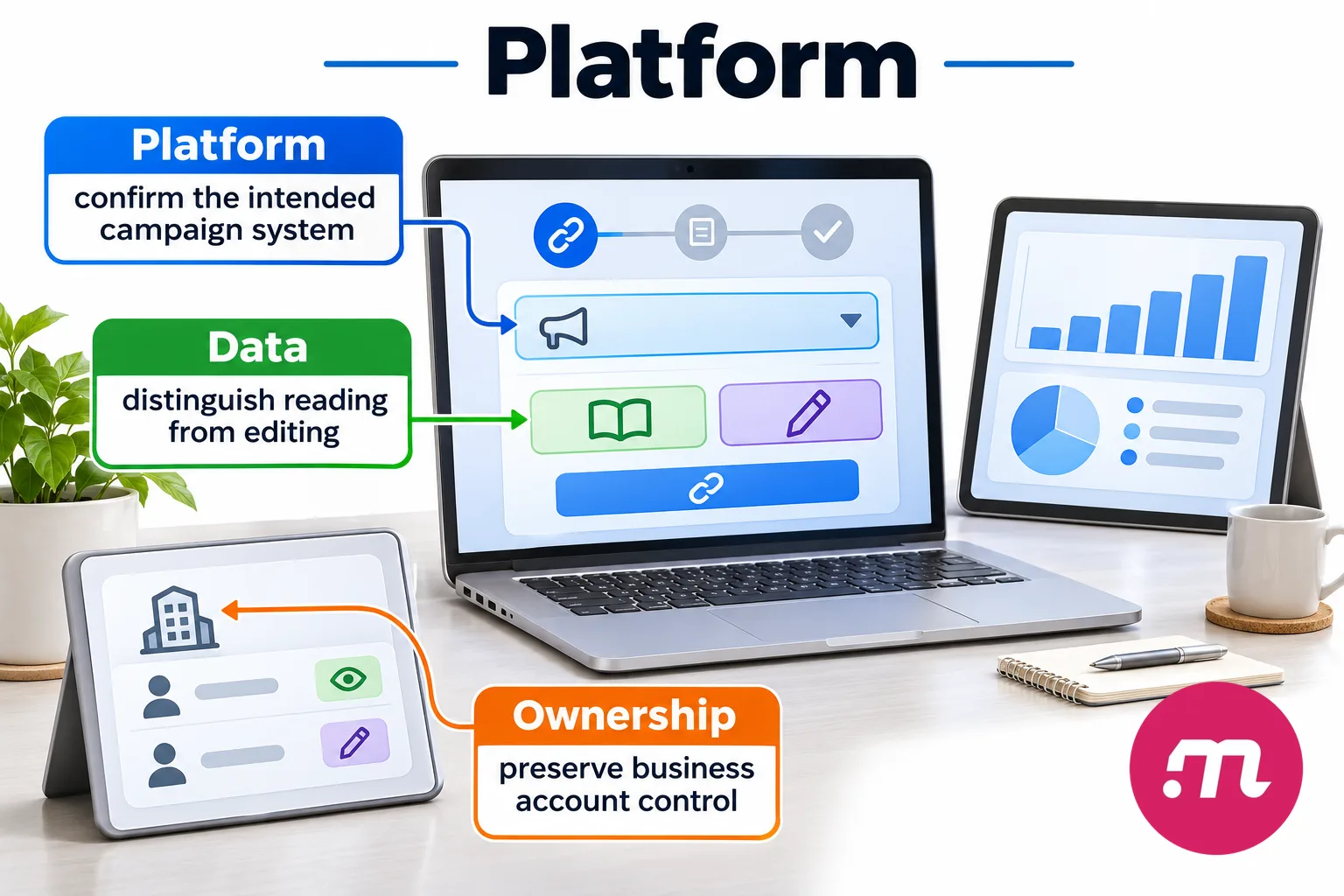
The best social media platforms for your business depend on buyer behaviour. Software selection follows that choice. Check whether a proposed product supports the channels, campaign types and account permissions you actually use.
For Facebook and Instagram campaigns, evaluate your existing Meta Ads Manager workflow before adding a third-party layer. For professional audiences, examine the LinkedIn campaign workflow you need. For niche communities, check the requirements of the relevant advertising platform. A generic claim of cross-channel support isn't enough.
Don't assume a paid-search tool is automatically the right social tool. Optmyzr's main site centres its search offering on Google Search, Shopping and Microsoft Ads. Ask which specific product and connector covers your intended paid-social task rather than relying on the brand name.
Separate data visibility from action permissions
A connector may read reports without supporting every campaign edit. Test both. Check what happens when an account connection expires and whether the team can tell that data has stopped updating.
We would keep business ownership of the advertising accounts and a documented route back to native tools. That helps the team continue work when a subscription ends or a connector fails. It also makes the trial easier to evaluate: you can compare the proposed workflow with the work you already know.
A short-form video plan needs production and approval support as well as distribution. Choose the creative process that fits your team rather than assuming that a media-buying dashboard will solve editing delays.
Shortlist tools by the task they need to perform
Use the category before the brand
The table below is a buyer's shortlist based on vendor documentation, not a hands-on performance ranking. We wouldn't claim that any product will lower CAC simply because its website describes AI optimisation.
| Option | Job to evaluate | When to consider it | Trial question |
|---|---|---|---|
| Native campaign tools | Direct campaign work on the chosen platform | Your current needs can be handled there | What task genuinely needs another layer? |
| Madgicx | Meta-focused ad management, automation and analytics | You have a defined repeat campaign task | Can it complete your required action with an understandable record? |
| Buffer | Organic planning and publishing | The bottleneck is maintaining an approved calendar | Does the selected plan support your accounts and approval needs? |
| Hootsuite | Publishing coordination and approval workflows | Several people need to coordinate content | Does the actual workflow remove manual chasing? |
| Smartly | Creative and media coordination across channels | Campaign complexity justifies a broader system | Can the team demonstrate your workflow and its total cost? |
Read the current plan, not an old listicle
Madgicx's pricing page lists automation, targeting, analytics and ad management, with a monthly-ad-spend selector. Its dynamic price display isn't a reliable static quotation. Request the actual amount for your account mix and check add-ons separately.
Smartly's platform overview describes creative, media and cross-platform coordination. We'd shortlist it when those handoffs are a real operational problem. A smaller team should still ask whether implementation effort outweighs the work removed.
Hootsuite's publishing documentation describes scheduling and approval workflows. Treat that as a reason to test those tasks, rather than assume every paid-media action is included in whichever plan you choose.
Match social media advertising software to your budget
Start without an extra paid layer when possible
For a small advertiser, the first comparison is the existing native workflow against the proposed subscription. Include the time you would spend learning and maintaining the new system. We wouldn't divert money from useful creative production just to obtain another report.
For organic publishing, Buffer's current pricing page lists a free plan for up to three channels with ten scheduled posts per channel. That can support a limited publishing trial. It doesn't establish that Buffer replaces an advertising manager.
For growing teams, price the whole workflow
Ask for the total in INR for the channels, accounts and users you will actually connect. Confirm billing frequency and whether the displayed monthly rate requires annual payment. Include applicable taxes, currency conversion and paid add-ons when comparing the final cost.
A spend-linked subscription needs another check: what happens to the fee when advertising spend grows? A seat-based subscription needs a clear count of people who require access. We would evaluate the expected operating setup, rather than compare each vendor's cheapest headline plan.
Write the comparison in your own operating terms: the complete subscription amount, setup work and the reporting effort that remains. Ask for the cost at renewal as well as the introductory offer. A temporary discount doesn't tell you whether the tool remains worthwhile after the first billing period.
If the business case depends on time saved, verify that the time is actually removed. Moving work from an account manager to a designer doesn't necessarily reduce the team's total effort. We would also separate claimed advertising gains from observed workflow savings; neither should be counted twice to justify the purchase.
For complex teams, include implementation
An enterprise quotation should explain onboarding, data connections and the work your own team must supply. Request a realistic implementation plan and an exit process. The commercial question is whether the system removes enough recurring work to justify its full cost.
Don't invent a universal software-to-ad-spend percentage. A reporting-heavy agency and a small ecommerce team can have different needs at similar spend. We would tie the allowance to a measured task and a usable result.
Test the tactics and automation you plan to use
Make creative tests answer a question
Social media marketing tactics need a clear comparison. If you want to test a demonstration against a founder explanation, keep the offer and destination consistent enough to interpret the result. Ask whether the tool can organise those variants and preserve their identity in reporting.
Don't call every collection of different ads a controlled experiment. Campaign delivery can distribute attention unevenly. Use the platform's appropriate testing method when you need a controlled comparison, and verify that the third-party tool supports that workflow.
Test an exception, not only the ideal case
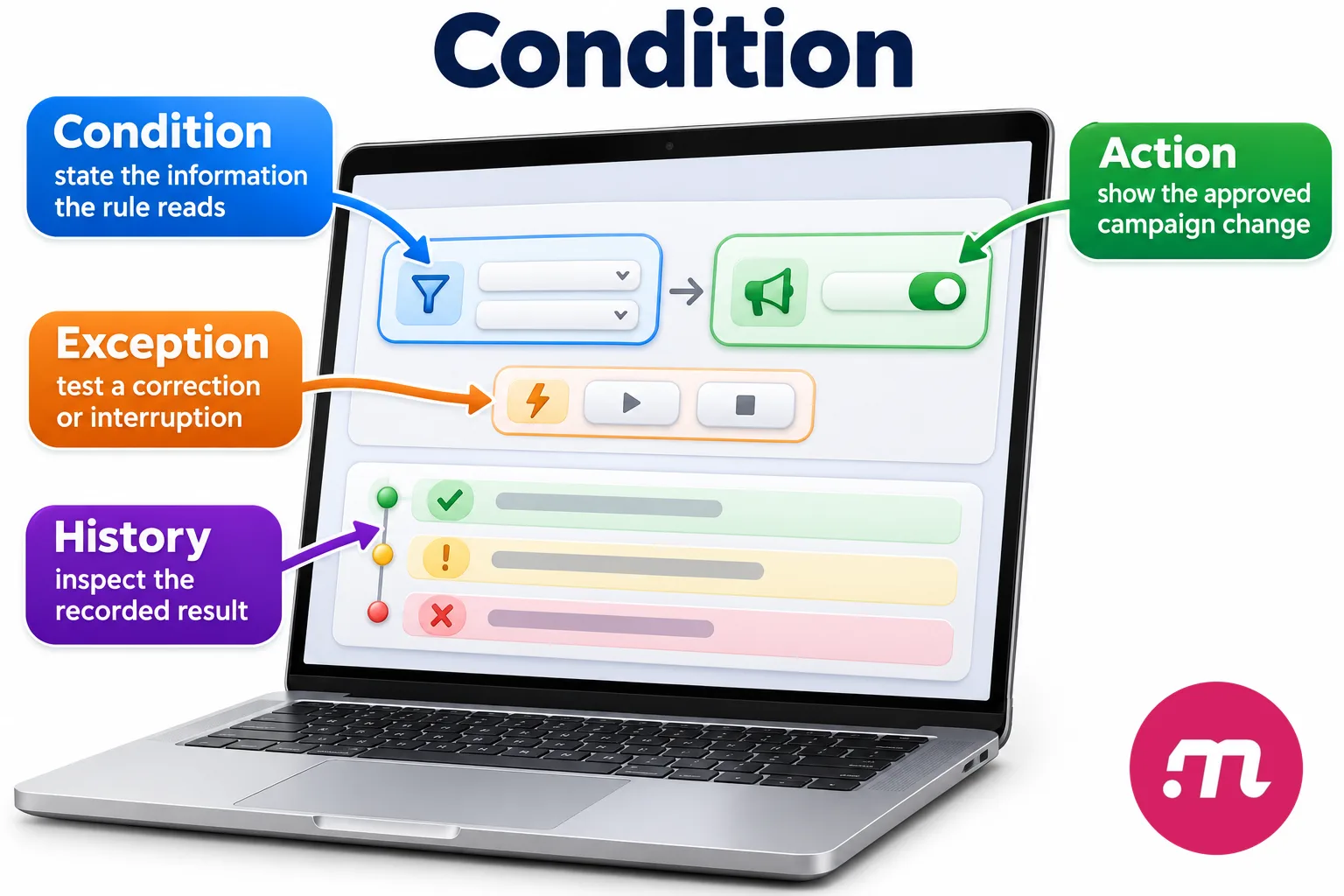
Try the workflow when a product becomes unavailable or a claim needs correction. Check who can pause activity, how the change appears and whether you can inspect its history. We would rather discover a limitation during a trial than while paying to promote an unavailable product.
Retargeting also needs a supported audience source and reliable event data. Ask the vendor to demonstrate the intended setup rather than accept a broad promise about tracking. For Indian ecommerce, returns and COD cancellations still matter after the initial conversion appears.
Give automation a narrow first job
Begin with a clearly defined action or an alert you can evaluate. Record what information the rule uses and who reviews the result. AI recommendations still need a person who understands the offer and the outcome definition.
We wouldn't let a trial turn into several tools changing budgets for different reasons. Assign responsibility for each automated decision and compare the result with the original task you wanted to improve.
Run a trial that supports a buying decision
Use six checks before subscribing
- Write the required task and a clear acceptance test.
- Connect the intended account type with appropriate access.
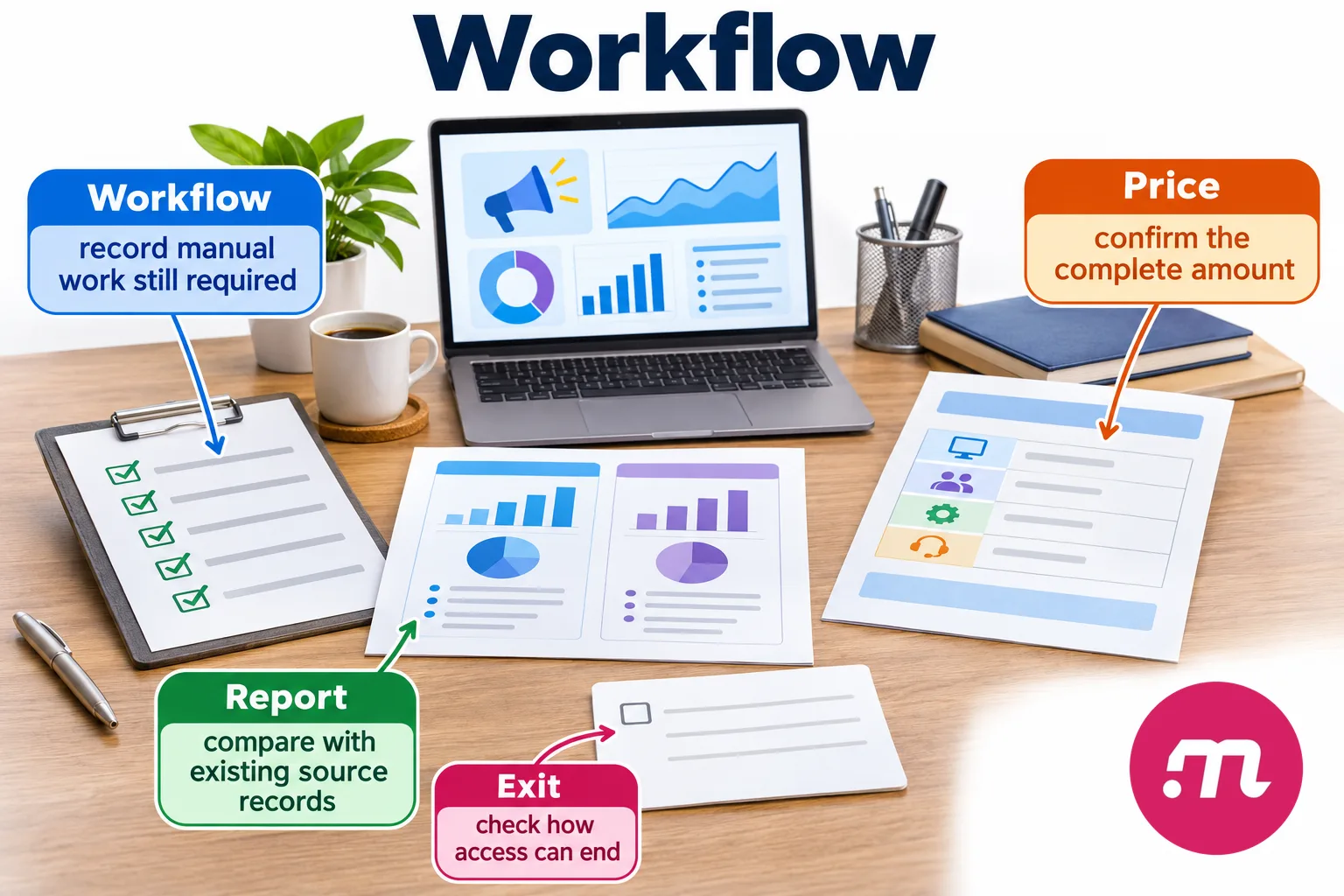
- Complete a normal task and record the manual work still required.
- Test a correction or interruption and inspect what happened.
- Compare the outcome report with your existing source records.
- Confirm the full price and the process for ending access.
Check the exports you will need if you stop using the product. Keep campaign names, account ownership and your working documentation understandable outside the vendor interface. Record who will maintain the connections and handle an interrupted workflow. A useful trial includes that ongoing work, not only the first successful task.
Use the people who will operate the software in the trial. A polished sales demonstration doesn't show whether your account manager can complete the weekly work without extra support. We would record the result of each check rather than rely on a general impression.
Measure commercial outcomes consistently
Google's campaign URL guidance explains source, medium and campaign parameters, with utm_content available to distinguish creative versions. Keep naming consistent and test the destination. A prettier dashboard cannot repair inconsistent source data.
Compare qualified leads, retained customers and the cost definition used to acquire them. ROAS is attributed revenue divided by advertising spend; it isn't profit. Different tools may attribute the same sale differently, so don't add their claimed conversions together.
Our performance marketing work connects the reporting choice with the offer and conversion path. The purchase should help you make a better decision or complete useful work, rather than create another metric the business must reconcile.
Conclusion: buy the missing workflow
Choose the software category first, then test the specific product against your actual accounts and tasks. Keep the current workflow when it already does the job. Add a paid layer when the trial demonstrates a useful improvement at a total cost you can explain.
Book a free strategy call through Mommantum's performance marketing service and bring the task list, current reports and vendor quotations. We'd use those inputs to decide what the team needs before recommending another subscription.
Frequently Asked Questions
Key takeaways and practical details on this topic.
Choose social media advertising software that solves a defined task on the platforms you actually use. Start by testing the existing native workflow, then trial a paid layer against a written acceptance test. We would confirm whether the product applies changes or merely recommends them before treating it as a workload solution.
A social media strategy records the buyer you want to reach, the hesitation your message should answer and the business outcome you need. Tools help execute those choices. We would define the useful next customer action before choosing software, so a new dashboard doesn't become a substitute for a commercial plan.
The best social media management tool is the one that supports your actual publishing, approval and reporting workflow at a justifiable total cost. It may solve a different problem from advertising software. We would trial corrections and routine reports with the people doing the work before committing to a subscription.
Choose a social media platform according to the buyer and the explanation your offer needs. Visual demonstrations, professional explanations and niche-community participation serve different purposes. We would establish a relevant audience and next action first, then select software that supports the chosen platform and the exact tasks your team must complete.
Social media strategies become useful when the audience, offer and next action fit together and the business can handle the resulting interest. Demonstrations and relevant explanations are tactics to test within that plan. We'd review qualified enquiries or retained orders, rather than assume regular posting or more automation proves commercial progress.
The best advertising software for a small business may be its existing native campaign workflow until a specific limitation justifies another product. Write down the task consuming time and test a candidate against it. We wouldn't buy a broader suite when the actual problem is an unclear brief or delayed creative approval.
Meta Ads Manager may be enough when your required campaign work can be completed there without a separate tool. Identify the actual limitation before adding another layer. We'd trial a third-party product only against that gap and include learning, maintenance and manual work remaining in the comparison, not just its subscription price.
Spend on social media advertising software should follow a measured workflow need and a complete cost comparison, rather than a universal percentage of ad spend. Request the total in INR for your accounts and users. We'd include setup, add-ons and remaining reporting effort before deciding whether the purchase is worthwhile.
Agency ad software should be tested on the recurring account review you are struggling to complete. Record what information it reads, whether it applies an approved change and what manual work remains. We'd also examine meeting and reporting processes before assuming a subscription can solve an overloaded account manager's entire workload.
Tell the advertising vendor to complete the exact approved change your team needs on a supported account type. A report or recommendation screen doesn't demonstrate execution. We'd inspect the result and its history, then test a correction, so the buying decision reflects an actual workflow rather than a capability claim.
More automation won't resolve a client's unclear strategy. Define the buyer hesitation, useful next action and outcome measure before expanding production or purchasing software. We'd connect the existing content to those choices first, then identify any repeat task that a tool could improve without hiding the underlying commercial question.
A B2B software business should choose a buyer and a channel hypothesis before purchasing cross-channel advertising software. Test an explanation that speaks to the professional problem and define the next conversation. We'd use that evidence to establish required account support, rather than pay for channels the business has no plan to use.
Ready to implement this for your brand?
Connect with our Jaipur growth studio to turn these strategies into revenue for your D2C or ecommerce business.