Marketing Through Social Media: A Step-by-Step Plan for India
Connect social content with a working buying path. Build a plan for Indian customers, assign the replies and use the response to choose your next test.
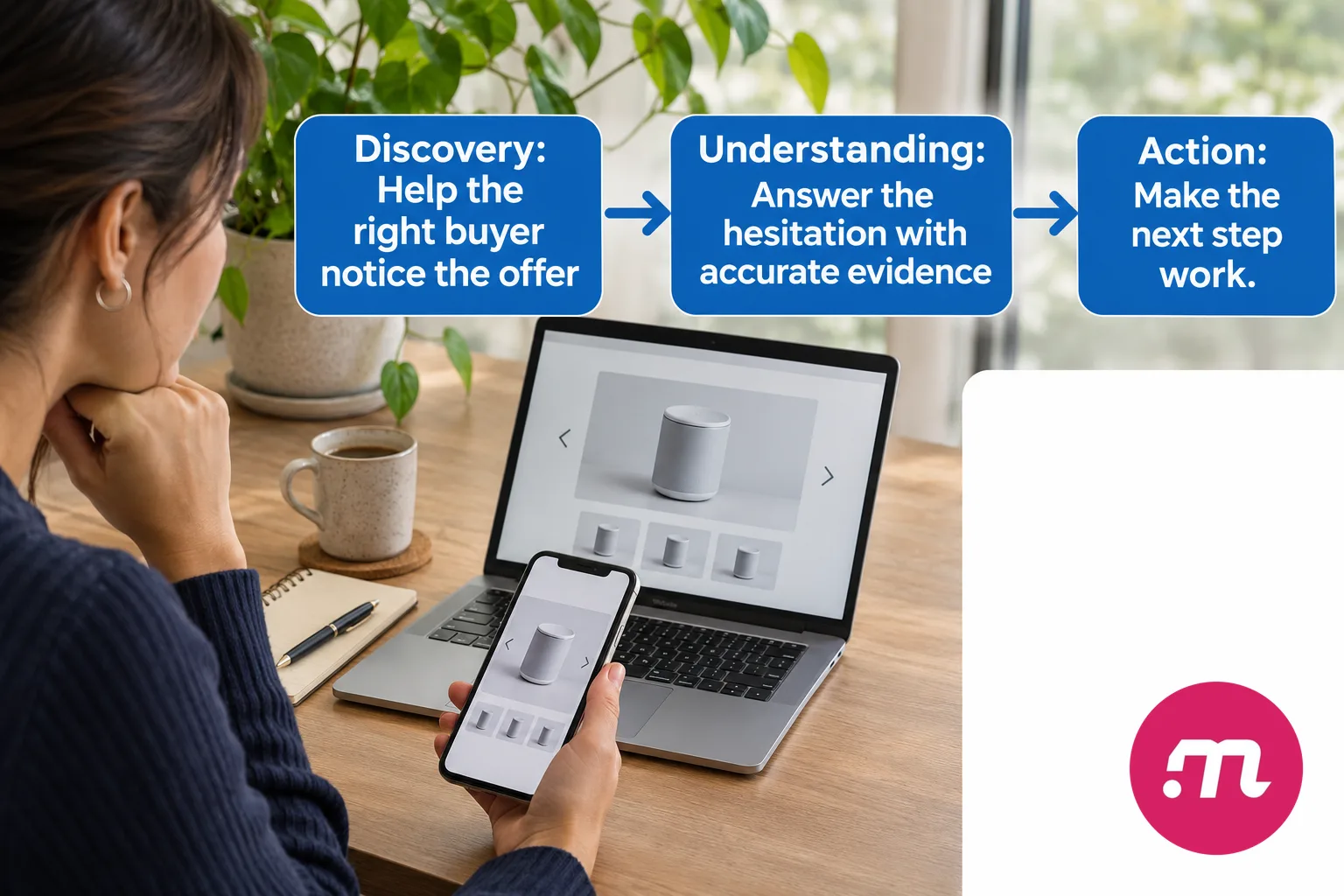
Introduction
Marketing through social media can attract interest while leaving the business no closer to a sale. A customer watches your demonstration, asks whether you deliver to their city and receives no useful reply. The demonstration earned a question. Your reply process lost the chance to answer it.
We'd plan that path before increasing production. Decide which customer action matters, explain what the buyer needs to know and make the next step work on a phone. Then budget for the people who create the work and handle its response. You can start small without leaving the responsibilities vague.
Table of Contents
- 1. Introduction
- 2. How marketing through social media works
- 3. Use the fundamentals to make decisions
- 4. Choose channels for the Indian customers you serve
- 5. Build a plan from question to completed action
- 6. Make the order or enquiry route work
- 7. Judge marketing through social media with evidence
- 8. Compare doing the work yourself with hiring help
- 9. Conclusion: complete the path before adding volume
- 10. FAQs
How marketing through social media works
Help a buyer move from interest to a decision
Social media marketing uses content and conversations on social platforms to support business objectives. It can help people discover an offer, understand suitability or resolve a concern before buying. The useful role depends on what your customers need at that point.
Organic posts and paid advertisements are different ways to distribute the explanation. Advertising buys distribution; organic work still costs staff time and production effort. Neither guarantees that the customer will want the offer. We'd inspect the message and destination before blaming a limited budget for every weak response.
Give your strategy a job beyond posting
A strategy explains the intended buyer and why a particular approach should support the business. The plan assigns the work; the calendar schedules it. A page can publish regularly without anyone having made the earlier decisions.
A Reddit freelancer raised exactly that concern after making product photos and videos consistently. The missing question was whether those activities connected to a deliberate business objective. We would ask what customer hesitation each assignment should address.
Our guide to what a social media strategy involves explains those choices. For your working plan, begin with a simple sentence: this customer needs to understand this information before taking this action.
Use the fundamentals to make decisions
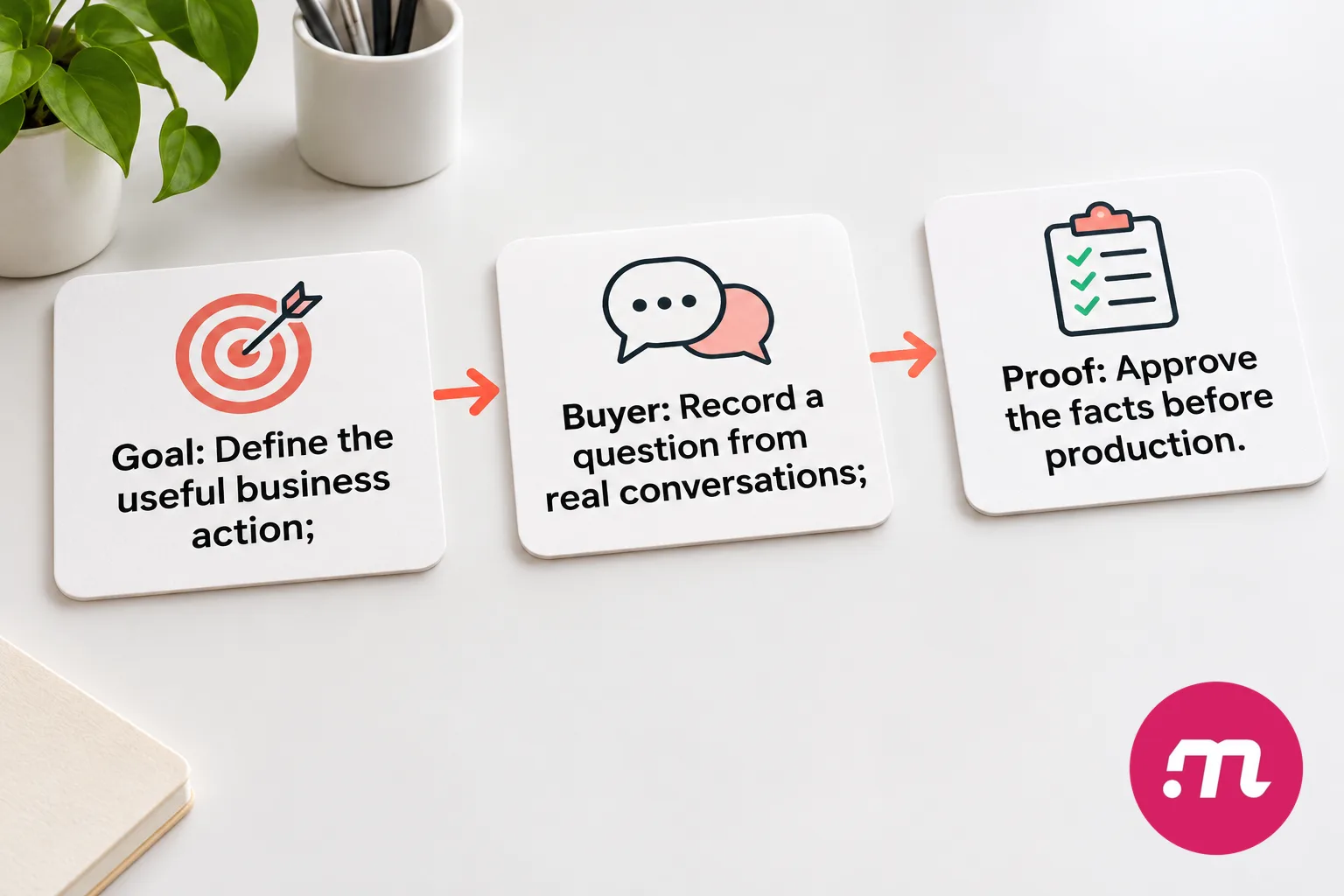
Define the outcome and audience first
The fundamentals of social media marketing are goals, audience understanding, channel choice, content, engagement, measurement and consistency. Treat them as connected decisions. A content format makes more sense after you know whom it serves and what should happen next.
Choose a useful action and define it clearly. For a service, an enquiry may need to fit your location and capability. For a store, distinguish an order placed from a purchase retained after cancellations. Record the current position using your own records.
Find the buyer's hesitation in enquiries and sales conversations. An illustrative homeware business might hear repeated questions about the size of a storage box. That points towards a demonstration and accurate dimensions, rather than a generic claim about improving the home.
Make evidence and responsibility visible
Write down which product facts are approved, who can check them and who receives the interested customer. The production team should know what must be shown. The reply owner should know what they can promise.
Mailchimp's planning guide includes goals, customer profiles, channels, metrics and a calendar. We'd use those components as a working brief, with a reason for each choice. If the brief leaves the claim or its owner unresolved, settle that before filming.
Keep the scope manageable. Consistency means delivering accurate work and handling the response reliably. It doesn't require an identical posting frequency for a shop, a clinic and a B2B service.
Choose channels for the Indian customers you serve
Compare roles before opening more accounts
Check where your enquiries already come from and what customers need to see. Choose a primary channel you can maintain, then add another only when its job is clear. We wouldn't use a national audience total to decide which platform deserves your small team's time.
| Channel | Role worth testing | Work to prepare |
|---|---|---|
| Visual product demonstrations | Accurate footage and a relevant next step | |
| Conversations with an existing community | Useful updates and response ownership | |
| YouTube | Explanations that help comparison | A clear demonstration and suitable production |
| Professional problems and service suitability | Relevant evidence and a qualified enquiry route |
These are possible roles, not claims that a platform always suits an industry. Inspect your actual buyers and available material. A product can need both a short demonstration and a detailed explanation, but you don't have to launch every version at once.
Support the language and service area
Social media management in India includes what happens after a Hindi or regional-language post. Decide who checks the copy and who can answer questions in that language. Translation without supported replies can leave the customer stranded.
State delivery restrictions or service areas where they matter. Avoid content that encourages enquiries your business cannot fulfil. We'd rather narrow the promise than generate a large volume of disappointed conversations.
For festive campaigns, confirm stock and the actual offer before scheduling. A seasonal graphic shouldn't make an unavailable product look ready to ship.
Build a plan from question to completed action
Write assignments an editor can act on
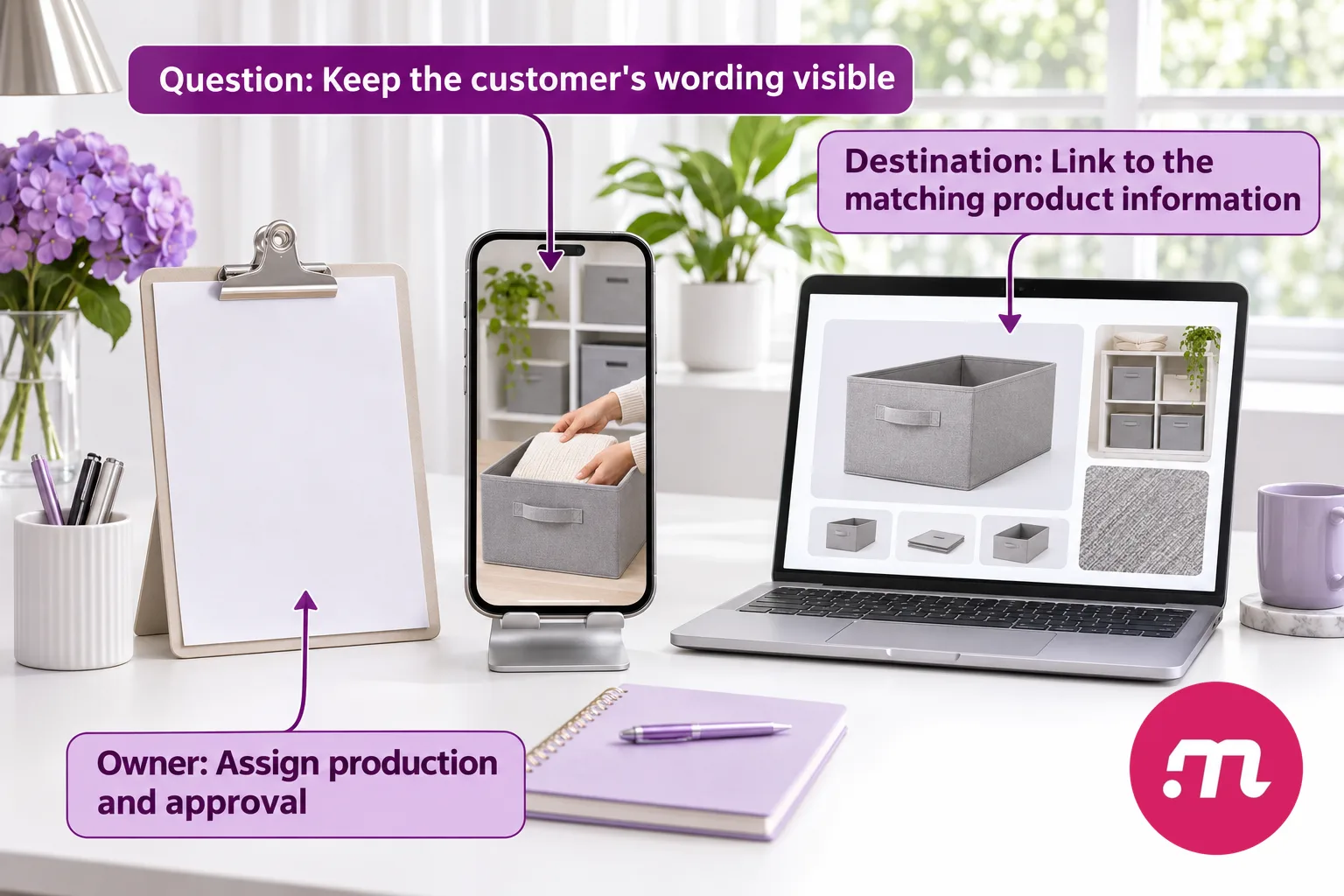
A social media marketing plan should name the business action, buyer question and evidence needed. Add a destination and the people responsible for delivery. This gives your editor a specific explanation to create.
For the illustrative storage box, film what fits inside using the actual product and approved dimensions. Link to the matching product information, rather than a category page that makes buyers search again. This is a proposed example, not a client performance claim.
- Select a recurring buyer question from real conversations.
- Define the suitable action you want the explanation to support.
- Choose the channel and format using customer behaviour and your capacity.
- Prepare approved facts and the demonstration your creator needs.
- Assign production, approval and customer replies.
- Test the destination and ordering handoff on a phone.
- Record the response and choose the next change with a reason.
Use a compact assignment record instead of a new software stack. The fields below can sit in your existing working document. If a field is unresolved, give that decision an owner before production starts.
| Assignment field | What to enter |
|---|---|
| Question | The customer's wording from a real enquiry |
| Evidence | The approved product fact or demonstration |
| Next action | The relevant page or staffed conversation |
| Delivery owner | Who creates and who approves the work |
| Review note | What you will inspect and what could change |
For the storage box, check whether the demonstration makes capacity understandable without exaggeration. Ask someone unfamiliar with the product to follow the link and locate its dimensions. Their confusion is useful input for revision. It isn't a research statistic or proof that every buyer will react the same way.
Keep the calendar connected to the brief
Each calendar entry should point to the question it answers. Record who supplies footage and what must be approved before publication. If product information changes, the team needs a way to update the draft or correct published content.
We'd keep an unfilled slot rather than approve a claim nobody can verify. Batch production can save setup effort, but it should not freeze prices or availability that need checking close to publication.
Don't make the format the strategy. Use a Reel when movement clarifies the offer, a still image when detail needs inspection or a comparison when suitability is the issue. Personality can make the explanation engaging without replacing the facts.
Make the order or enquiry route work
Walk through the customer's next step
Open the actual post or profile link and follow the route as a customer. Does it reach the right product? Can someone confirm delivery and payment choices? Can they ask a question without repeating everything they just saw?
Show COD availability accurately and test UPI where it is offered. For a service, make the coverage area and appointment process clear. A form that attracts unsuitable enquiries gives your team more work without meeting the objective.
Use WhatsApp when a conversation helps the decision. Give it an owner and a route to the person who can confirm fulfilment. Keep a direct buying route for someone who is ready to check out.
Practise the handoff before increasing reach
Send a test enquiry and check who receives it. Ask a delivery question and confirm the answer uses current information. Then check how an accepted order reaches the fulfilment team. An inbox count won't expose every failure in that process.
At Mommantum, we'd resolve a broken handoff before buying more distribution. The constraint may be an unclear reply owner rather than a weak creative. If the existing questions sit unanswered, sending more people to the inbox adds to the backlog.
Keep a simple working record of questions that prevent orders. Feed recurring issues back into the next content brief. If buyers repeatedly ask the same size question, the explanation or destination may still be incomplete.

Judge marketing through social media with evidence
Keep attention and sales measures separate
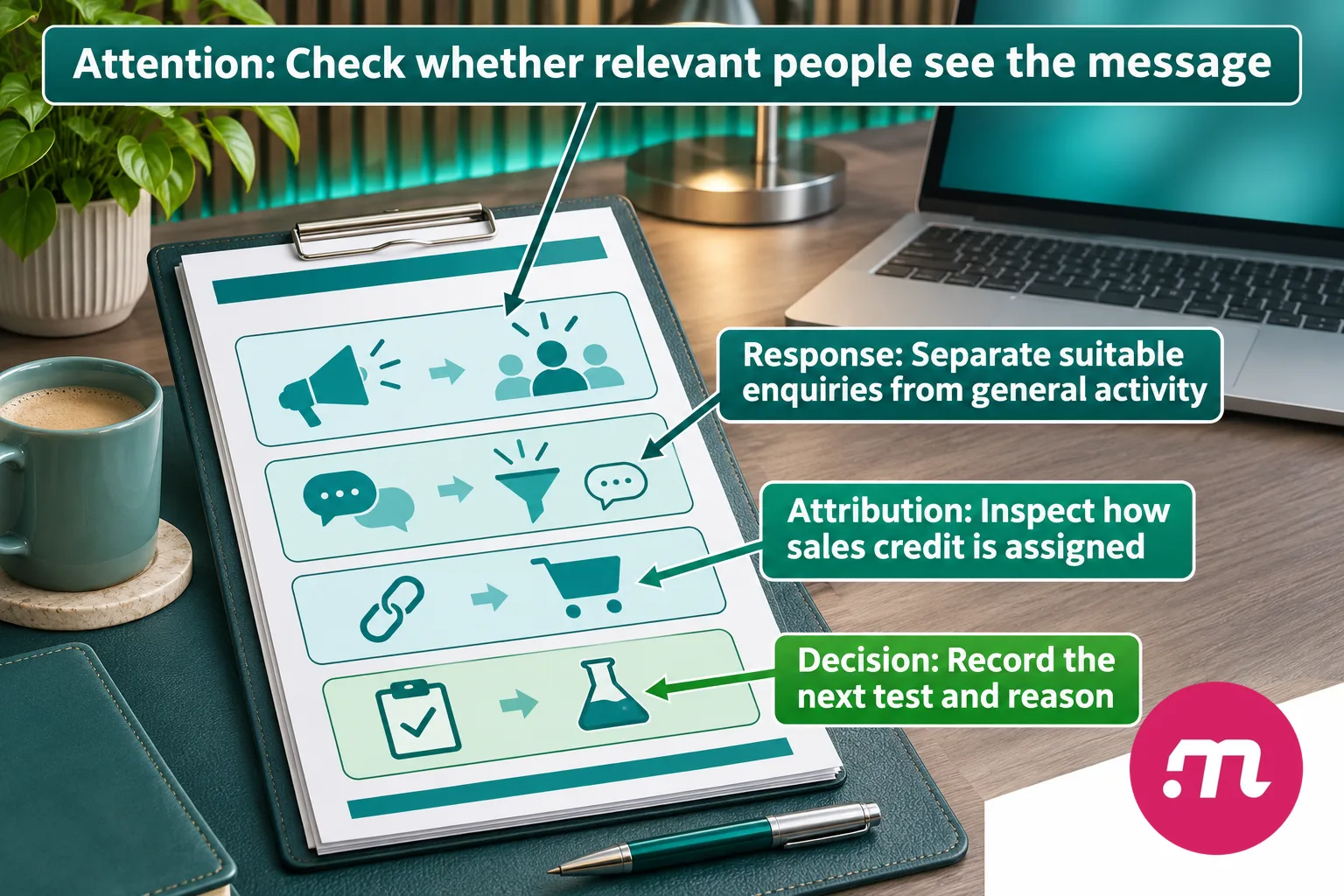
Reach and viewing behaviour help explain whether the message was seen. Relevant visits and suitable enquiries help explain the next response. Retained purchases show a different part of the outcome. Agree the definitions before comparing reports.
Google's campaign URL guidance explains source, medium and campaign parameters, with utm_content available to distinguish creative versions. Keep the names consistent and test each destination. Where the sale closes through conversation, use an operational record too.
Shopify's marketing reporting documentation describes attributed sales and attribution models. The credit assigned to a channel depends on the reporting method. We'd inspect that method before treating a dashboard figure as a complete explanation of why a customer bought.
Use the review to choose a change
If little relevant attention arrives, review the question and opening. If visits arrive but buying stalls, inspect suitability and the product page. If messages fit the offer but orders stop, check the replies and fulfilment conditions. These are diagnostic questions, not automatic answers.
ROAS compares attributed revenue with advertising spend. It isn't profit after returns, fulfilment and management costs. State the costs included in CAC before comparing acquisition efficiency. Adding incompatible platform claims can make a report look better without changing the business.
We'd review monthly while correcting broken links or inaccurate offers sooner. This is a proposed working rhythm, not a promise of results within a month. Record the next test and its reason, then keep enough context to interpret what changes.
Compare doing the work yourself with hiring help
Buy the responsibility your team cannot cover
Your team may have the best access to product facts and fresh footage. A freelancer can fill an editing gap; a social media marketing company can coordinate several roles. Both need a clear brief and someone in the business who can approve claims.
Ask a provider to demonstrate how it would handle a real customer question. Meet the people proposed for delivery and inspect relevant authorised work. We wouldn't accept a guaranteed sales claim as evidence of competence.
Our social media marketing service starts with the connection between content and business actions. Compare that complete scope with any alternative, including the tasks your staff would retain.
Read the costs alongside the exclusions
For a public example checked on 8 November 2026, Digital Online Solution lists monthly social media packages at ₹12,000, ₹22,000, ₹35,000 and ₹55,000. These are one provider's prices, not a national average or a Mommantum quotation. Its page separates GST and advertising spend.
Confirm filming, revisions and community replies in the quotation. Include staff time and any software or creator costs. We'd reduce the scope explicitly when funds are limited, rather than hide unpaid work inside a low headline fee.
Set an affordable test boundary using your own margins and cash commitments. A desired revenue number alone doesn't tell you what advertising spend is sensible.
Conclusion: complete the path before adding volume
Choose a buyer question, create an accurate explanation and make the next action work. Assign the reply and fulfilment handoff, then judge the response with consistent measures. That gives you a practical basis for deciding whether to improve the content or expand its distribution.
Book a free strategy call through our social media marketing service and bring your current calendar and recent enquiry records. We'd use them to find the next useful change before recommending a larger production commitment.
Frequently Asked Questions
Key takeaways and practical details on this topic.
Social media marketing uses content and conversations on social platforms to support a business objective. It works by helping a suitable customer discover, understand or choose an offer, then take a clear next action. We'd prepare the destination and reply process alongside the content. Distribution can create attention, but the complete buying path still needs to work.
Create a social media marketing plan by choosing a business action and identifying the buyer question preventing it. Record the channel, required evidence and destination, then assign production and replies. We'd define a review measure before launch. A useful calendar follows those decisions and gives each assignment an owner, rather than simply list formats and dates.
The fundamentals of social media marketing connect goals, audience understanding, platforms, content, engagement, measurement and consistency. Use them to decide what you will create and how you will handle the response. We'd start with a real customer question and accurate evidence. The framework only helps when someone can use it to make an assignment or review decision.
Social media management firms supply an agreed combination of planning, production, publishing and reporting. Filming, customer replies and paid advertising may have separate scopes. We'd ask who does each task and what your staff must supply. Language support and service-area restrictions also belong in the plan, because a translated post alone doesn't complete the customer conversation.
Social media management costs depend on the scope and team supplied. One provider's public packages list ₹12,000 to ₹55,000 monthly, with GST and advertising spend separate. These are examples, not a national benchmark. We'd compare providers against the same brief and check filming, revisions and reply ownership before deciding whether a fee is suitable.
The best platform fits the customer behaviour and production work your business can support. Review current enquiries and account history before choosing, then give each channel a clear role. We'd begin with a primary channel when capacity is limited. Expanding makes sense when the extra work serves a defined buyer need and the replies can be handled.
Measure social media success using the customer action you defined before publication, with attention measures kept separate. Review suitable enquiries, relevant visits or retained purchases using consistent definitions. We'd inspect attribution methods before comparing sales reports and keep an operational record for conversational orders. The review should identify a reasoned next test, rather than call every view a sale.
A beginner should start by answering one real customer question and testing the next step on a phone. Choose a channel you can maintain and name the person who will handle replies. We'd practise a complete assignment before buying more tools. That makes it easier to see whether the content, destination or response process needs improvement.
Your first social media activity should explain something a suitable customer needs to know before acting. Choose the channel using current enquiries and the material you can produce reliably. We'd test its destination and assign replies before publication. Learning from that complete assignment is more useful than trying to master every app without a business purpose.
Your product video plan needs a clear buyer question and a reason for the intended audience to pay attention. Inspect those before adding more volume, then test whether the opening communicates the relevance. We'd also check the next action and its destination. A weak response is a prompt to diagnose the assignment, not proof that posting more will solve it.
Your kidswear store should assign product facts, filming and customer replies before comparing outside teams. Staff may handle some tasks well, while editing or coordination needs support. We'd ask providers to quote against the missing responsibilities. Test sizing information and the ordering route first, because a larger content package won't repair an unanswered delivery question.
Request a relevant authorised example and a clear explanation of what the agency actually contributed. Meet the proposed delivery team and ask how it would turn a real customer question into an assignment. We'd also confirm exclusions, account access and handover responsibilities. A confident presentation doesn't establish who will own the work after you sign.
Ready to implement this for your brand?
Connect with our Jaipur growth studio to turn these strategies into revenue for your D2C or ecommerce business.