Instagram Money Per View: 7 Practical Checks For Indian Creators And Brands To Separate Real Earnings From Viral Counters Before Pricing Content, Forecasting Cash Or Increasing Their Next Production And Promotion Budget
Don't forecast Reel income from an internet rate. Identify the payer, match views with actual earnings and check delivery costs before committing more budget.
Introduction
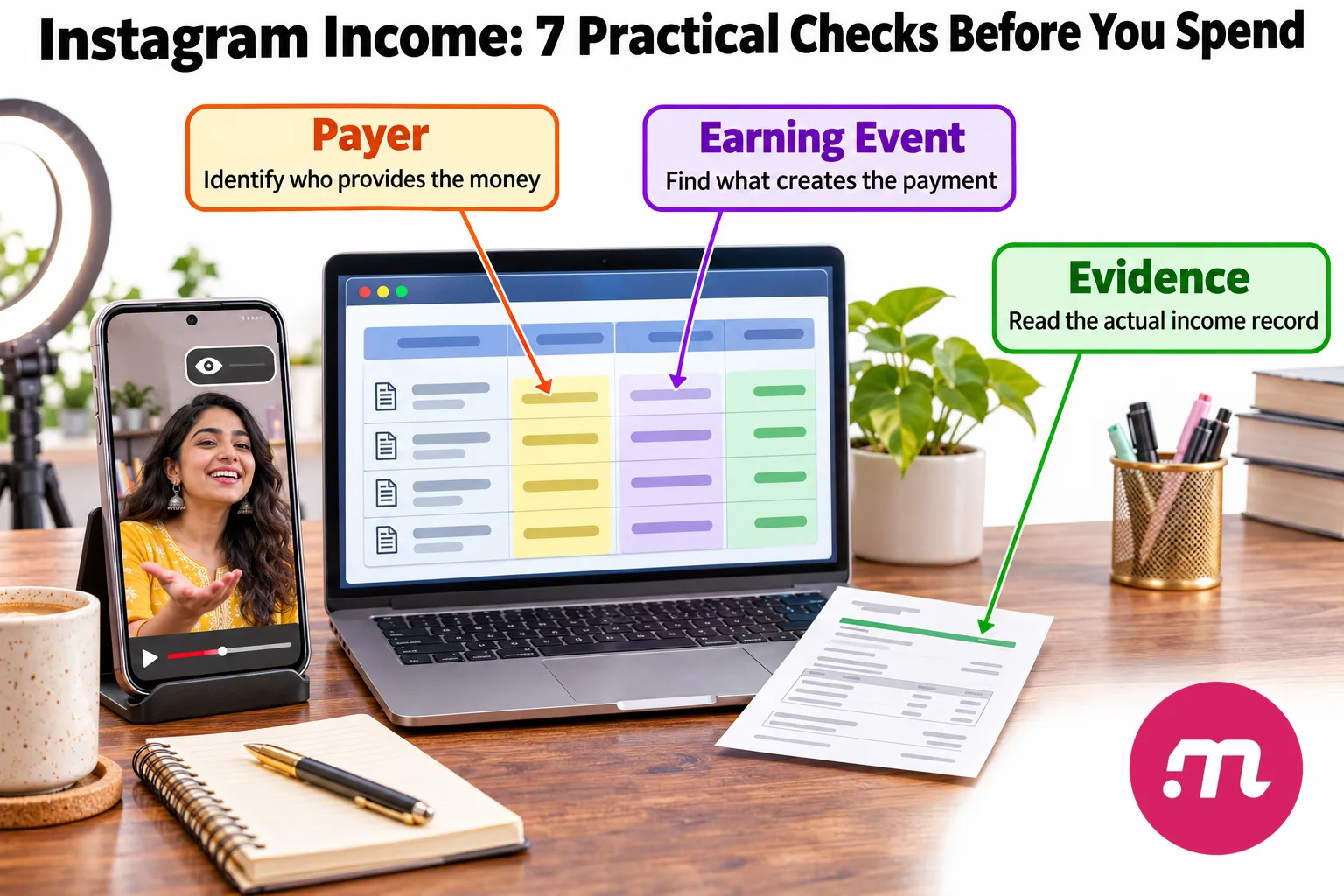
Instagram money per view isn't a fixed salary you can calculate from a Reel's counter. Before you multiply plays by a rate found online, ask what actually produced the money: a platform programme, a brand agreement or a customer purchase. Without that information, you can't tell whether the result is an earned payment, a possible sale or an unsupported estimate. Don't commit a shoot budget against it.
For an Indian founder or creator, this confusion can affect real spending on shoots, editing and promotion. At Mommantum, we would connect that expense to a defined earning route before approving more content. Ask the report to show which income was earned and the cost of delivering it. You should be able to trace the money to an account record, agreement or completed order.
Table of Contents
- 1. Introduction
- 2. Instagram money per view isn't a universal rate
- 3. Separate the ways a video can earn
- 4. Calculate Instagram money per view from your records
- 5. Check account access before expecting a payout
- 6. Build a commercial route for your Indian audience
- 7. Measure the customer outcome after the view
- 8. Mistakes we'd correct before buying more views
- 9. Conclusion: calculate from income, not an assumed rate
- 10. FAQs
Instagram money per view isn't a universal rate
Ask who is paying
An advertiser buying production work and a supporter purchasing a Gift are different payers. The video may help both transactions happen, but the conditions aren't the same. You need the agreement or earning record behind each claim before deciding whether it applies to your account.
Meta's Instagram Gifts explanation describes supporters purchasing virtual gifts using Stars and directs creators to the Professional Dashboard to check eligibility. A viewer watching and a supporter purchasing a gift are different actions. We wouldn't forecast the second from the first without evidence from the account.
Check the product and the date
Meta's announcement updated on 3 April 2024 described a limited, invitation-only bonus in the United States, South Korea and Japan. That historical test doesn't establish a current Indian payment entitlement. A screenshot without the programme name, earning period and account context cannot settle what you will receive.
The query "how much instagram pay for reels in india" needs that context before it can produce a useful answer. Don't import another platform's payment formula or somebody else's contract into your budget. We prefer a forecast with an explicit unknown to a precise rate that nobody has agreed to pay.
Separate the ways a video can earn
Read the event behind the income
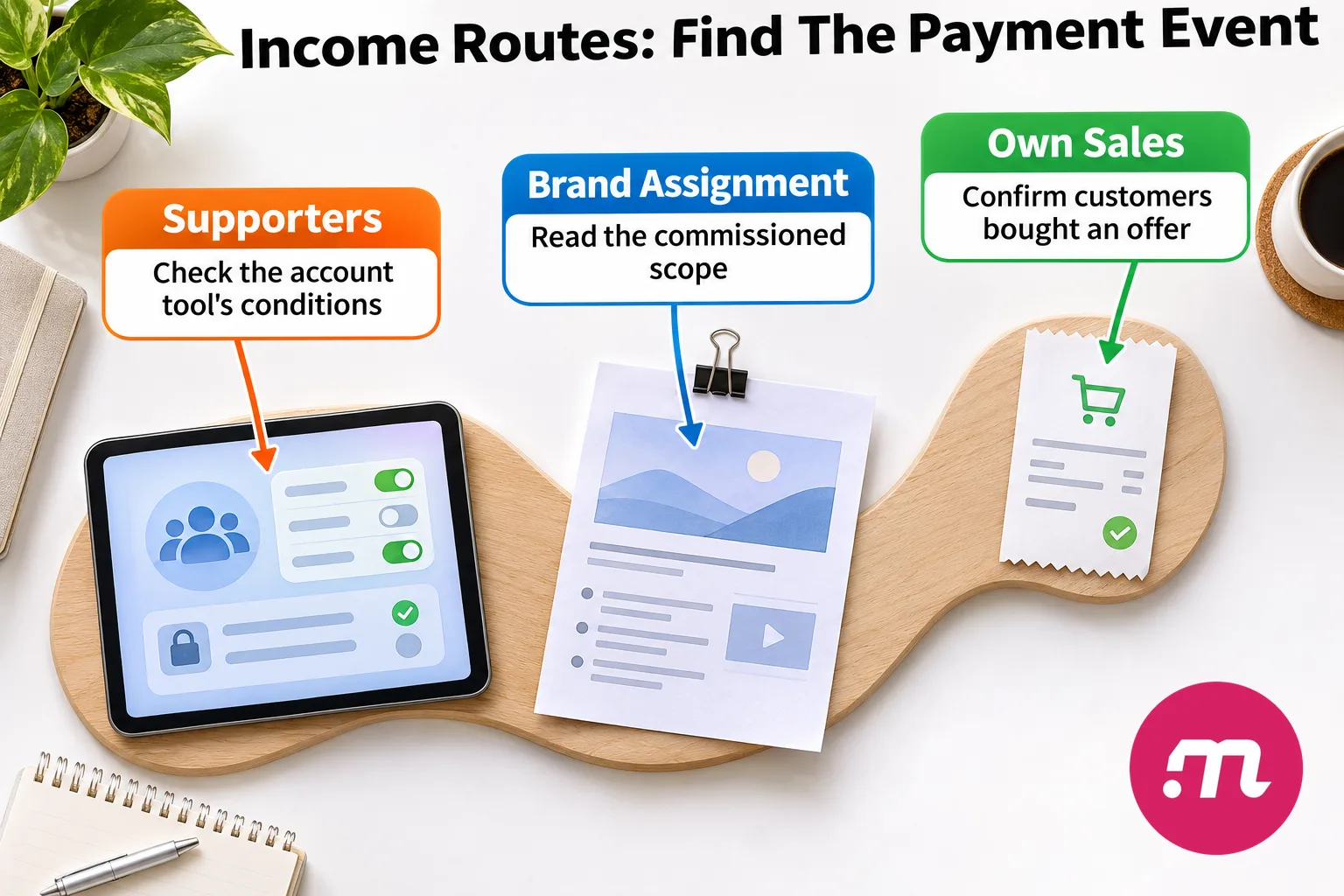
If you're asking how does Instagram monetization work, start with the event that creates an earning. The comparison below describes possible routes, not a promise that every platform tool is available to every account. Check the current terms shown to you before committing time to any particular programme.
| Route | Payment depends on | Record to inspect | Main limitation |
|---|---|---|---|
| Gifts | Supporters purchasing virtual support on eligible content | Tool earnings record | Views don't establish supporter purchases |
| Subscriptions | Members paying for continuing access | Subscription earnings and offer | You owe ongoing member value |
| A specific bonus | The active offer's qualifying conditions | Invitation, terms and earnings period | Another account's offer may not apply |
| Brand work | Agreed production or promotion | Approved scope and invoice | Rights and revisions affect the work |
| Affiliate income | A purchase qualifying under partner terms | Approved commission statement | Clicks may never become approved commission |
| Your own sales | Customers buying an offer | Order and payment records | Delivery and returns carry costs |
Choose the route you can maintain
Platform tools can make supporter payments possible where your account qualifies, but you don't control future access or audience willingness to pay. Brand work gives you a negotiated brief, but the fee comes with commitments. Product sales give you more control over the offer and more responsibility for fulfilment.
Pick the operating work you can actually do. A creator who enjoys filming may prefer a production assignment to running a product store. A founder with a working store may need clearer product demonstrations rather than another revenue programme. We wouldn't add a new income route while existing clients or customers are waiting for work you've already promised. Start with the commitment you can fulfil.
Calculate Instagram money per view from your records
Use the ratio as a description
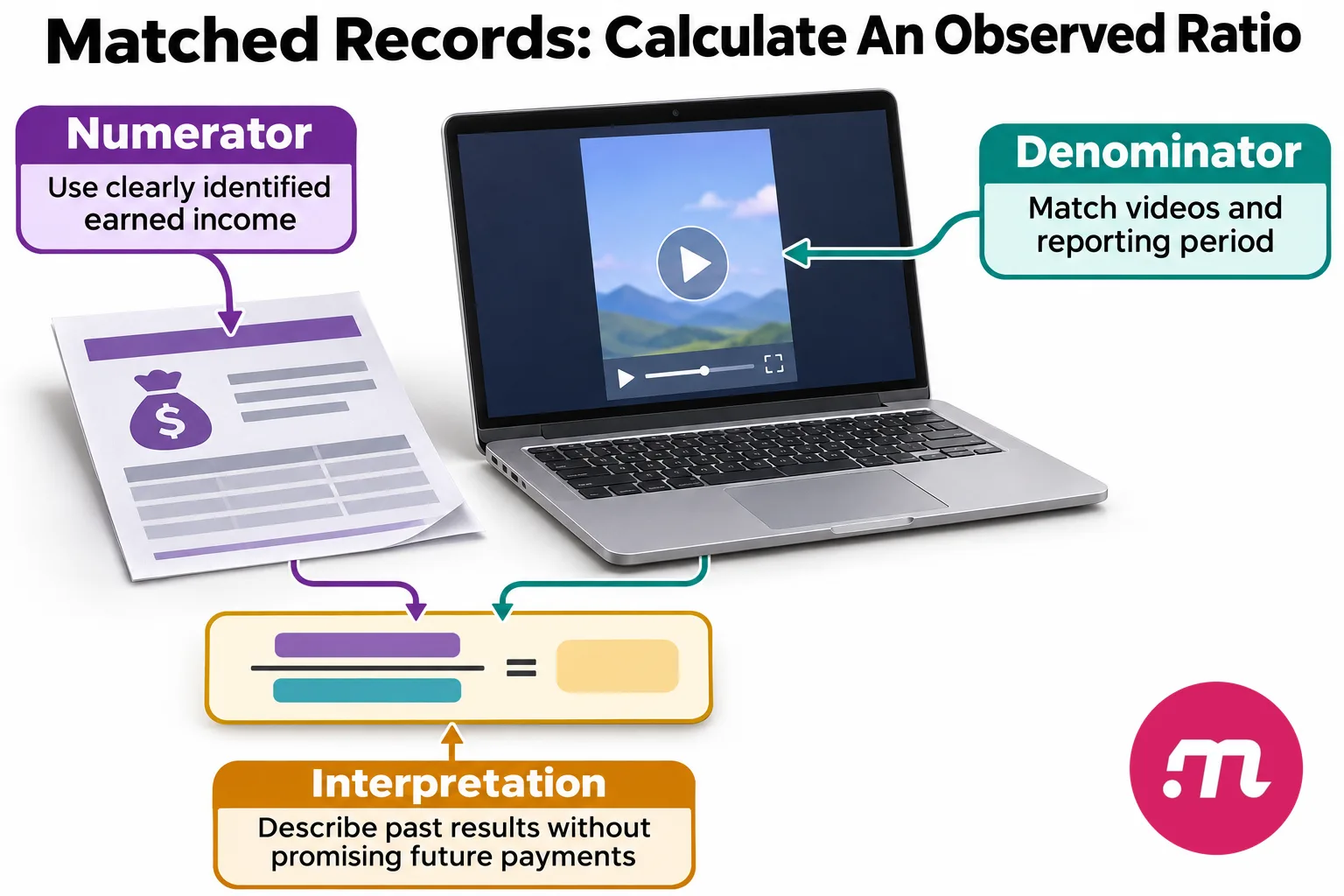
You can calculate an observed income ratio after money has been earned. Divide the income assigned to a defined set of videos by the views counted for those same videos and period. To express the result per thousand views, multiply that quotient by 1,000. This is arithmetic about your records, not an official Instagram tariff.
Observed income per 1,000 views = matched earned income / matched views * 1,000
Label the numerator. A sponsor fee per thousand views describes a commercial assignment; approved affiliate commission per thousand views describes affiliate performance. Mixing these with platform earnings hides what changed. We would keep them on separate lines even if the dashboard looks less impressive.
Match the reporting scope
A fee covering video production and advertising rights cannot be fairly described as payment for public views alone. Similarly, customer revenue across the entire store doesn't belong against a single Reel just because it was posted during a strong sales period. State what you included and why.
Choose a consistent reporting window and note whether the income is earned, approved or received. If views keep rising after a fixed sponsorship fee is agreed, the calculated fee per view falls while the fee stays unchanged. That falling ratio doesn't mean the client reduced your payment. The denominator changed.
Don't calculate the ratio when the view count is zero, and don't hide missing income records behind an assumed rate. An incomplete comparison needs a note about the gap. It doesn't need a more complicated calculator.
Check account access before expecting a payout
Find the stage that stopped
A Professional Dashboard option, completed setup, recorded earnings and a bank payment are separate stages. If a tool is unavailable, investigate access. If setup fails, record the exact error. If income exists but hasn't arrived, inspect payout status and the conditions attached to that earning product.
A Reddit poster asked whether a viral video should already have generated money. Another described a growing facts account with many views and no income, while also explaining that it had no product to sell. These are individual experiences, not payout benchmarks. They show why identifying a payable event is more useful than comparing counters.
Use this account review sequence
- Confirm the account and platform connected to the income claim.
- Inspect the earning tools actually offered in its Professional Dashboard.
- Read the selected tool's current account, country and content conditions.
- Finish any official setup or acceptance requested by that tool.
- Look for recorded earnings tied to a qualifying event.
- Check the payment status and any verification or hold message.
- Use official account support for the specific unresolved issue.
We wouldn't change unrelated account settings merely because the view counter is rising. A useful support report names the tool, the step and the message. Keep payment details accurate and follow the official correction route when something is wrong. Guessing a classification to get past a form creates another problem to resolve later.
Build a commercial route for your Indian audience
Make the next action fit the video
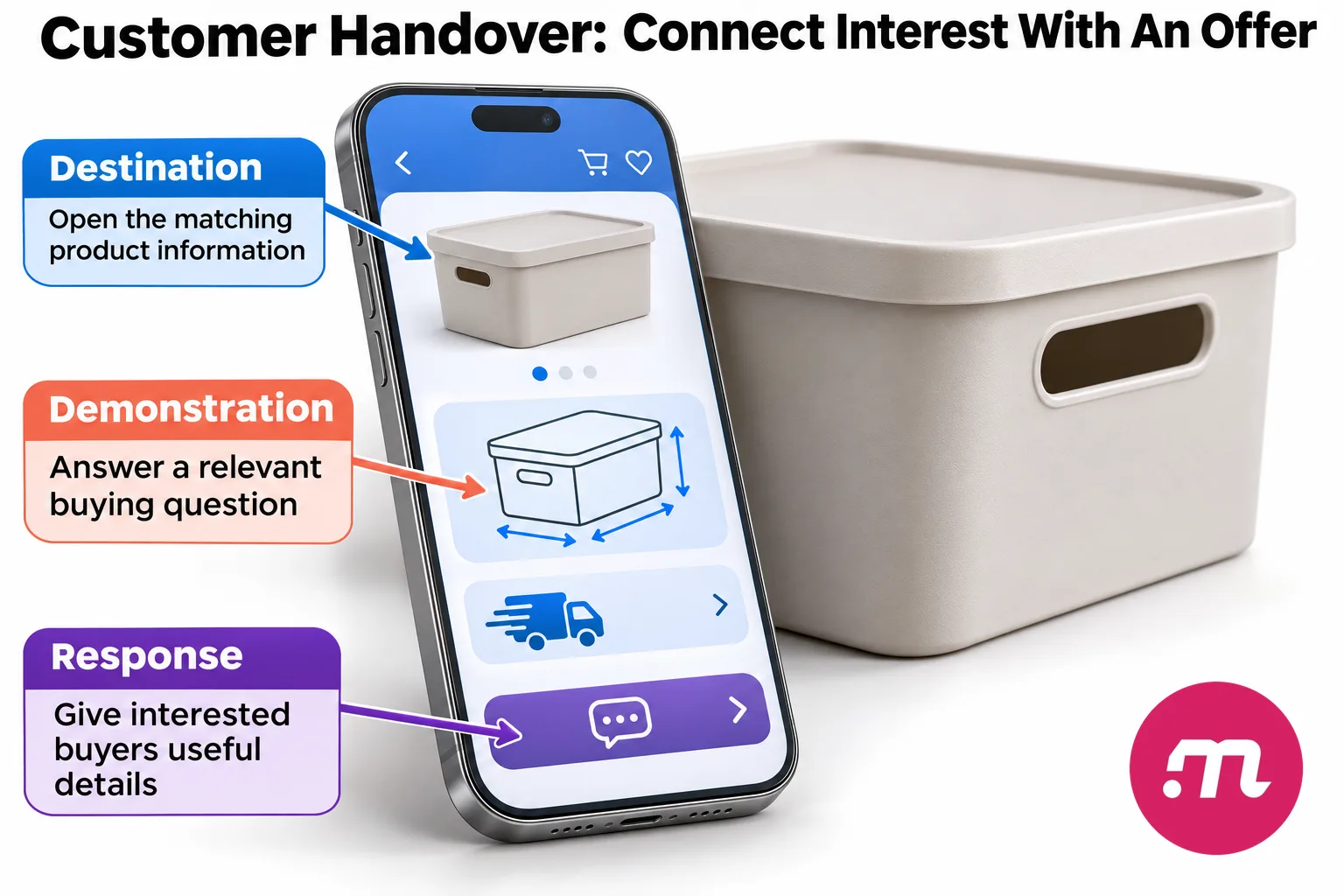
For a hypothetical Jaipur homeware seller, a Reel could demonstrate how a storage box fits inside a cupboard. The next step should answer a buying question, such as dimensions or delivery coverage. Send interested viewers to the matching product information rather than making them search a general catalogue again.
If you want to learn how to monetise Instagram through your own offer, inspect that entire handover. Open the destination on a phone, check availability and follow the checkout. For WhatsApp enquiries, assign someone to respond with useful details. A pile of unanswered messages isn't evidence that the content needs more reach.
Define brand work before quoting
For commissioned content, ask whether the client wants a video delivered to its team or a post reaching your audience. Agree permitted uses, revision limits and approval responsibilities. Advertising rights and exclusivity can change the commitment beyond the original filming. We would price the actual work before discussing a discount.
Keep disclosure in the brief too. ASCI's influencer guidance says material connections can include free products, and disclosure must be upfront and prominent. A product received without a cash fee can still create a disclosure requirement. Review the video and caption before delivery rather than leave the relationship unclear to viewers.
The trade-off is time. A brand assignment may pay without generating product sales for you, but revisions can consume the hours reserved for your own content. Record those hours when deciding whether the next assignment is worth accepting.
Measure the customer outcome after the view
Connect the content to a useful record
Google's campaign URL guidance explains using campaign parameters to identify referred traffic. For a supported clickable destination, use consistent source and campaign names and test the link. That helps distinguish traffic routes; it doesn't prove that every attributed visit created an extra sale.
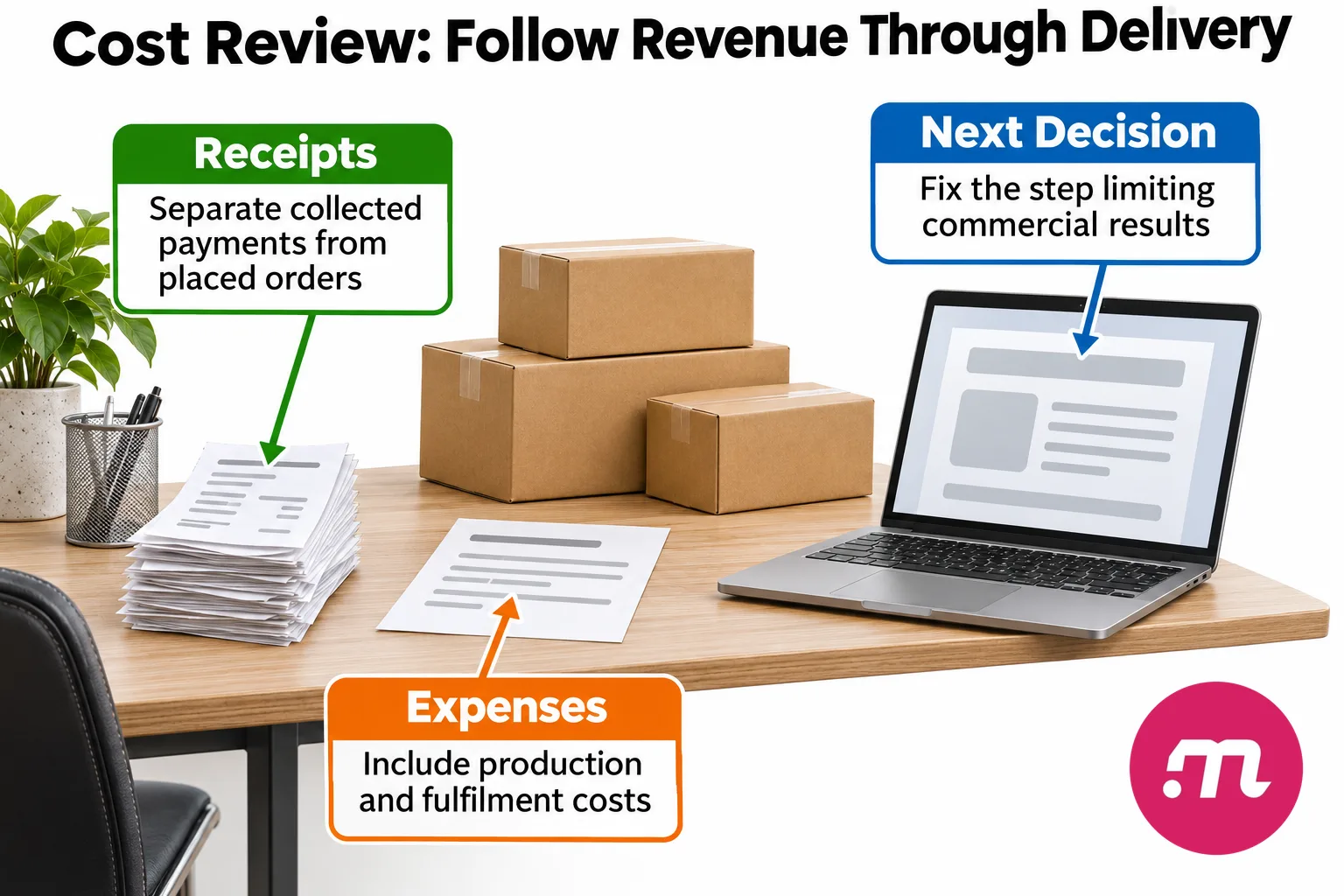
Keep enquiries, completed orders and collected payments separate. For COD, an order placed and an order successfully delivered aren't identical business outcomes. Note cancellations and returns before interpreting revenue as money available to spend. We would fix a broken order process before paying to send more viewers through it.
Read business metrics with their costs
CAC compares acquisition spending with new customers under a stated measurement method. ROAS compares attributed revenue with advertising spend, while conversion rate needs a defined completed action and denominator. None can be inferred from organic views alone. Include production and creator fees when assessing the wider investment, even if the advertising report excludes them.
Our Jalvayu Wellness case study reports monthly revenue moving from ₹1.1L to ₹5.8L and CAC from ₹920 to ₹310. The work included branding, ecommerce, content and Google advertising. These are combined business results, not an Instagram payout or proof that a particular Reel caused every sale.
Use that distinction in your own review. A lower acquisition cost is useful only if you understand the customer count and spending behind it. If you can't explain the change, investigate before treating it as a repeatable result.
Mistakes we'd correct before buying more views
Applying old tutorials to a different product
Instagram IGTV monetization is a historical search term that still brings up old instructions. Meta's 5 October 2021 announcement combined IGTV and feed videos into Instagram Video. Match a tutorial to its product date before copying its settings or earnings assumptions.
We would apply the same check to a Facebook payment screenshot shared in an Instagram discussion. Name the platform and programme explicitly. Cross-posting a video doesn't establish identical earning conditions. A high view count also doesn't resolve whether you own the content or have the permission needed for the planned use.
Reporting activity without a spending decision
Views can help compare how content attracts attention, but a commercial review needs to answer what to do next. If relevant buyers enquire but don't complete orders, inspect the offer and response. If an agreed assignment loses money after revisions, change the scope or fee. More publishing isn't the answer to every failure.
- Record the payer and event behind each income line.
- Match income, videos and reporting periods before dividing.
- Separate earned balances from received payments.
- Check the buying route before increasing promotion.
- Include the cost of delivering what you sold.
Our marketing FAQs explain the team's approach to growth work. When you compare support options, ask which decision the reporting will help you make. For example, ask whether the next action is to repair checkout, clarify a client brief or pause an unprofitable assignment. Make someone responsible for that decision.
Conclusion: calculate from income, not an assumed rate
Start with a payment mechanism you can verify. Then use matched records to understand what your content earned and what it cost. An observed income-per-view ratio can describe past performance, but it doesn't create a platform promise or guarantee the same outcome for the next video.
For help connecting Reels to a customer offer and measurable response, explore Mommantum's social media marketing support and book a free strategy call. Bring a recent content report and the income records behind it. We can identify which missing step deserves attention before you increase the budget.
Frequently Asked Questions
Key takeaways and practical details on this topic.
Instagram doesn't have a universal per-view payment you can apply to ordinary content. Identify the earning tool or commercial agreement behind any quoted rate, then check what qualifies for payment. A ratio calculated from your own sponsor fee and views describes that assignment; it doesn't establish an Instagram payment promise.
Instagram bonus access should be verified against an active offer on your own account. Historical announcements described limited, invitation-only tests, so an old screenshot doesn't establish present eligibility or a current rate. Read the programme name, dates and qualifying conditions before budgeting production around income you haven't yet earned.
Brand deal pricing should cover the agreed production, audience access and usage rights rather than rely on a universal view rate. Ask for the brief, define revision limits and clarify advertising use before quoting. Compare the fee with the time and costs required to deliver the assignment, including approval work.
Instagram views can support income when interested people take a payable action, such as buying your offer or commissioning work. Choose that route before producing more content, then provide a relevant next step. Track enquiries and completed transactions separately so you can see whether attention is reaching a buyer.
Instagram Subscriptions, where offered to your account, let members pay for continuing access to your content or experiences. Check the current tool requirements and define the member promise before starting. Include preparation and support time in your plan, because public video popularity doesn't establish demand for a recurring paid offer.
Instagram payouts transfer earnings recorded under an applicable tool according to its payment conditions. First check that a qualifying earning exists, then review setup, payment status and any hold or verification message. Use the terms attached to your account rather than treating a view milestone as proof that money is overdue.
Instagram income depends on the earning route, the buyers or supporters involved and your delivery costs. Build a forecast from actual account earnings, agreed client work or completed customer transactions. Keep gross revenue separate from what remains after production and fulfilment, and avoid projecting a viral result as a guaranteed monthly income.
Instagram follower requirements depend on the particular platform tool; commercial work also needs a client or customer who agrees to pay. Check current account eligibility instead of assuming a follower milestone creates income. For a sponsor, show audience relevance and a clear deliverable, with the rights and fee agreed in writing.
A viral Instagram video doesn't establish earnings by itself, so inspect the relevant tool's earnings record before expecting payment. Check whether an applicable programme was active and what its terms required. If no earning is recorded, investigate the payment mechanism rather than assuming Instagram owes money based on the public counter.
A facts page needs an identifiable buyer or supporter action before its views become income. Assess a relevant sponsor assignment, an original offer or an earning tool actually available to the account. Start by checking audience interests and your ability to deliver the promise; don't assume a large counter establishes demand.
Moving a viral Instagram video doesn't guarantee payment on another platform. Check the destination's current country, account and content requirements, plus your rights to use the material there. Confirm what event produces earnings before adapting the video, and compare the extra production work with a payment route you can actually verify.
A facts page can test a paid offer by identifying a specific audience problem and a credible way to solve it. Read relevant enquiries, ask what viewers need and assess whether you can deliver the proposed product or service. Interest is an early signal; completed purchases are the evidence for expanding.
Ready to implement this for your brand?
Connect with our Jaipur growth studio to turn these strategies into revenue for your D2C or ecommerce business.