How Much Instagram Pay for Reels: 5 Practical Income Checks for Indian Creators and Brands to Separate Platform Earnings From Sponsorship Fees, Price the Actual Work and Avoid Forecasting Rupees From Views
A Reel's views aren't a rupee forecast. Check platform earnings, client fees and customer sales separately before quoting work or setting your production budget.
Introduction
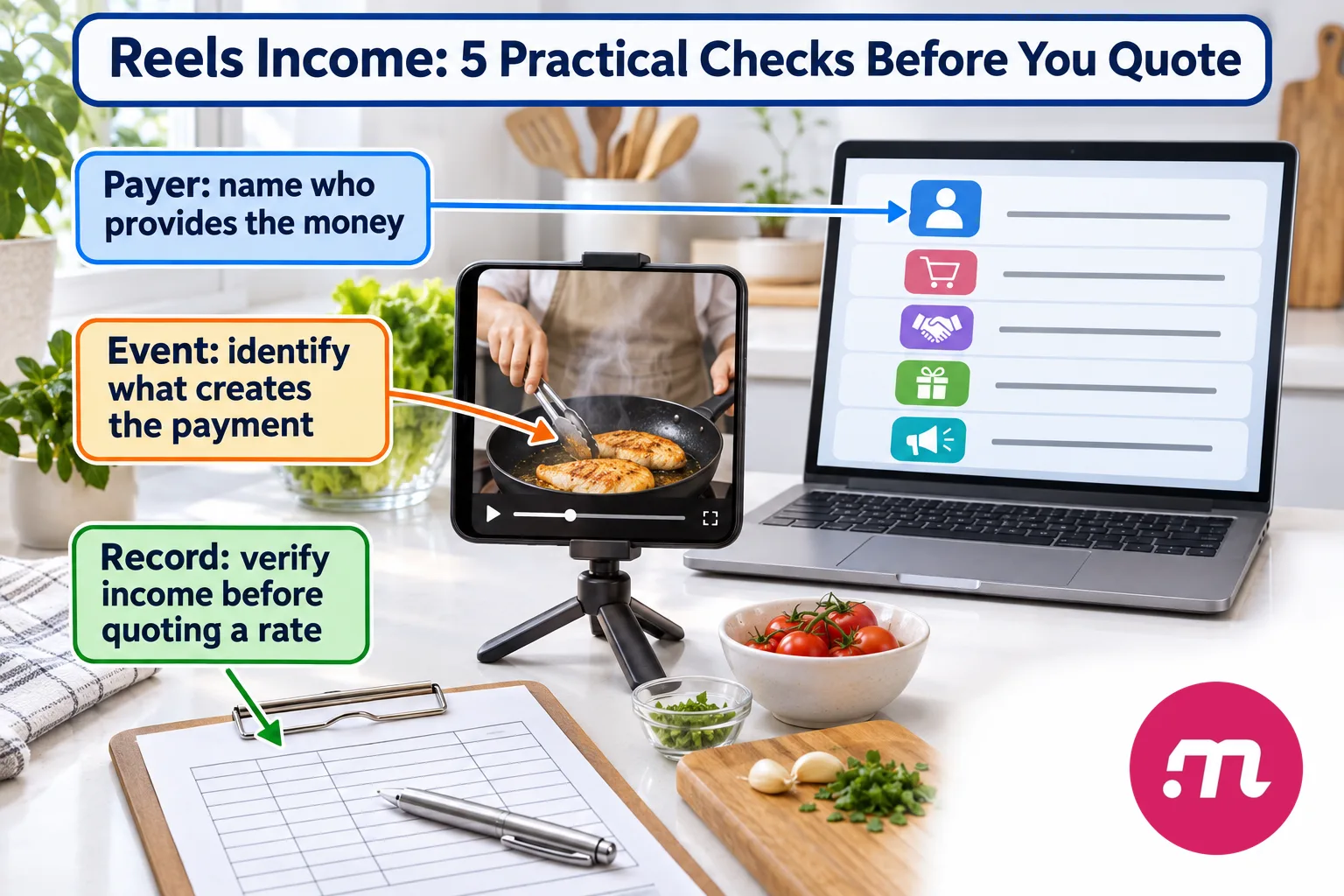
How much Instagram pay for Reels is a question that needs a named income source before it needs a calculator. A view count cannot establish a universal rupee payout. Start by separating eligible platform earnings from a brand's production fee and the money a business makes from customer orders. We'd keep those records apart.
For Indian creators and founders, confusing those amounts can lead to a bad quote or an unrealistic filming budget. This guide, reviewed on 11 November 2026, gives you a practical earnings audit. Use the terms shown to your account and the agreement behind each payment; another creator's screenshot isn't enough to forecast your income.
Table of Contents
- 1. Introduction
- 2. How much Instagram pay for Reels depends on the route
- 3. Check how much Instagram pay for Reels claims
- 4. Audit the earnings tools your account actually has
- 5. Price brand work around what the client buys
- 6. Compare the quote with the work it requires
- 7. Count sales income without mistaking it for profit
- 8. Fix the assumptions that make earnings forecasts fail
- 9. Conclusion: forecast from the transaction, not the plays
- 10. FAQs
How much Instagram pay for Reels depends on the route
Identify the payer before estimating income
If you're asking "does Instagram pay money for Reels?", separate the platform's tools from commercial work that happens because of your content. A supporter may send a Gift. A business may commission a product demonstration. A viewer may purchase something you sell. Each creates a different record.
| Route | What produces income | Amount to inspect | What views cannot establish |
|---|---|---|---|
| Gifts, where offered | Supporters send virtual gifts | The tool's recorded earnings | Whether anyone sent support |
| Subscriptions, where offered | Members pay for continuing access | Subscription earnings and deductions | Whether viewers want a recurring offer |
| A specific bonus offer | Content meets that offer's conditions | The active programme's earnings record | Whether your account has that offer |
| Brand work | You deliver an agreed assignment | The fee and agreed payment terms | What rights or work the client bought |
| Affiliate or own sales | A qualifying purchase occurs | Confirmed commission or completed orders | Whether attention became a purchase |
Keep payment claims specific
We'd avoid labelling every income line "Instagram earnings". A creator receiving a client fee has evidence of a paid assignment, not a standard payment for a certain number of plays. A shop receiving orders has sales revenue, with product and delivery costs still to consider.
That distinction also protects your comparison. Two creators with similar views may have completely different offers and transactions behind their income. You need the mechanism before their numbers become useful.
Check how much Instagram pay for Reels claims
Read the date and the programme
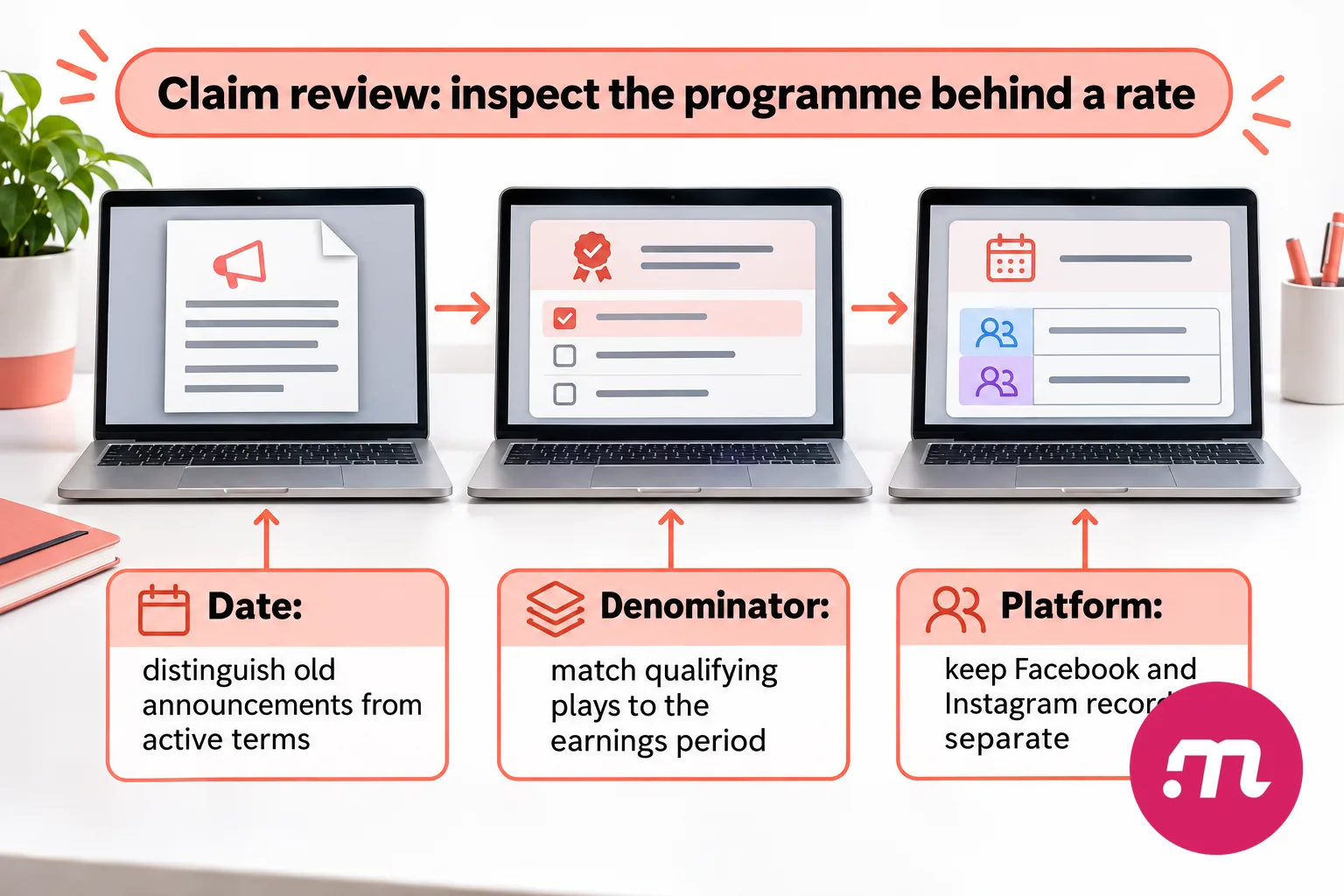
Meta's creator earnings announcement described a limited, invitation-only bonus linked to qualifying plays and photo views. Its 3 April 2024 update named the United States, South Korea and Japan. That historical test doesn't establish a current invitation for an Indian account.
We wouldn't turn that announcement into a 2026 rate card. Check an active offer's period, qualifying content and payment conditions in the account that would earn the money. Keep Facebook and Instagram records separate, even when the same video appears on both.
Do not manufacture a rate from attention
A claim about payment per thousand views needs a numerator and a denominator from the same programme and period. Was the money estimated, confirmed or paid? Were the views qualifying plays, all plays or a different screen's total? Without those answers, division creates a precise-looking number with no reliable meaning.
The same applies to a million-view Reel. It tells you about distribution, not whether a fan payment, active bonus or customer purchase occurred. We'd rather leave the earnings forecast uncommitted than insert a rate copied from a different product or country.
If a prospective partner offers a performance-based fee, define its measurement and settlement in writing. That is a commercial agreement. It should never be presented as the rate Instagram automatically pays everyone.
Audit the earnings tools your account actually has
Check the tool and setup separately
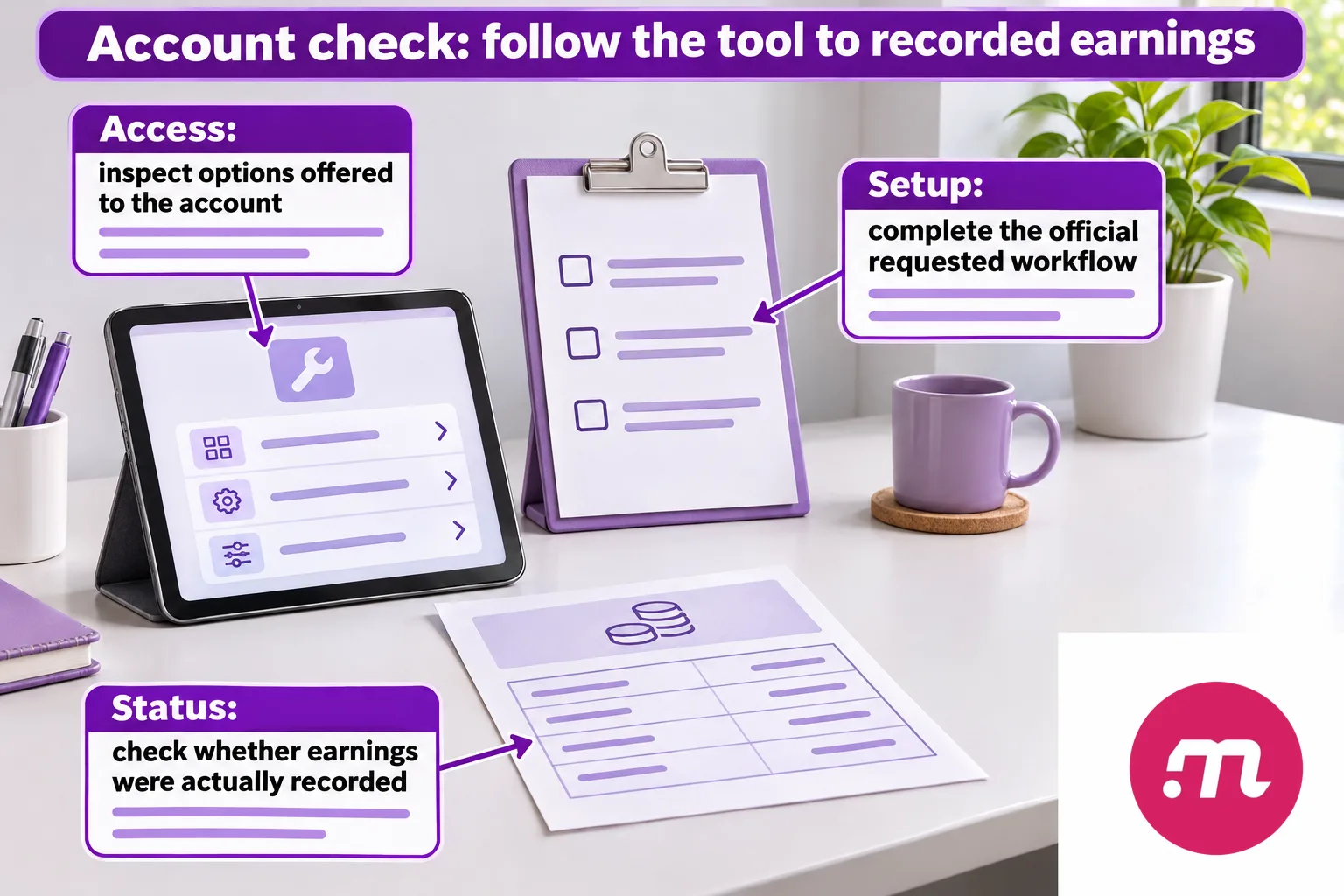
Meta's Gifts explanation describes supporters buying virtual gifts using Stars and directs creators to the Professional Dashboard for eligibility. A supporter action is different from watching. Don't estimate Gifts earnings from views alone.
- Confirm the account and platform you are reviewing.
- Inspect the earnings tools offered in the Professional Dashboard.
- Read the particular tool's current conditions and any restriction.
- Complete its official setup if it is offered to you.
- Check recorded earnings for the period you are analysing.
- Inspect payout status only after confirming money was earned.
- Use official account support for an unresolved message.
Use current conditions, not one follower threshold
Instagram Reels monetization does not have one checklist that proves every tool is available. Read the requirements for the specific option, including any account-standing, location or setup conditions shown. We'd check the tool itself before acting on a generic eligibility tutorial.
Subscriptions, where offered, also require a continuing promise to paying members. Decide what you can deliver repeatedly and how much preparation that requires. A popular public clip doesn't establish that viewers will pay for a longer commitment.
Keep recorded earnings and money received separate. If the tool shows a restriction or unfinished setup, address that exact message. If it records no earnings event, a rising view counter is not evidence that a bank transfer is overdue.
Price brand work around what the client buys
Separate production from audience distribution
Meta's 2024 creator marketplace announcement describes brands and creators reviewing opportunities, requirements and rates before agreeing to work. It also explains partnership ads as a way to amplify content with a partner's handle. Access to a collaboration tool isn't a guaranteed booking.
Consider a hypothetical Jaipur cooking creator approached by a kitchenware business. Producing an accurate pan demonstration for the client's channels is one assignment. Posting that demonstration to the creator's audience adds a distribution commitment. We'd ask which job is needed before quoting.
Put the commercial scope next to the rupee amount
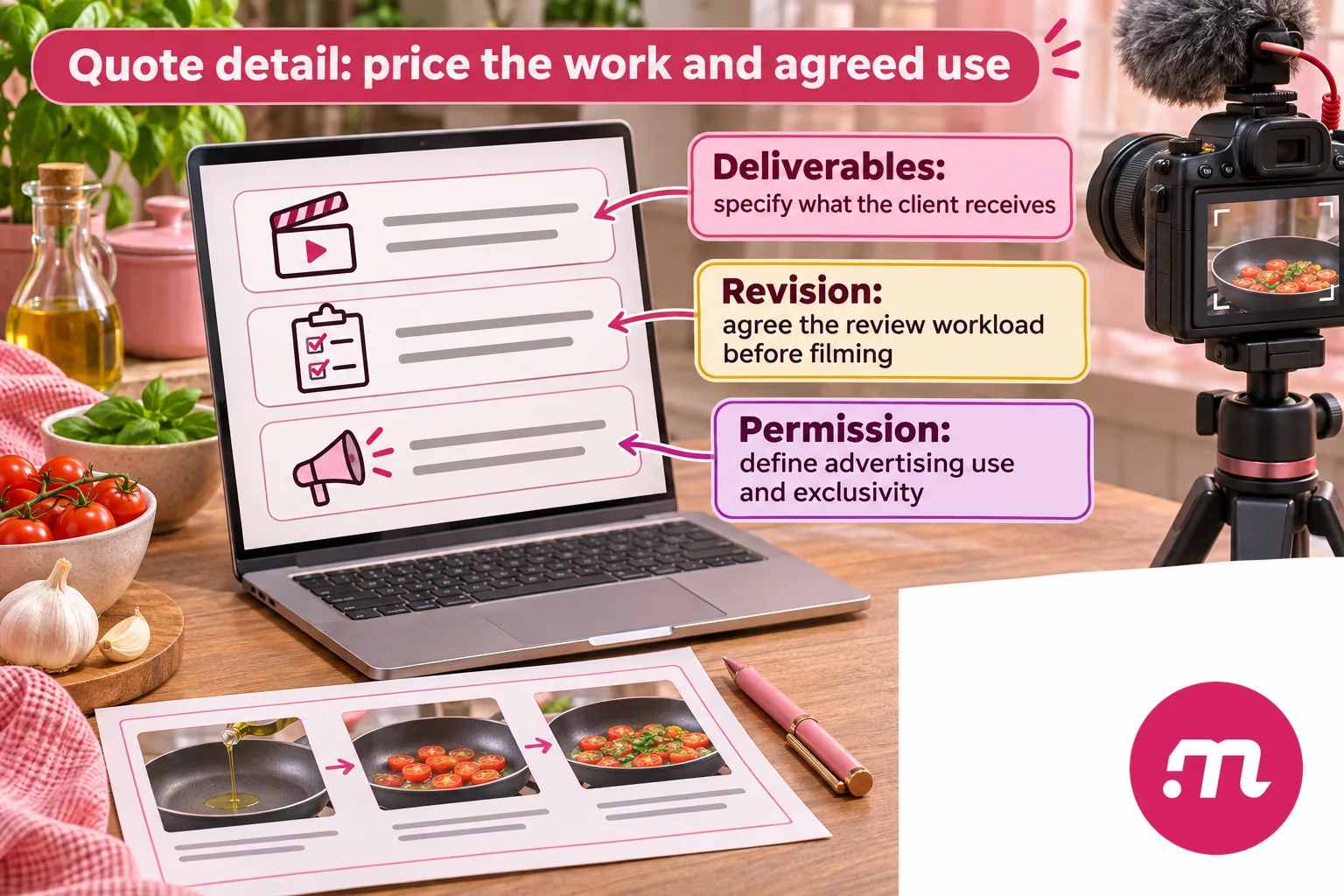
Write down the deliverables and who publishes them. Include preparation, filming and editing in the workload. Agree revisions, review deadlines and payment milestones, then discuss where the content can be reused and for how long.
Paid advertising use, raw footage and category exclusivity deserve an explicit decision. They can affect your workload or the other assignments you can accept. We wouldn't silently include them in a base production fee just because a brand asks for "one Reel".
A cooking creator on Reddit described repeated unanswered quotes despite substantial reach. Cutting the price didn't resolve their uncertainty. That is a useful prompt to inspect the brief and sales conversation, not evidence of a market rate or proof that every unanswered quote is too expensive.
Show relevant work and explain the audience fit. Ask whether the client needs a finished asset, a placement on your page or permission to advertise with the content. Record the answer before you revise the amount. A client needs to understand what the quote purchases, rather than see a number disconnected from the business problem.
Compare the quote with the work it requires
Build a cost record before negotiating
List the time spent on the assignment and any actual expenses. Include ingredients or props, location costs and editing charges where they apply. Use your own records to decide whether the fee makes sense; a creator-income calculator can't know how much revision work the client will request.
For the hypothetical cooking assignment, an extra recipe test can use both ingredients and filming time. A request to reshoot after the client changes the product claim is different from correcting your own production error. Keep the agreed script and approval message with the job record. That gives both sides something specific to compare when a new request arrives, instead of arguing over what a general promise of revisions meant. Agree the review process early enough to make that distinction useful.
Reduce scope when the budget cannot cover it
If a brand's budget is below your workable quote, discuss a smaller assignment. That might mean fewer deliverables or a narrower usage permission, provided both sides agree. We'd prefer a clearly bounded job to an attractive fee that expands after you start filming.
Keep disclosure in the scope too. ASCI's influencer guidance calls for upfront, prominent disclosure when there is a material connection, including free products. A barter offer doesn't remove that responsibility. Check that product claims can be supported before you turn them into a script.
We'd assess gifted products according to whether the assignment is worth doing for you, rather than equate a retail price with cash available to pay an editor. The practical question is what you receive and what work you owe.
Count sales income without mistaking it for profit
Affiliate commission needs confirmation
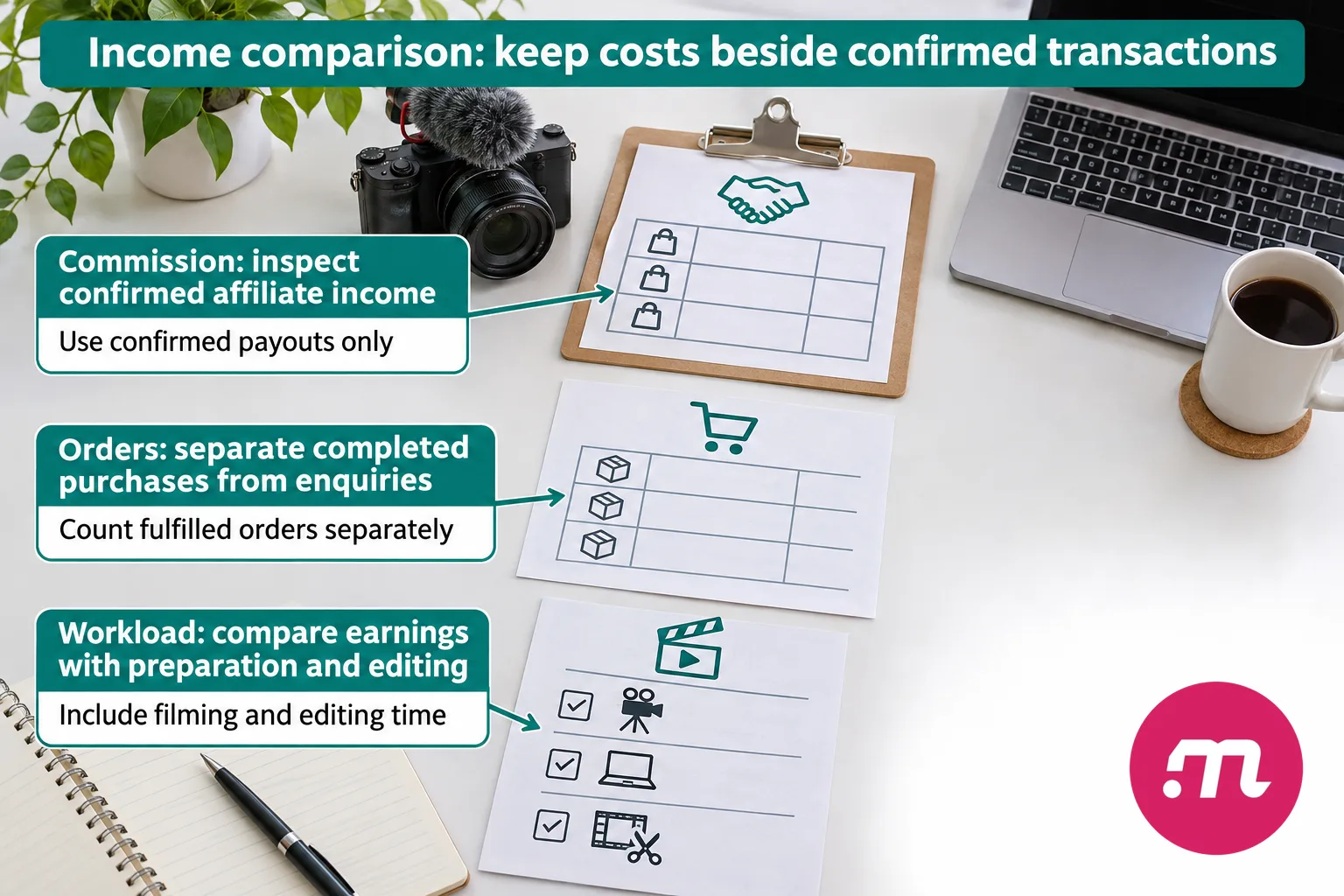
If you're exploring how to monetize Instagram Reels with affiliate recommendations, check the partner's qualifying action and permitted placement. Read how attribution and cancelled orders affect commission. Report confirmed commission under those terms, rather than multiplying all video views by an assumed purchase rate.
For your own offer, record completed orders and refunds separately from enquiries. A recipe creator could sell a relevant original resource, but the video must help the intended buyer understand it. We'd test that fit before adding more reminders to buy.
Measure the business outcome you need
Keep production cost beside the income route. Customer revenue may still need to cover product costs and fulfilment. A client fee may still need to cover subcontracted editing. Those comparisons are more useful than a large gross number on a media kit.
Conversion rate needs a named action and denominator, such as completed purchases divided by relevant visits. CAC compares acquisition cost with new customers under a defined method. ROAS compares attributed revenue with advertising spend; a view total alone doesn't supply either side of that calculation.
The Urban Vada Pav case study reports daily footfall moving from 40 to 210 and cost per walk-in from ₹220 to ₹58 through broader marketing work. These figures describe customer outcomes, not Instagram payments for Reel views. A local business should choose measures connected to its actual sales process.
For more on how we approach that planning, see Mommantum's marketing FAQs. Bring the income route and the unresolved measurement question when comparing options. We'd start with a recent completed transaction: trace the payment back to the assignment or order, then attach its actual costs. If that record is incomplete, improve the record before using it to set a larger production commitment.
Fix the assumptions that make earnings forecasts fail
Do not price from a standout post alone
A Reddit creator with an Indian audience asked what to charge while describing both ordinary and exceptionally high-performing Reels. The useful distinction is repeatable evidence versus a standout result. We'd explain the content sample and audience to a prospective client rather than promise the best result again.
Another forum discussion asked how to account for usage and exclusivity beyond follower count. Treat those as negotiating questions, not universal percentage surcharges. The scope you accept determines what you must deliver and which other work you may have to decline.
Use an evidence checklist before the next commitment
- Name the payer and the transaction that creates income.
- Confirm current tool access or a written client agreement.
- Separate views from qualifying earnings and received payments.
- Record production costs and any recurring delivery promise.
- Review actual results before expanding the commitment.
Work with content you created or have permission to use, and check the applicable monetization conditions as well. Permission and programme eligibility answer different questions. Don't build an earnings forecast around footage you cannot use for the intended purpose.
At Mommantum, we'd answer how to earn from Instagram Reels by identifying the transaction and the work behind it. That gives you something to test, even when a platform earnings tool isn't offered to the account.
Conclusion: forecast from the transaction, not the plays
Check the current account tool for platform earnings and the written scope for brand work. Use confirmed commercial records for affiliate income or customer sales. Keep costs visible, and don't convert attention into rupees until you can explain what actually creates the payment.
For help connecting Reels content with an offer and a measurable customer action, explore Mommantum's social media marketing support and book a free strategy call. Bring a recent brief or offer so the next discussion starts with a concrete decision.
Frequently Asked Questions
Key takeaways and practical details on this topic.
Instagram Reels income cannot be calculated from a universal payment per view. Check the specific account tool or commercial transaction creating the money, then inspect its actual earnings record or agreement. A brand fee, fan support and customer sales need separate records because they pay for different actions.
A thousand Instagram Reel views don't establish a fixed payment you can forecast. Identify whether an eligible supporter action, active programme or commercial sale occurred. For a brand assignment, inspect the written fee and scope; that amount is a client payment, rather than a standard Instagram rate per thousand plays.
A million Instagram views are insufficient to calculate income without the earnings mechanism behind them. Check the platform tool's recorded earnings or the commercial agreement involved. Large distribution can bring an opportunity, but it doesn't show whether anyone sent support, commissioned work or bought a relevant offer.
Instagram can support earnings through eligible tools, while businesses and customers can pay for work connected to Reels. The payment depends on the actual event or agreement, not the view counter alone. Check the account tool separately from brand invoices and completed customer orders before forecasting income.
Monetize Instagram Reels by choosing an income route and confirming what creates its payment. Inspect tools offered to the account, then assess brand assignments, affiliate agreements or a relevant offer of your own. Record the earnings event and the work required so the next production decision has evidence behind it.
Earn from Instagram Reels by delivering something a supporter, client or customer wants to pay for. A creator could produce an agreed brand demonstration or sell a relevant original offer. Make the scope and next step clear, then compare confirmed income with preparation, editing and customer delivery costs.
Instagram follower requirements depend on the specific platform tool, so one threshold cannot establish every income route. Read the current conditions shown to your account. For commercial production, inspect the assignment and relevant portfolio instead of treating follower count as proof that a client will book or pay you.
Price a sponsored Reel in India around its actual deliverables, production work and agreed use, rather than a universal follower formula. Discuss paid advertising use, revisions and exclusivity explicitly. Check your own cost record to decide whether the rupee fee covers the work before accepting the assignment.
Unanswered cooking-page quotes don't establish that your fee is too high. Ask about the brief, audience fit and intended use before sending another isolated price. Show relevant work and put deliverables beside the amount, then consider a smaller scope if the client's budget cannot cover the assignment you can deliver.
An exceptional Reel's reach isn't a reliable promise for every brand assignment. Present a clear sample of relevant work and distinguish ordinary performance from the standout post. Agree the production and distribution scope, then price the job you can deliver rather than guarantee that the highest result will repeat.
Discuss advertising use and competing-work restrictions separately from making the Reel. Confirm where the asset can run, the duration and which work you would have to decline. Put the agreed scope beside the fee so both sides can change terms deliberately instead of assuming broad permissions came with the production.
Strong reach without bookings needs a sales-conversation review before a price cut. Compare the client's stated need with your portfolio and proposed deliverables, then record where the discussion ends. An unanswered message alone doesn't reveal the reason, so ask for a clear brief and assess fit before revising the quote.
Ready to implement this for your brand?
Connect with our Jaipur growth studio to turn these strategies into revenue for your D2C or ecommerce business.