Fundamentals of Social Media Marketing: Build Your First Plan in 2026
Learn the fundamentals through a working first-week plan. Choose a customer problem, prepare useful content and measure the response before expanding.

Introduction
The fundamentals of social media marketing become useful when you can explain why a post deserves your customer's time. A regular schedule doesn't answer it. If the people watching cannot understand your offer or take the next step, a larger following leaves the same problem unresolved.
We'd begin with a customer problem and a business action, then work backwards to the explanation that connects them. You can learn the basics while doing that work. This guide covers seven fundamentals and a first-week exercise you can run with the information, people and budget you already have.
Table of Contents
- 1. Introduction
- 2. Understand what social media marketing does
- 3. Seven fundamentals of social media marketing
- 4. Choose channels by fit and production capacity
- 5. Create useful content and handle the conversation
- 6. Measure behaviour before claiming a business result
- 7. Practise the fundamentals of social media marketing
- 8. Budget the work and decide who should do it
- 9. Avoid the mistakes that make beginners feel stuck
- 10. Conclusion: learn by completing a useful customer path
- 11. FAQs
Understand what social media marketing does
Connect discovery with a buying decision
Marketing through social media means using content and conversations on social platforms to support a business objective. Someone may discover a product, compare it with alternatives or ask a question before buying. Your work should help at the relevant point, rather than assume every viewer is ready to order.
Organic content earns distribution without a media payment for each placement; paid advertising purchases distribution. Both still require production and management effort. We wouldn't describe organic marketing as free when your staff spend time filming, editing and replying.
Know the difference between activity and strategy
A strategy explains which customers you want to serve and the approach you believe will help them choose you. A calendar turns that direction into scheduled work. You can execute a post well and still be unclear about what it should achieve.
That distinction appears in a real Reddit question from a freelancer who already made product content and posted consistently, yet couldn't explain whether the work amounted to strategy. We'd answer by inspecting the intended customer decision, rather than prescribing more posts.
Use our guide to what a social media strategy involves for that distinction. Your first practical task is smaller: name the question a customer must resolve before taking the action your business needs.
Seven fundamentals of social media marketing
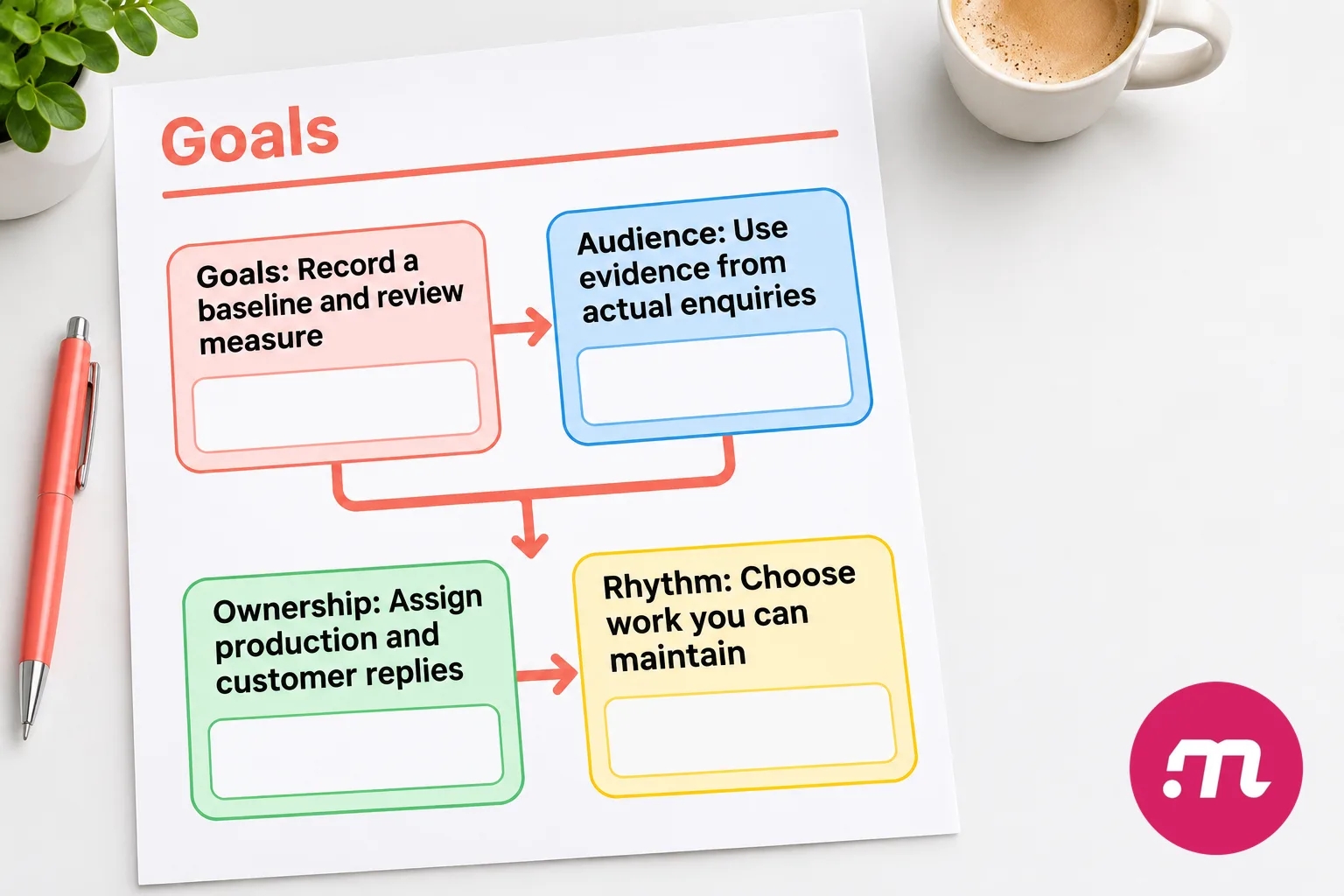
Start with goals and customer evidence
Your goal should describe a useful action, such as suitable enquiries for a service or retained orders for a store. Record the starting point using your own business records. A follower target may help explain audience growth, but it doesn't establish whether buyers are suitable.
Audience research begins with actual conversations. Ask who buys, what prompted the enquiry and what caused hesitation. For an illustrative furniture shop, a customer may need to understand whether a desk fits a small room. That question tells you more about the required content than a broad age range does.
Make the other fundamentals serve that purpose
| Fundamental | Decision to write down | Working output |
|---|---|---|
| Goals | Which business action matters? | A definition and baseline |
| Audience | Who needs help deciding? | A real buyer question |
| Platforms | Where can you reach and support them? | A channel role |
| Content | What evidence answers the question? | A production brief |
| Engagement | Who handles the response? | A reply and handoff owner |
| Analytics | How will you judge the response? | A review measure |
| Consistency | What can you maintain? | A realistic delivery rhythm |
Mailchimp's planning guidance brings goals, customer profiles, metrics and calendars together. We'd keep your working brief short enough to use during delivery. More detail helps only when it resolves a decision or makes a task clear.
Choose channels by fit and production capacity
Give your first platform a specific role
Choose a channel using evidence about your buyers and the content you can produce. Instagram may be worth testing for visual demonstrations. YouTube may suit an explanation that customers need to understand before comparing products. Facebook may be useful where your business already has a responsive community.
Those are possible roles, not universal rules about Indian audiences. A professional service might need a different conversation from a local shop. Inspect your current enquiries and account history before treating platform popularity as a reason to invest.
We'd start with a primary channel when resources are limited. Add another when you can describe its purpose and supply the extra work. Before opening another account, check whether your current enquiries receive an answer.
Adapt the format without changing the facts
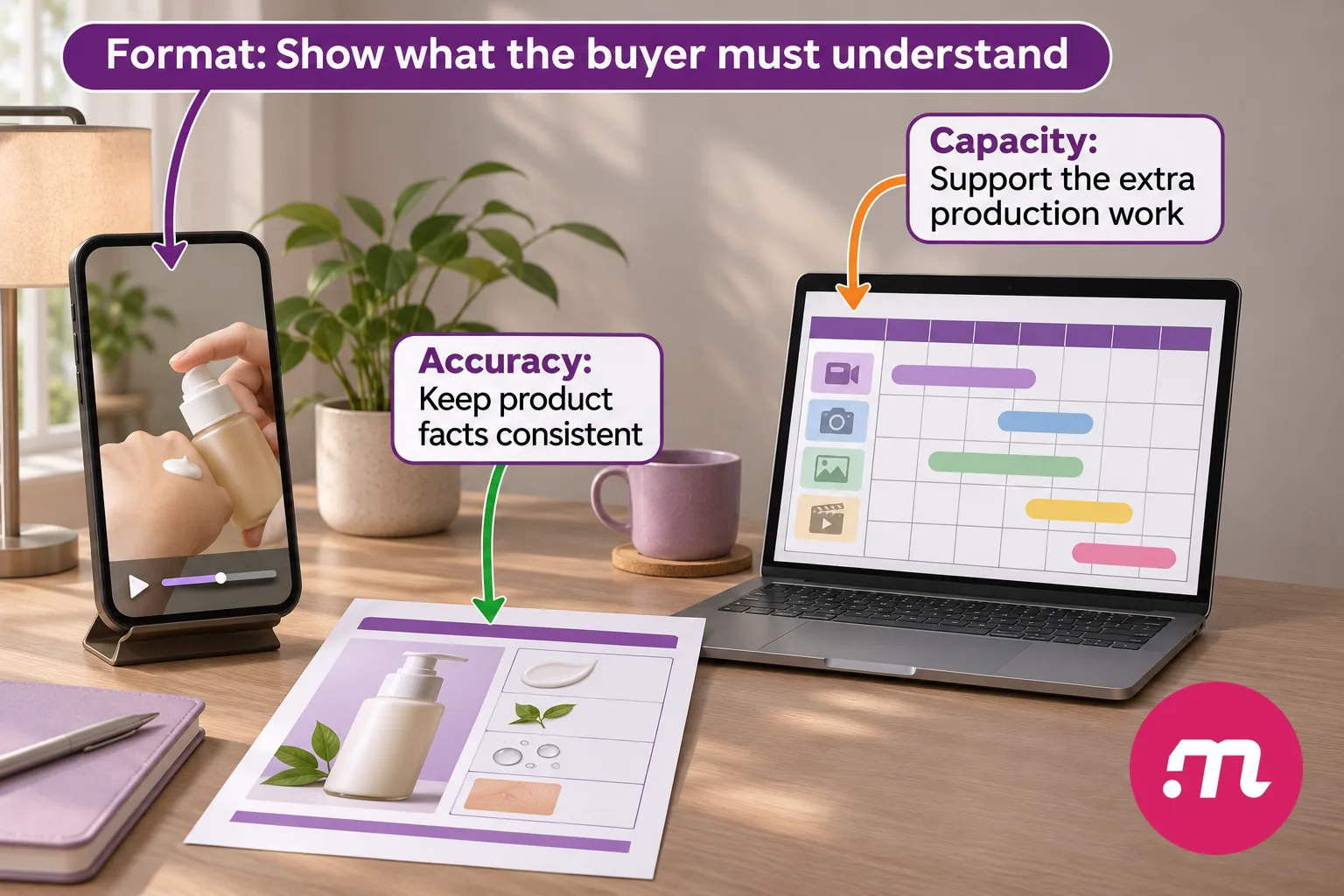
A short video can show movement or a product in use. A still image can make a dimension easier to inspect. A comparison can explain who should choose a particular option. Use the format that answers the question clearly.
For the furniture example, show the desk in context and provide approved dimensions. Don't stretch the object to make it look more spacious. The explanation should stay accurate across every version.
Set a production rhythm you can maintain alongside stock updates and customer service. We wouldn't increase frequency until the current work can be approved and answered properly. Consistency means dependable execution, not a promise to publish daily regardless of quality.
Create useful content and handle the conversation
Write the brief before you open an editor
Record the buyer question, the approved evidence and the intended action. Add the person responsible for production and the person who can approve factual claims. That gives an editor a decision to support instead of a vague request to make something engaging.
For our illustrative desk post, the evidence could be the product measured correctly and shown beside an ordinary chair. The next action could be inspecting the relevant product page. This is a proposed assignment, not a reported client result.
We'd keep the explanation direct. A dramatic opening that promises something the product doesn't provide may attract attention while creating unsuitable expectations. Get permission before using customer material, and keep any testimonial faithful to what the person actually said.
Plan the reply as part of the work
Assign someone to comments and enquiries. Give them approved product information and a route for questions they cannot answer. A customer asking about delivery should receive a clear answer, not another promotional message.
For social media management in India, language support extends beyond captions. If a Hindi or regional-language explanation attracts questions, decide who can respond accurately in that language. A translated post without a supported conversation can leave the buyer stuck.
Use a private conversation for information that shouldn't appear publicly. Keep the handoff to ordering or fulfilment visible to your team. We would rather have fewer supported enquiries than a message total that nobody takes responsibility for.
Measure behaviour before claiming a business result
Separate attention from customer actions
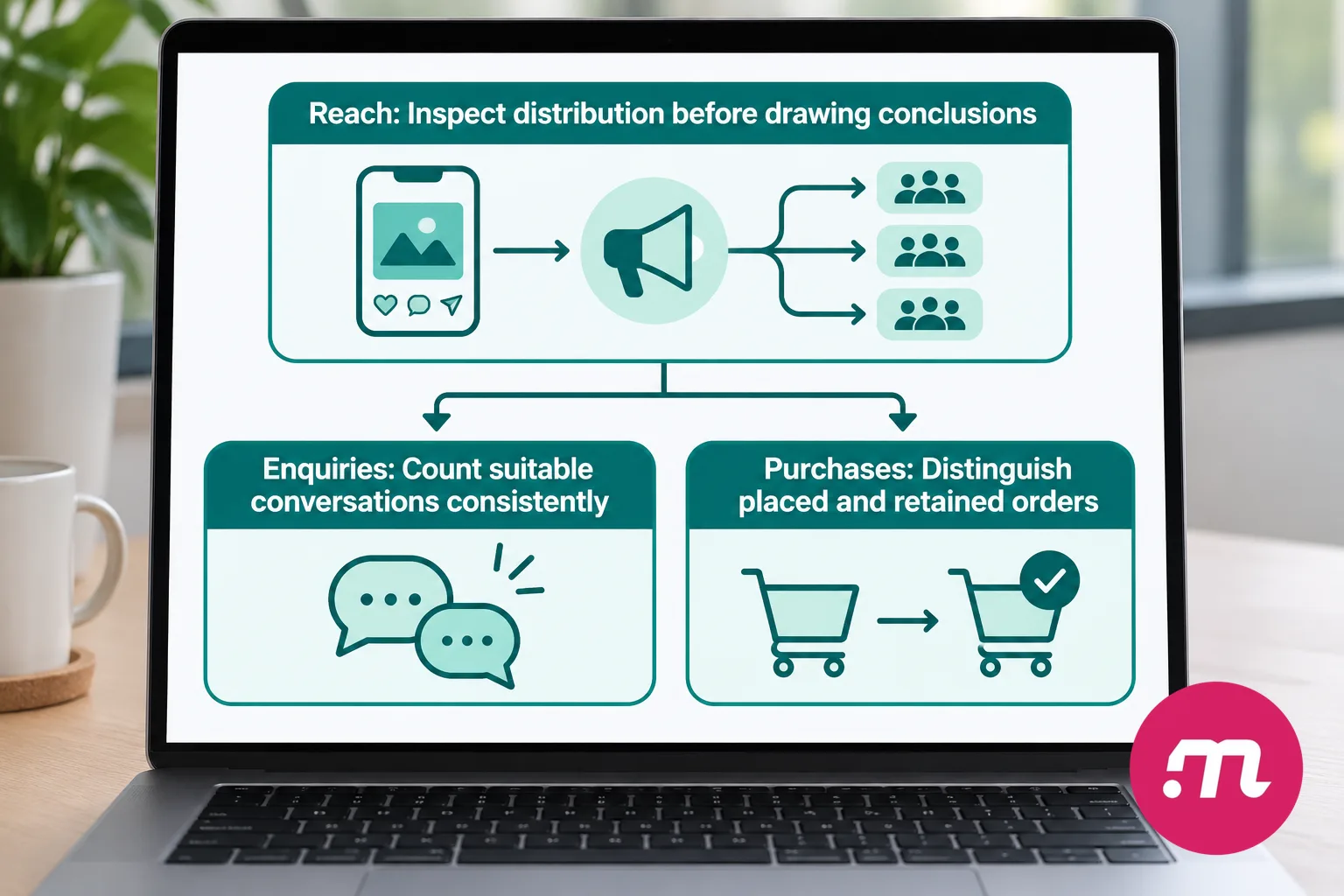
Reach helps describe distribution. Views and engagement help you understand the response to the content. Relevant product visits, suitable enquiries and retained purchases tell you something different about the business response. Decide which measure belongs to your goal before launch.
Keep the definitions stable. An enquiry outside your service area shouldn't become a qualified lead merely because it appears in an inbox. A placed order and a retained order are different when cancellations or returns occur.
We wouldn't dismiss attention measures, but we'd resist treating them as proof of sales. They help diagnose where the path may need work. A report should explain a decision you can take.
Use tracking that matches the customer path
Google's campaign URL guidance explains source, medium and campaign parameters, with utm_content available to distinguish creative versions. Keep naming consistent and test the destination link. When an order closes through a conversation, retain an operational record rather than expect the website report to capture every step.
ROAS compares attributed revenue with advertising spend. It isn't profit after fulfilment, returns and management costs. CAC is acquisition cost per customer; state which costs you included. Avoid adding each platform's claimed conversions as though they were automatically distinct customers.
At Mommantum, we'd review the explanation behind a result before recommending more production. If suitable visits arrive but purchases stall, inspect the product page and delivery information. More videos may be the wrong next task.
Practise the fundamentals of social media marketing
Build a first-week plan from existing information
Use the following sequence as a proposed working exercise, not a promise of results within a week. You need access to customer questions and accurate product information. A phone and a simple working document can be enough to begin.
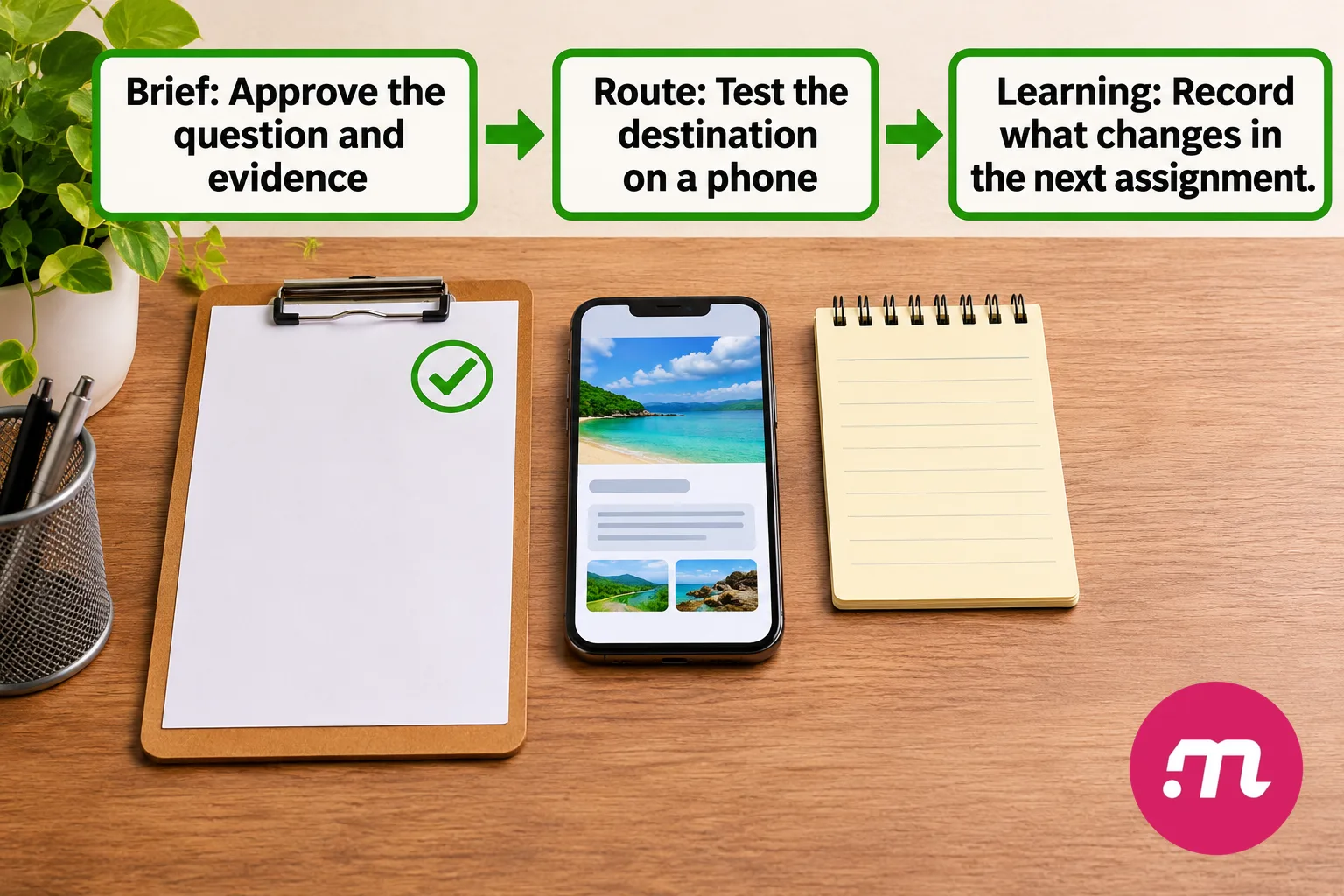
- Collect recent enquiries and select a recurring question linked to a useful business action.
- Write the goal with a baseline from your records, a target you can justify and a review date.
- Choose a channel you can maintain and explain why it fits the customer question.
- Prepare a content brief with approved evidence, a producer and an approver.
- Test the destination on a phone, including payment or enquiry handling where relevant.
- Publish the approved assignment and make sure someone owns the response.
- Record the evidence and choose what to improve in the next test.
Fill this compact template before production
| Field | What to enter |
|---|---|
| Customer question | The wording you hear in real enquiries |
| Intended action | A suitable enquiry, visit or purchase |
| Proof | The approved information or demonstration |
| Destination | The relevant page or staffed conversation |
| Owners | Producer, approver and reply owner |
| Review | What to inspect and when to decide |
A SMART goal is specific, measurable, achievable, relevant and time-bound. The framework doesn't supply your target for you. We'd use the baseline and business capacity to judge the target rather than borrow an impressive percentage from another brand.
Your social media marketing plan can develop as you learn. Keep the reason for each change in the document. That way a new editor or supplier can understand why the work exists instead of restarting the discussion from a blank calendar.
Budget the work and decide who should do it
Compare costs against an explicit scope
In a public price page checked on 8 November 2026, Digital Online Solution lists social media packages at ₹12,000, ₹22,000, ₹35,000 and ₹55,000 monthly. These are examples from one provider, not a national average or a Mommantum quotation. The page lists GST and advertising spend separately.
Ask what each quotation includes. Filming, editing and community replies are different responsibilities. Software and creator fees can also change the total. We'd compare providers using the same brief so a cheaper price doesn't simply conceal work left with your staff.
Don't infer an advertising budget from a revenue ambition alone. Use your margins and cash commitments to establish an affordable test boundary. Record the staff time for organic work too.
Hire for the gap you actually have
An internal team can stay close to daily product changes. A freelancer can fill a specific skill gap. A social media marketing company can coordinate several roles, provided its scope names the people doing the work.
Ask to inspect a relevant authorised example and meet the delivery team. A badge or confident sales pitch doesn't establish suitability. We'd prefer a provider that explains its contribution and limitations over one promising guaranteed sales.
If you want structured study alongside practice, HubSpot Academy's free social media course covers strategy and measurement. Use training to improve an actual assignment; a certificate doesn't replace testing your customer path.
Avoid the mistakes that make beginners feel stuck
Fix the decision before increasing activity
| Mistake | What to change |
|---|---|
| Posting because the calendar has a gap | Start with an unanswered customer question |
| Opening every platform at once | Choose a primary channel with a defined role |
| Judging sales from views alone | Inspect the intended customer action separately |
| Buying editing without a brief | Approve the claim and required evidence first |
| Generating enquiries without reply ownership | Assign the conversation and fulfilment handoff |
Learn from the weak response
If a post goes unnoticed, inspect whether the question matters to the audience and whether the opening makes that relevance clear. If interest appears but the next step fails, test the destination. These are diagnostic questions, not guaranteed explanations.
We'd change a clear part of the assignment and record why. Changing the offer, format and destination together makes it harder to understand what helped. Some buying decisions also take time, so avoid treating a quiet afternoon as a verdict on the entire plan.
Conclusion: learn by completing a useful customer path
The basics work together when a real buyer question leads to accurate content and a supported next action. Choose a manageable channel, assign the work and judge the response using consistent definitions. Then use what you learn to improve the next assignment.
Book a free strategy call through our social media marketing service. Bring a recent customer question and your current calendar. We'd identify the next useful test before recommending more production.
Frequently Asked Questions
Key takeaways and practical details on this topic.
The fundamentals of social media marketing are goals, audience understanding, channel choice, content, engagement, analytics and consistency. Use them together to answer a buyer question and support a business action. We'd start with real enquiries, then assign the content and replies. A regular posting schedule helps execution, but it doesn't establish the purpose of the work.
Beginners should start with a customer question they can answer accurately on a channel they can maintain. Choose the next customer action and test its destination on a phone. We'd also name the reply owner before publishing. That gives you a complete assignment to learn from, without requiring a large tool stack or presence on every platform.
Create a social media strategy by defining the business objective, intended buyer and approach you believe will help that buyer decide. Then select channels and content that serve that approach. We'd record the reason behind each choice before building the calendar. The plan also needs responsibility for enquiries and a review measure linked to the objective.
An actual social media strategy explains whom you want to influence and why the proposed approach should help your business. Editing and posting are activities that carry out those choices. We'd inspect the customer decision behind the content rather than judge strategy by production quality alone. A useful brief names the hesitation, supporting evidence and intended action.
Social media management costs depend on the scope, production and people supplied. One provider's published monthly packages run from ₹12,000 to ₹55,000, with GST and advertising spend separate. These are examples rather than a national average. We'd compare a common brief across quotations and check who supplies footage, approves claims and answers enquiries.
The best platform is the one that fits your customers' behaviour and your ability to produce useful content and handle responses. Inspect existing enquiries and account history before choosing. We'd begin with a primary channel if resources are limited. Add another when its role is clear and your team can support the additional work.
Measure social media results against the customer action you chose before launch. Review attention separately from suitable enquiries or retained orders, and keep the definitions consistent. We'd use campaign parameters for website links and operational records for conversational orders. A useful report ends with a reasoned next test, rather than treating every view as evidence of revenue.
Hire a social media marketing company when you need several responsibilities coordinated and the proposed team can explain how it will do that work. A freelancer may suit a narrower skill gap. We'd inspect authorised examples, meet the delivery team and compare complete scopes before signing. Your business still needs someone who can approve accurate product information.
Practise one complete customer assignment before trying every app: choose a real question, prepare accurate evidence and test the next action. Give the work a producer and a reply owner. We'd learn from the response before increasing the scope. The useful first skill is making a business decision clear, rather than learning every publishing tool.
Your client work has a strategy when you can explain the business objective, intended buyer and reason the proposed approach should help. Polished posts alone don't answer those questions. We'd ask you to attach each assignment to a buying hesitation and review the customer response. Keep the production skill, but make the purpose and evidence visible.
Organise your kidswear work around accurate sizing information and a clear ordering process before increasing production. Decide who films, who edits and who answers questions about availability or delivery. We'd test the route on a phone using an actual product. You can then judge whether outside editing support fills the gap or whether you also need planning and coordination.
Assess an agency by inspecting a relevant authorised example and meeting the people proposed to deliver your scope. Ask them to connect a real customer question with content and a measurable action. We'd also request exclusions and handover responsibilities in writing. A provider should explain those choices plainly; you don't need to master every tool to evaluate ownership.
Ready to implement this for your brand?
Connect with our Jaipur growth studio to turn these strategies into revenue for your D2C or ecommerce business.