Does Instagram Pay Money for Reels? 5 Practical Income Checks for Indian Creators and Brands Before You Budget for Views, Chase Bonus Invitations or Mistake an Eligible Account for a Confirmed Payout
Views, eligible tools and bank payouts answer different questions. Check what creates the income before you increase your Reels production budget.
Introduction
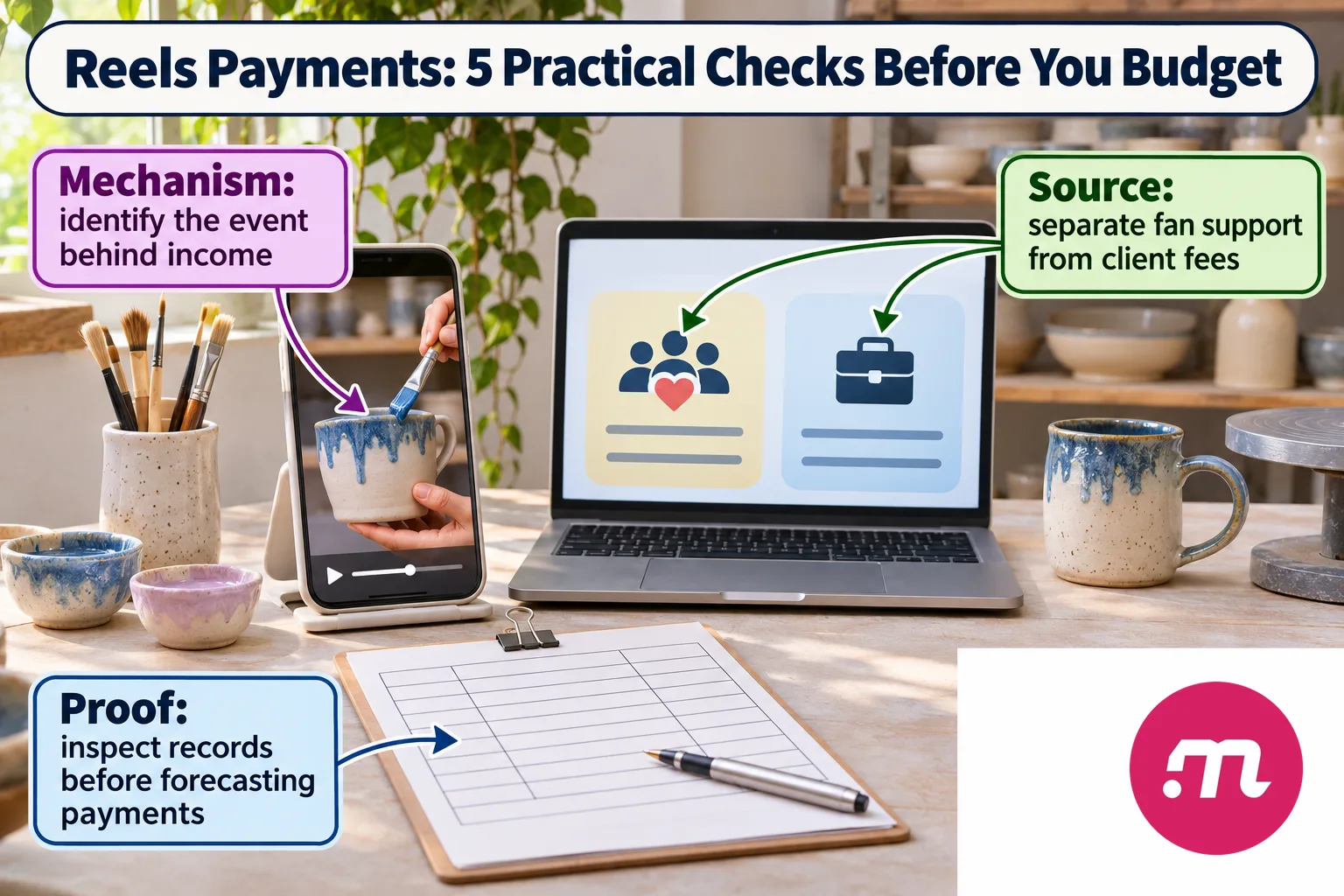
Does Instagram pay money for Reels? Money can come through specific earnings tools or commercial work connected to a Reel, but a large view count isn't a payment instruction. Before you spend on filming, identify the programme or customer transaction that could create the income. We'd ask for that evidence before forecasting a rupee.
For an Indian creator or founder, the distinction changes the budget. You might be checking an earnings screen, negotiating a brand assignment or trying to sell your own product. This guide, reviewed on 11 November 2026, separates those cases and gives you a practical way to investigate an account without relying on another creator's payout screenshot.
Table of Contents
- 1. Introduction
- 2. Does Instagram pay money for Reels automatically?
- 3. Does Instagram pay money for Reels in your case?
- 4. Check the account before troubleshooting the bank
- 5. Choose income you can actually deliver
- 6. Turn attention into a relevant customer action
- 7. Measure earnings without confusing them with growth
- 8. Avoid the shortcuts behind payout confusion
- 9. Conclusion: verify the payment mechanism first
- 10. FAQs
Does Instagram pay money for Reels automatically?
Start with the event that creates earnings
Watching, sending a Gift and buying a product are different actions. A Reel can perform well at the first and produce neither of the others. Instagram Reels monetization is therefore a set of possible income routes, each with its own conditions, rather than a universal reward attached to every play.
Meta's explanation of Instagram Gifts describes supporters purchasing virtual gifts through Stars and directs creators to their Professional Dashboard to check eligibility. The supporter action matters. A view counter cannot tell you how much support was sent.
Separate the source of the money
| Income route | What creates the income | Evidence to check | Main limitation |
|---|---|---|---|
| Gifts | Eligible fan support | The tool's recorded earnings | Access and supporter choice |
| Subscriptions | Payment for a continuing offer | Subscription and earnings records | Access and ongoing delivery |
| A specific bonus | The offer's qualifying conditions | Active terms and programme record | Invitation and offer restrictions |
| Brand production | An agreed client assignment | Accepted work and client payment | Finding and serving a client |
| Affiliate or own sales | A qualifying purchase or customer order | Confirmed commission or completed order | Relevant demand and fulfilment |
We'd keep these income lines apart. A brand fee can arrive because you produced a useful video, even if Instagram's earnings screen shows nothing. That doesn't make the fee an Instagram per-view payout.
Does Instagram pay money for Reels in your case?
Old announcements describe particular programmes
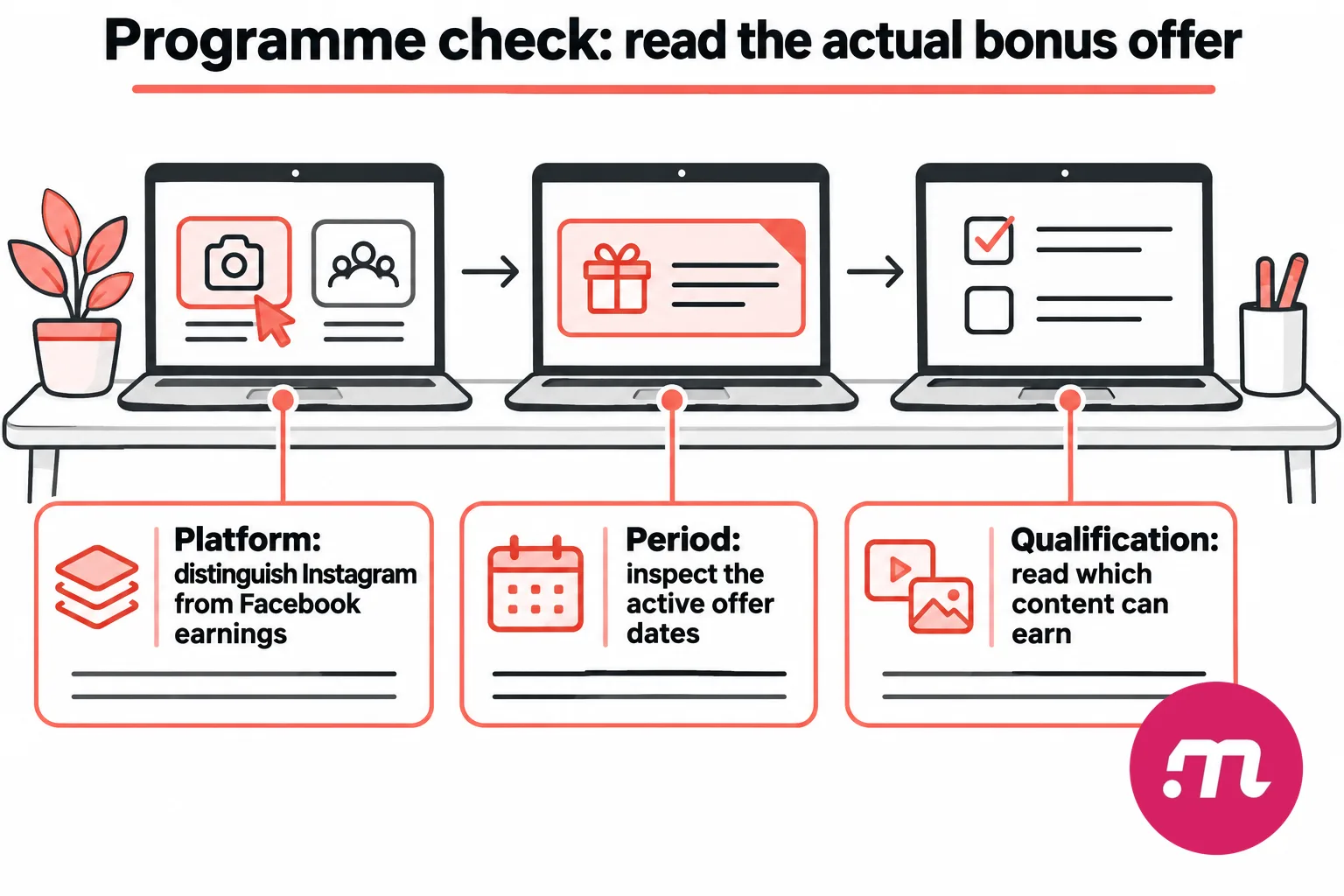
Meta's creator earnings announcement described an invitation-only bonus tied to qualifying plays and photo views. Its update on 3 April 2024 named the United States, South Korea and Japan for that limited-time test. Those details describe that announcement, not a promise of current access for every Indian account.
We wouldn't use that page's old eligibility numbers as a current checklist. Tool requirements and availability can change. A 2026 article should help you inspect the actual offer, rather than turn a historic rollout into a standing entitlement.
Compare like with like
When someone shares an earnings screenshot, ask which platform and programme produced it. A Facebook earnings record doesn't establish an Instagram payment. Nor does a brand invoice establish that plays alone triggered payment.
If you're offered a bonus, read its active period and qualifying content rules inside the account. Check whether the amount shown is an estimate or a payment record. We'd save those terms before making a production commitment, because the economics of a temporary offer can differ from an ongoing customer business.
The search phrase "how much Instagram pay for Reels" encourages a simple rate. Don't apply one without a named mechanism. A quoted amount per thousand views is meaningless for your forecast if your account has no matching programme or qualifying earnings event.
Check the account before troubleshooting the bank
Run a tool-specific check
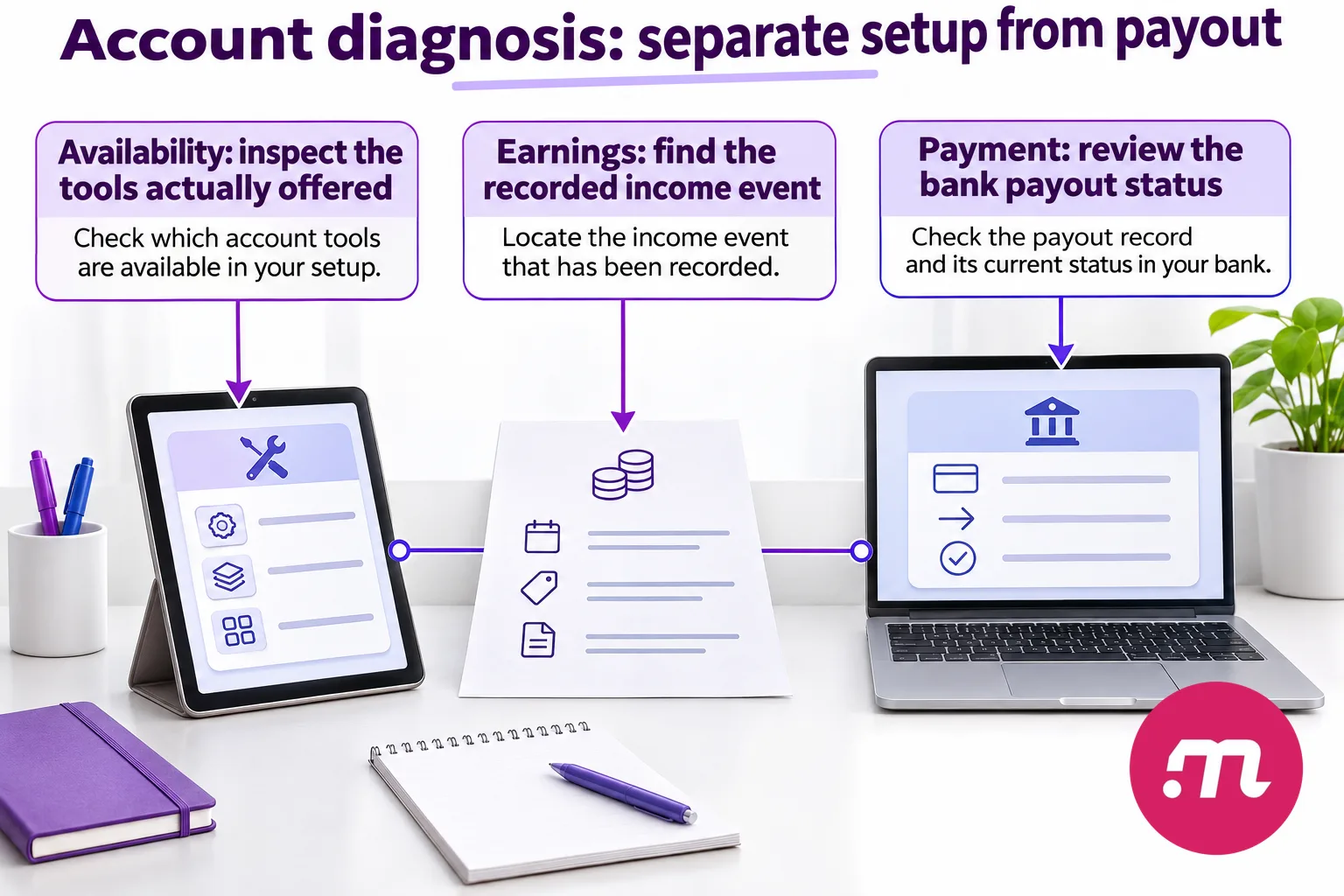
Open the intended professional account's dashboard and inspect the exact earnings tool. You need the account's own status, not a general statement that Instagram supports monetization. Write down the tool name and the message shown before changing anything. We'd start there.
- Confirm the publishing account and platform.
- Inspect the earnings tools offered in its Professional Dashboard.
- Read the specific tool's current requirements and restrictions.
- Check whether official setup or acceptance remains incomplete.
- Review the tool's actual earnings record for the relevant period.
- If earnings exist, inspect the payout status and requested payment details.
- Use the official account support route for a message you cannot resolve.
Distinguish availability, earnings and payout
A missing tool is an availability question. An offered tool with no recorded earnings needs an earnings-event check. Recorded money awaiting a payout needs a payment-status check. They may look similar when your bank balance hasn't changed, but they call for different evidence.
One Reddit creator described an account labelled monetized without receiving payment. Another reported strong Reel performance and a zero earnings dashboard. These are useful diagnostic situations, not proof of what every creator earns. We'd investigate the tool and transaction before assuming the bank is at fault. Keep a screenshot of the exact message for your support request, but don't share banking details or account access in a public forum.
Don't repeatedly change payment details merely because the view counter rises. Follow the official workflow and note any stated hold or missing information. Use the product, payment method and account terms to establish the payout date and minimum. If the screen names an unresolved requirement, that is your next task; filming another video cannot complete it. Once the official workflow shows a payment as sent, compare that record with the receiving account and use its support guidance if the two don't agree.
Choose income you can actually deliver
Fan income needs more than discovery
Gifts depend on viewers choosing to support you through an available tool. Subscriptions, where offered, require something people want to keep receiving. Neither model follows automatically from a popular public clip. We'd assess audience demand before building recurring production costs around either.
Consider a hypothetical Jaipur ceramic artist. A short glazing demonstration might attract casual viewers, while a continuing paid lesson series asks for a deeper commitment. These are different audiences and promises. The artist needs time for preparation and member support as well as public posting.
Brand work needs a defined assignment
A business may want the artist to produce a demonstration for its channels, or may want distribution to the artist's audience. Agree which job is being purchased. A production portfolio and a relevant audience answer different client questions.
Specify deliverables and rupee pricing, then agree revisions, usage and payment milestones in writing. If a brand wants to use the asset in paid advertising, settle that use before delivery. We'd avoid replacing a production agreement with a vague promise of reach.
Under ASCI's influencer advertising guidance, a material connection can include free products as well as money, and disclosure must be upfront and prominent. Check product claims and the actual placement with the client. A disclosure buried in a bio doesn't explain the commercial relationship to someone watching the video.
The trade-off is straightforward: client work gives you an agreed deliverable to sell, but also deadlines and approval work. Count that time before comparing the fee with fan earnings.
Turn attention into a relevant customer action
Sell the offer the video prepares people to buy
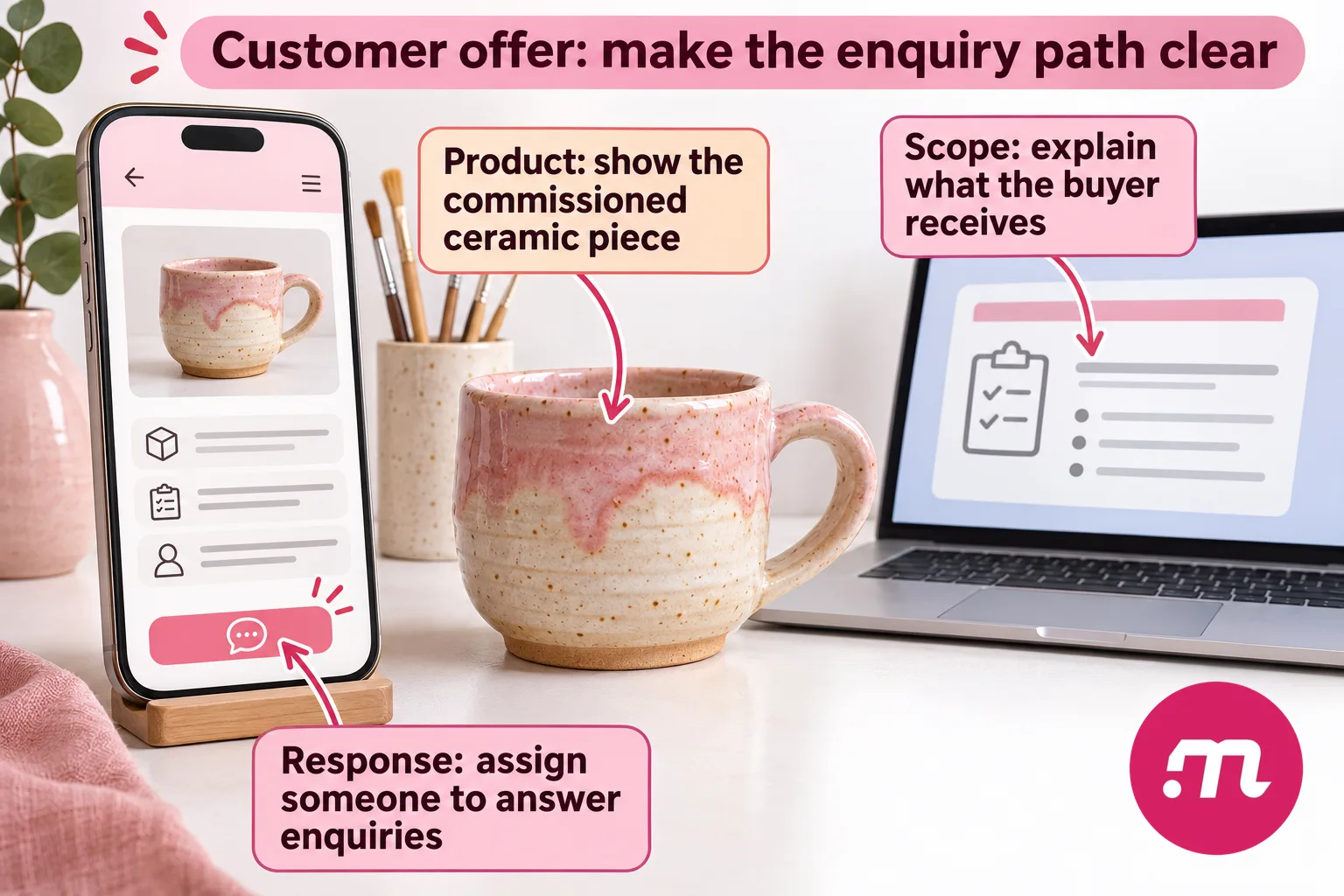
If you're researching how to monetize Instagram Reels through your own sales, begin with the customer question. The ceramic artist could show a finished commissioned piece and explain how to request a similar order. A viewer needs to understand the product before being asked to enquire.
That example is an illustration, not a client result. The practical test is whether the Reel attracts relevant enquiries and whether those people can find clear scope and delivery information. We'd improve that handoff before filming more clips with the same unclear offer.
Use a mobile-friendly destination or an organised enquiry process. Ask for the information needed to quote the work, and decide who replies. A message asking how the glaze works is different from an enquiry about purchasing a commissioned piece; keep those separate in your records.
Affiliate agreements have their own conditions
For affiliate income, read the partner's terms before recommending a product. Check which actions qualify, permitted placements, the attribution period and how cancellations affect commission. A sale visible in a report may still require confirmation under those terms.
Recommend products you can explain honestly and disclose the commercial connection. Don't assume that every link placement is permitted or that every resulting purchase qualifies. We'd compare confirmed commission with the production work, rather than report every click as income.
At Mommantum, we'd plan the content and the response process together. The camera captures only part of the sale. Someone still has to answer the buyer and deliver the order.
Measure earnings without confusing them with growth
Use records that match the question
Keep recorded platform earnings separate from money received in the bank. For client work, distinguish quoted fees from accepted invoices and payments. For your own products, distinguish enquiries from completed orders and allow for refunds. These records tell you where the process stops.
For a suitable clickable destination, Google's campaign URL guidance explains using utm_source, utm_medium and utm_campaign to identify referred traffic. Keep naming consistent and test the actual link. A campaign tag helps identify a visit; it doesn't prove the visit created an additional sale.
Include the cost of creating and serving demand
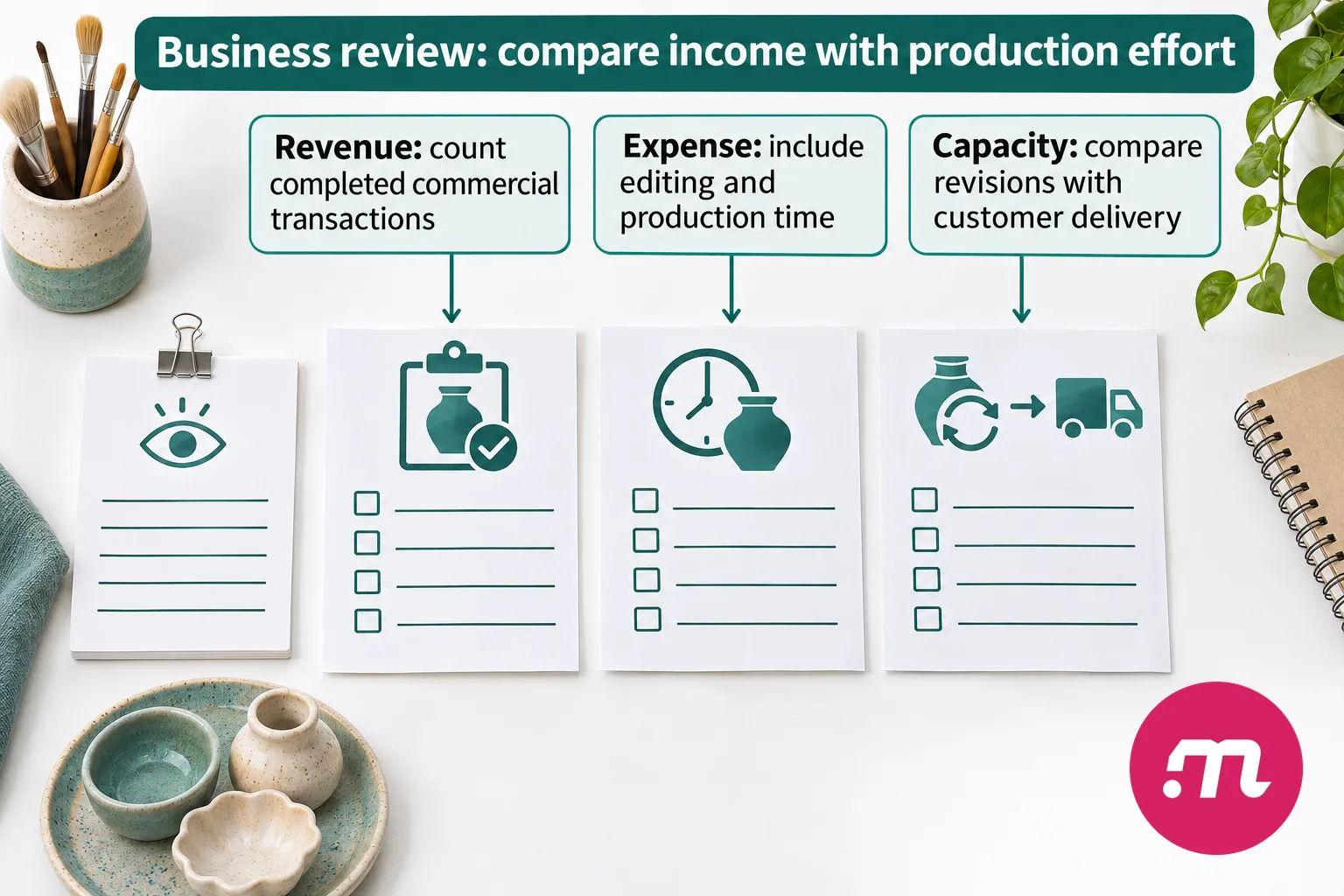
Record editing expenses and production time alongside the income route. A creator fee can look attractive until revisions consume the time reserved for customer orders. We'd make that capacity trade-off visible before increasing output.
Conversion rate needs a stated action and denominator, such as completed orders divided by relevant visits. CAC needs acquisition cost and new customers under a defined measurement method. ROAS compares attributed revenue with advertising spend; organic views alone don't provide that calculation.
The Urban Vada Pav case study reports daily footfall rising from 40 to 210 and cost per walk-in falling from ₹220 to ₹58 through broader marketing work. These are business outcomes, not payment rates for Reel views. We'd judge a local brand by the customer action it needs.
Our marketing FAQs explain more about how the team approaches social work. Keep the measurement question specific when you ask for help: missing earnings and weak customer conversion require different investigations.
Avoid the shortcuts behind payout confusion
Changing account type is not an earnings event
A Reddit creator switched from a business account to a creator account expecting a bonus option to appear. That question exposes the problem with generic setup tutorials: a settings change cannot establish that a particular invitation exists. We'd follow the requirements of the tool actually offered.
Another recent Reddit thread described a newly appearing bonus after a long period without platform income. Treat that as one person's account experience. It doesn't establish your eligibility or a rate you should promise a client.
Check the commercial logic before posting again
- Name the payer and the qualifying action.
- Confirm the specific account tool or written agreement.
- Use original material or material you have permission to use.
- Check the offer destination and who answers enquiries.
- Review recorded earnings, costs and unresolved steps.
Don't pay someone who promises to activate a hidden per-view salary. Use official account workflows for setup. For content rights, also check the relevant programme's monetization rules; permission to use footage and eligibility to earn from it are separate questions.
For founders asking how to earn from Instagram Reels, we'd choose a test that can produce useful evidence even without a platform payout. A product demonstration with a clear enquiry route can reveal buyer objections. Another unexplained viral clip may leave the original business question unanswered.
Conclusion: verify the payment mechanism first
Instagram-related income needs a real mechanism: eligible fan support, an active programme or a commercial transaction. Check the tool, earnings event and payout status in that order. Then compare confirmed income with the work required to produce it.
If your next decision concerns content and customer conversion, explore Mommantum's social media marketing support and book a free strategy call. Bring the offer and the point where viewers stop progressing. That's a more useful starting brief than a view target alone.
Frequently Asked Questions
Key takeaways and practical details on this topic.
Instagram can support earnings through specific tools, but Reel views alone don't establish a payment. Check the actual tool or commercial transaction behind the income. A fan Gift, a brand fee and a customer order are different events, and only the relevant record tells you what has been earned.
Instagram Reels earnings don't have a universal per-view rate you can apply to every account. Inspect the active programme terms or the commercial agreement that creates the income. A screenshot from another creator is insufficient unless you know the platform, qualifying event and conditions behind that amount.
Instagram Reel views alone don't establish a universal payment threshold. Check whether your account has a relevant earnings tool and whether the required action actually occurred. For Gifts, for example, supporter activity matters; for a customer sale, you need an order rather than a particular number of video plays.
Instagram follower requirements depend on the specific earnings route, so one number cannot answer every payment question. Read the current requirements for the tool offered to your account. A commercial production assignment also needs an agreed scope and client, rather than evidence that a platform payment threshold has been reached.
Indian Instagram accounts shouldn't forecast income from Reel views alone. Verify the specific earnings tool and its current account requirements, or identify the customer transaction or client assignment that will pay. A historical bonus announcement for other markets doesn't establish access to that offer for your account in India.
Monetize Instagram Reels by choosing a genuine earnings mechanism before increasing production. Inspect available account tools, then assess relevant brand work, affiliate agreements or an offer of your own. Confirm the next paid action and how you will record it, because audience attention doesn't automatically create a supporter payment or sale.
Earn from Instagram Reels by connecting useful content with a relevant paid action you can deliver. A ceramic artist could sell commissioned work or produce an agreed brand demonstration. Make scope and the enquiry route clear, then compare confirmed income with production costs and the time needed to serve customers.
Instagram payout timing must be checked against the relevant product, payment method and account status. Confirm that the tool records actual earnings, then inspect its payout screen for a date, hold or missing setup information. A rising view count doesn't establish that money is already due to your bank.
Check which Instagram tool is enabled and whether it records actual earnings before investigating your bank. A general monetization status doesn't show that a supporter payment or qualifying programme event occurred. If money is recorded, inspect the payout status and any official setup steps still requested for that specific product.
Switching Instagram account type doesn't establish access to a particular bonus. Inspect the official earnings tools and any active offer shown to that account, then follow its current requirements. The Reddit situation behind this question illustrates why a general settings tutorial cannot promise an invitation or income from views.
A zero Instagram earnings record is insufficient evidence that a bank payout is delayed. Separate incomplete official setup from the question of whether an eligible earnings event happened at all. Record the tool name and message, complete its requested workflow and use official account support for an unresolved status.
Another creator's Instagram bonus rate isn't a reliable budget assumption for your account. Verify whether you have an active offer and read its qualifying period and content rules. Treat the reported experience as a question to investigate, then plan production around income mechanisms you can actually confirm or sell.
Ready to implement this for your brand?
Connect with our Jaipur growth studio to turn these strategies into revenue for your D2C or ecommerce business.