Content Creator: A Practical Guide for Indian Brands to Choose Production or Audience Reach, Write Better Briefs, Compare Quotes, Agree Usage and Review the First Campaign Before Committing to a Monthly Retainer
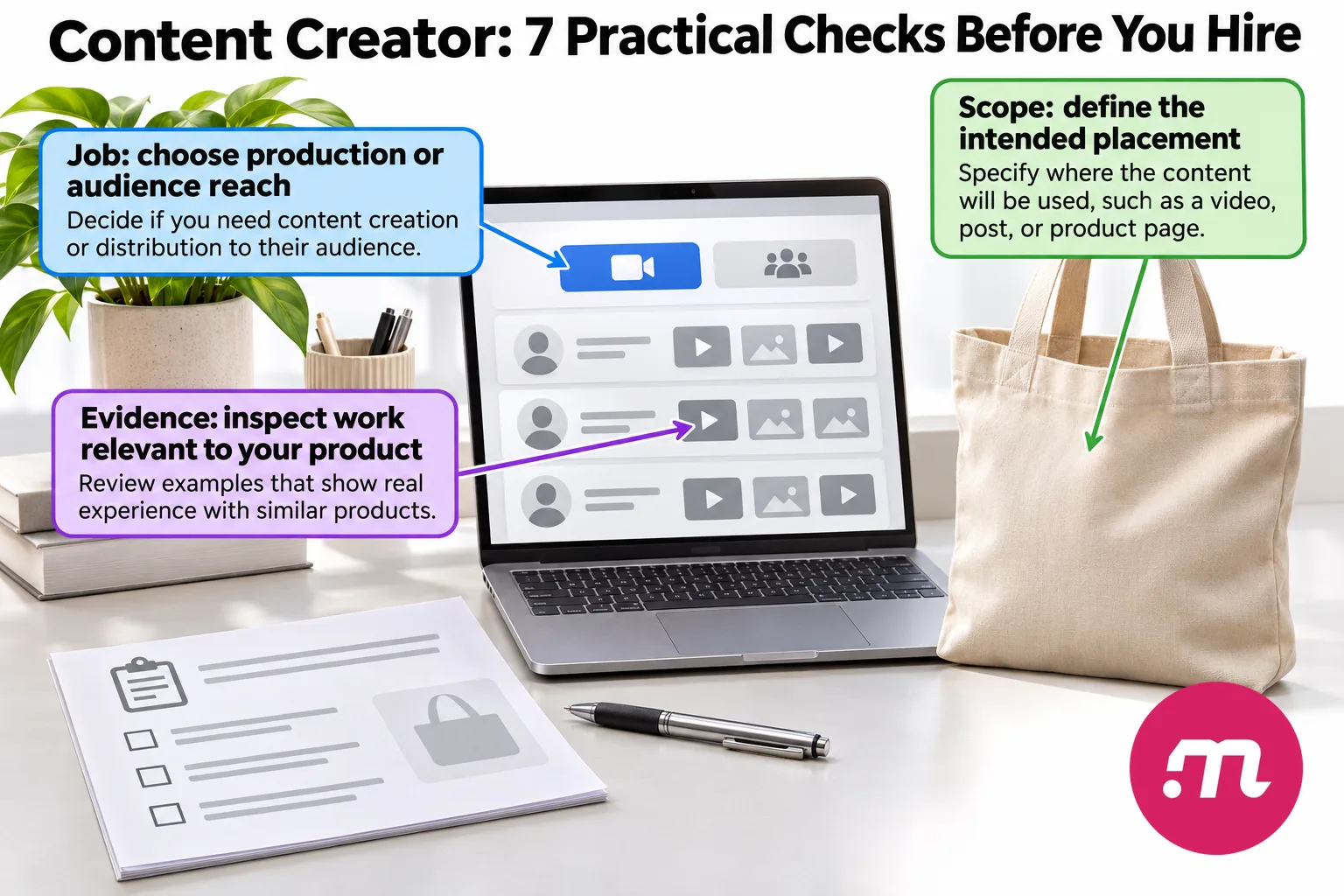
Choose a creator for the job you need. Compare production, audience reach, usage terms and revisions before approving a first brand assignment.
Introduction
Content creator selection gets expensive when you buy a video and discover that posting it, editing it and running it as an ad were different conversations. Start with the work you need and where it will appear. A large following won't fix an unclear brief, and a polished portfolio doesn't tell you what the quoted fee includes.
We'd define the customer question, choose the kind of partnership and run a clearly scoped first assignment before booking ongoing work. This guide explains the decisions behind that process for Indian brands, from comparing production with audience reach to approving the exact asset. The aim is a usable piece of communication with an agreed next step.
Table of Contents
- 1. Introduction
- 2. Decide what you need from a content creator
- 3. Review a portfolio against your actual brief
- 4. Write the content creator brief before filming
- 5. Compare quotes with the same scope and use
- 6. Make review a defined production step
- 7. Plan disclosure alongside the creative
- 8. Judge the work against the customer action
- 9. Conclusion: commission the job you actually need
- 10. FAQs
Decide what you need from a content creator
Separate making the asset from distributing it
A creator makes material such as videos, photographs, articles or graphics. An influencer partnership also involves reaching an audience through that person's account. Someone can do both, but the reason you hire them changes the brief and the evidence you should inspect.
| Need | What you are commissioning | What to check |
|---|---|---|
| Brand-channel production | Assets your business will publish | Relevant craft, clear delivery and agreed use |
| Creator-channel promotion | Production plus a placement for their audience | Audience fit, placement details and disclosure |
| Paid advertising material | Creative intended for advertising tests | Suitable versions, permissions and claim review |
| Ongoing content support | A repeatable production and review workflow | Ownership of briefs, approvals and reporting |
Name the decision a customer needs to make
Imagine a Jaipur retailer selling canvas tote bags. This is a hypothetical example, not a client result. A buyer wants to see the difference between the available sizes. That calls for clear comparative footage, not necessarily access to the creator's followers.
For creator-channel promotion, we'd ask who the audience is and whether the placement reaches the people the retailer can serve. For commissioned production, we'd start with similar work and the creator's ability to explain the product accurately. Decide which job you're buying before you compare prices.
Review a portfolio against your actual brief
Look beyond an attractive opening
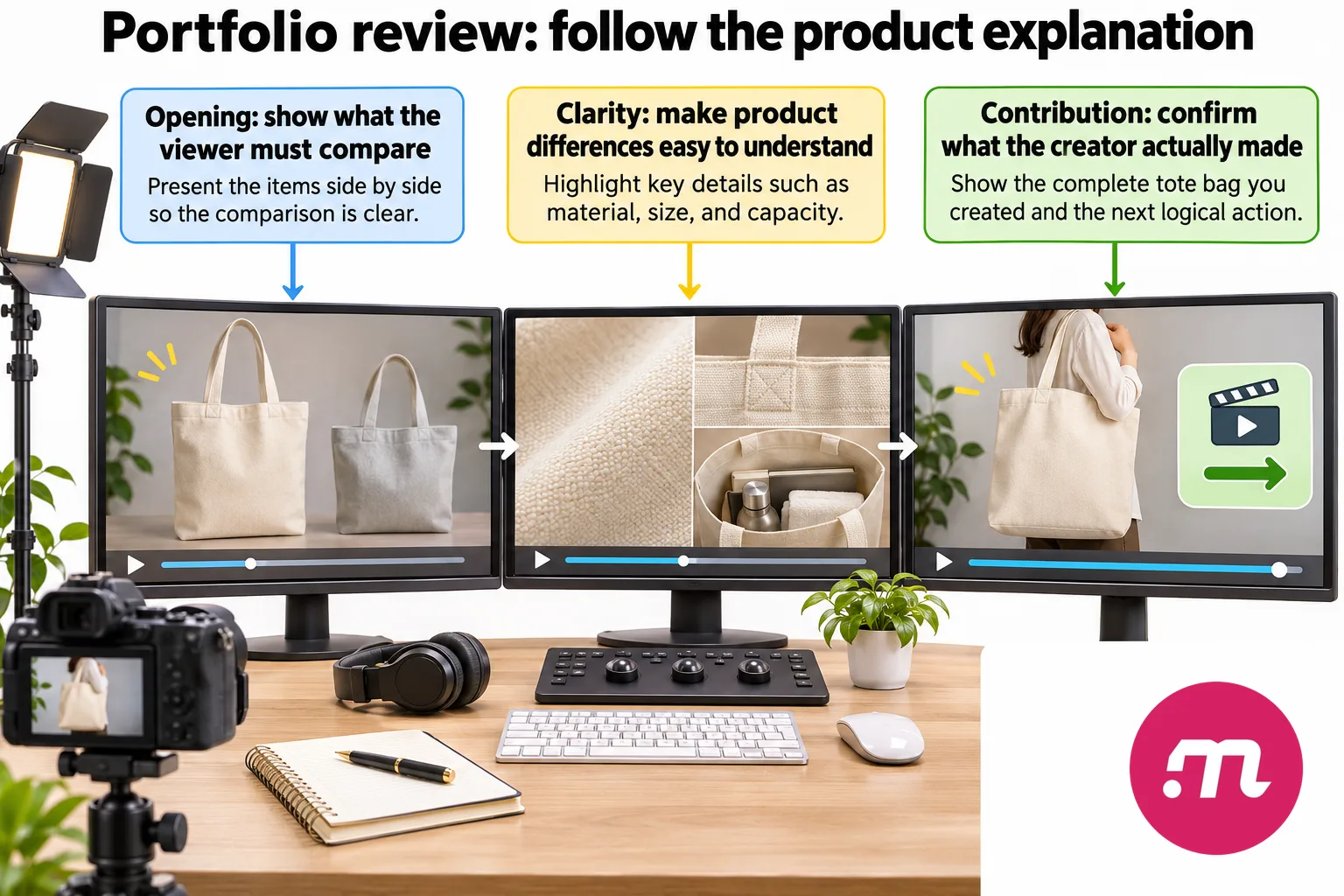
Watch the entire sample. Can you understand the product, read the text and follow the next step? For the tote comparison, look for work that shows scale and practical differences without relying on an exaggerated claim. Show the comparison. Put the same familiar items beside each bag and let the viewer inspect the difference, while checking any dimensions or capacity statements against the retailer's actual product information.
Ask the creator what they actually did on a sample: script, filming, editing or presentation. A team production may demonstrate excellent work while telling you little about what this person can deliver alone. We'd clarify their contribution rather than assume every portfolio item represents the same service.
Check audience evidence only when it matters
If you are buying distribution, request relevant audience information and recent comparable examples. Check the region and language alongside the subject matter. For a local business, an audience outside its service area can make a popular post commercially unhelpful.
Don't demand a large follower count for an asset-only assignment. Instead, assess the actual footage, communication and reliability. A social media content creator who can film a truthful comparison and deliver organised files may suit the production job even when their personal account is small.
We'd pay for a limited test when the fit is uncertain. Set its purpose and fee before work starts, and tell the creator how you'll judge it. Avoid requesting an unpaid finished campaign disguised as an interview exercise.
Write the content creator brief before filming
Give the creator evidence and boundaries
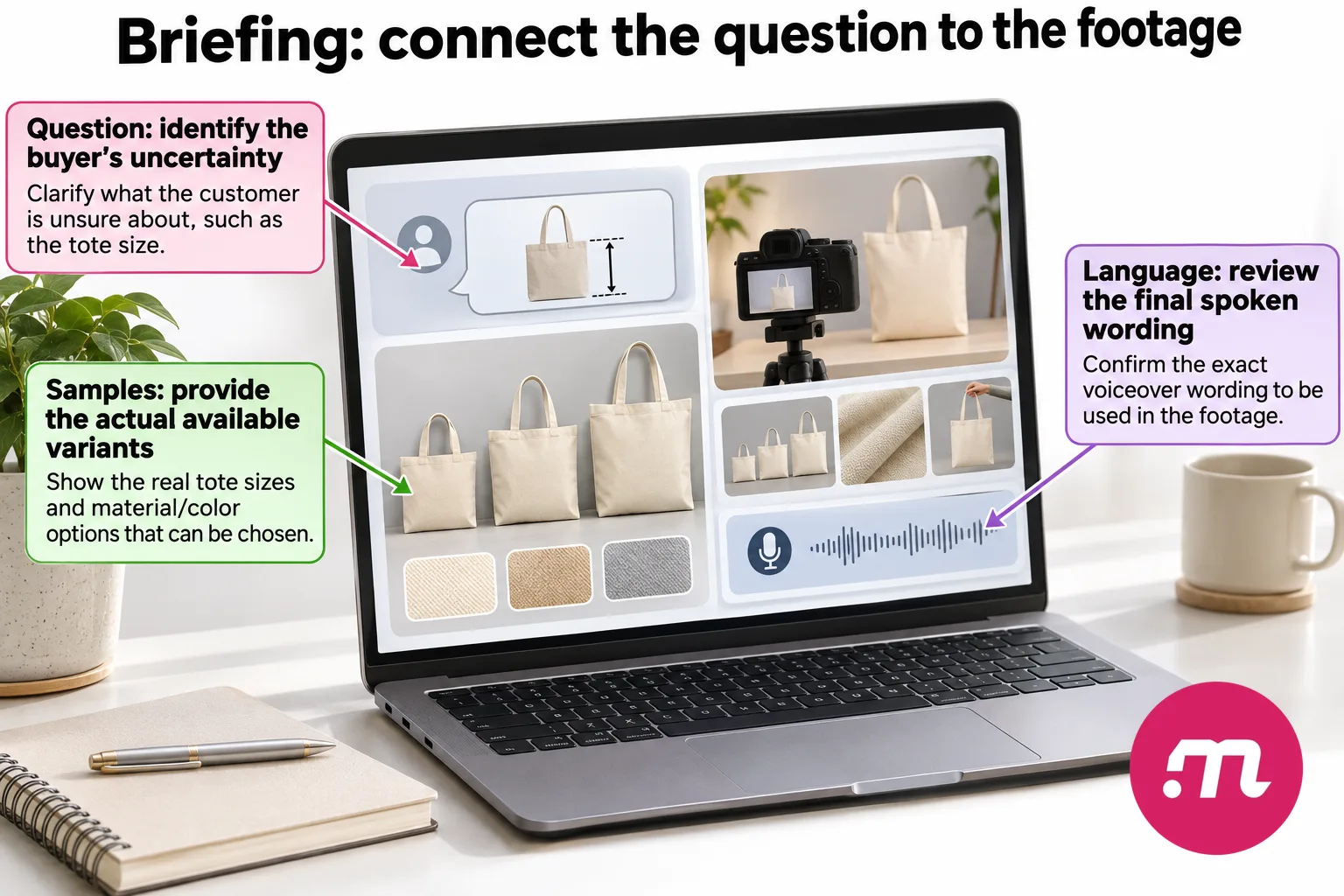
A brief should explain the customer question and what the viewer needs to see. For the tote retailer, supply the actual variants, confirmed dimensions and the destination page. If a product claim hasn't been checked, mark it as unresolved instead of asking the creator to make it sound convincing.
| Brief field | Illustrative tote assignment |
|---|---|
| Customer question | Which available size suits the buyer's intended use? |
| Deliverables | A vertical demonstration and a comparison graphic |
| Opening | Show the actual bags beside the same familiar items |
| Evidence | Verified dimensions and current product information |
| Placement | Named brand accounts; paid use discussed separately |
| Language | Agreed spoken wording and readable captions |
| Review | Named approver checks product facts and final material |
| Delivery | File requirements, due date and revision terms |
Leave room for the creator's judgement
Describe the evidence that must appear, then let the creator propose how to present it. We'd avoid scripting every gesture when we hired someone for their presentation skill. Conversely, freedom over delivery doesn't permit inventing durability, safety or customer-result claims.
Agree the opening and factual wording before booking a shoot. If the product needs to arrive by courier, put that dependency before the filming date. Check the sample first. If the creator is waiting for a courier delivery, set the shoot after that dependency and leave a separate review slot, rather than treating the publication date as the deadline for every task.
Keep brand content consistent through the facts and customer purpose, not by forcing every creator to sound identical. Review the final regional-language wording itself. An English summary cannot approve a different spoken sentence.
Compare quotes with the same scope and use
Separate the cost components
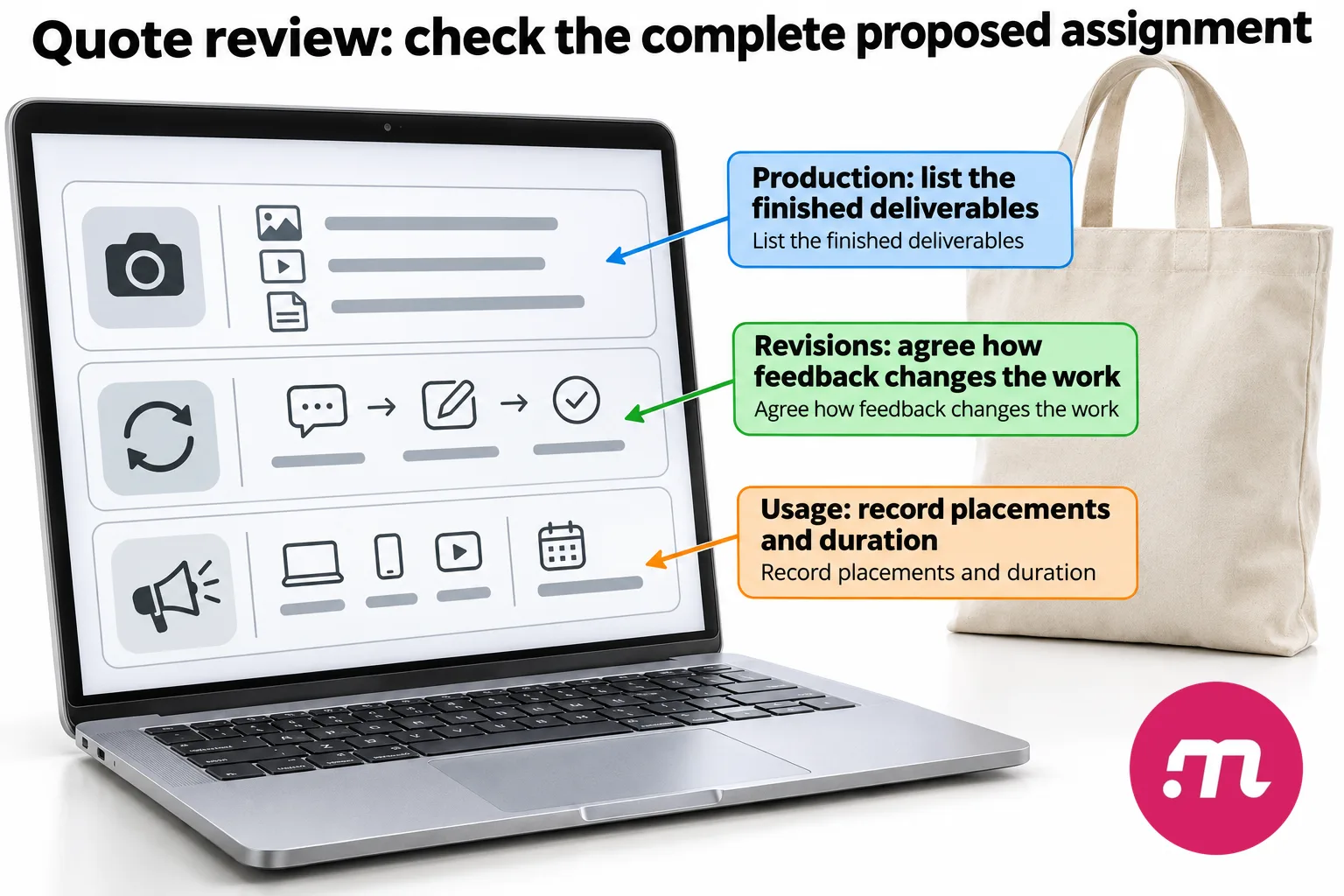
Ask for a written breakdown in rupees. Production, creator-channel posting and paid-media use can be different components. Add shipping, travel, props and taxes where applicable. We'd compare complete proposals rather than announce a universal Indian creator rate that ignores what the buyer receives.
Define the number of deliverables and what counts as a version. A changed opening, a new language recording and a differently cropped export can require different work. If you need raw footage or editable files, ask before agreeing the quote.
Write down the intended use
Specify the accounts, placements, duration and territories you want, along with whether paid advertising and editing are included. Discuss exclusivity only when you need it. This is a scope checklist for the agreement, not an assumption that payment automatically gives the brand every possible use.
Creator forum discussions describe a familiar problem: a modest video assignment expands into raw footage, unlimited revisions and indefinite advertising use. We'd resolve each requested use explicitly and price a later extension before it starts. Keep the agreed permissions beside the asset so another team member can find them.
Music, third-party footage and other people's appearances need attention too. Ask what material the creator supplied and what use is cleared for the planned placement. Don't assume that an audio track used in an organic sample is suitable for every advertising use.
For ongoing content marketing services, ask who owns the brief, production schedule and review process. A monthly fee can still leave all of those jobs with the founder. Match the service to the missing work rather than to the package name.
Make review a defined production step
Agree how feedback works
Choose an approver. If several people need to comment, combine their feedback before returning it to the creator. Separate factual corrections from preferences, and refer to the agreed brief. "Make it better" doesn't explain which shot or sentence needs changing.
Agree included revision rounds and what happens when the brief changes. There isn't a universal normal count. Replacing a product after filming can be a different assignment from correcting a misspelt name. We'd discuss that distinction before a dispute, while both sides can still choose the scope.
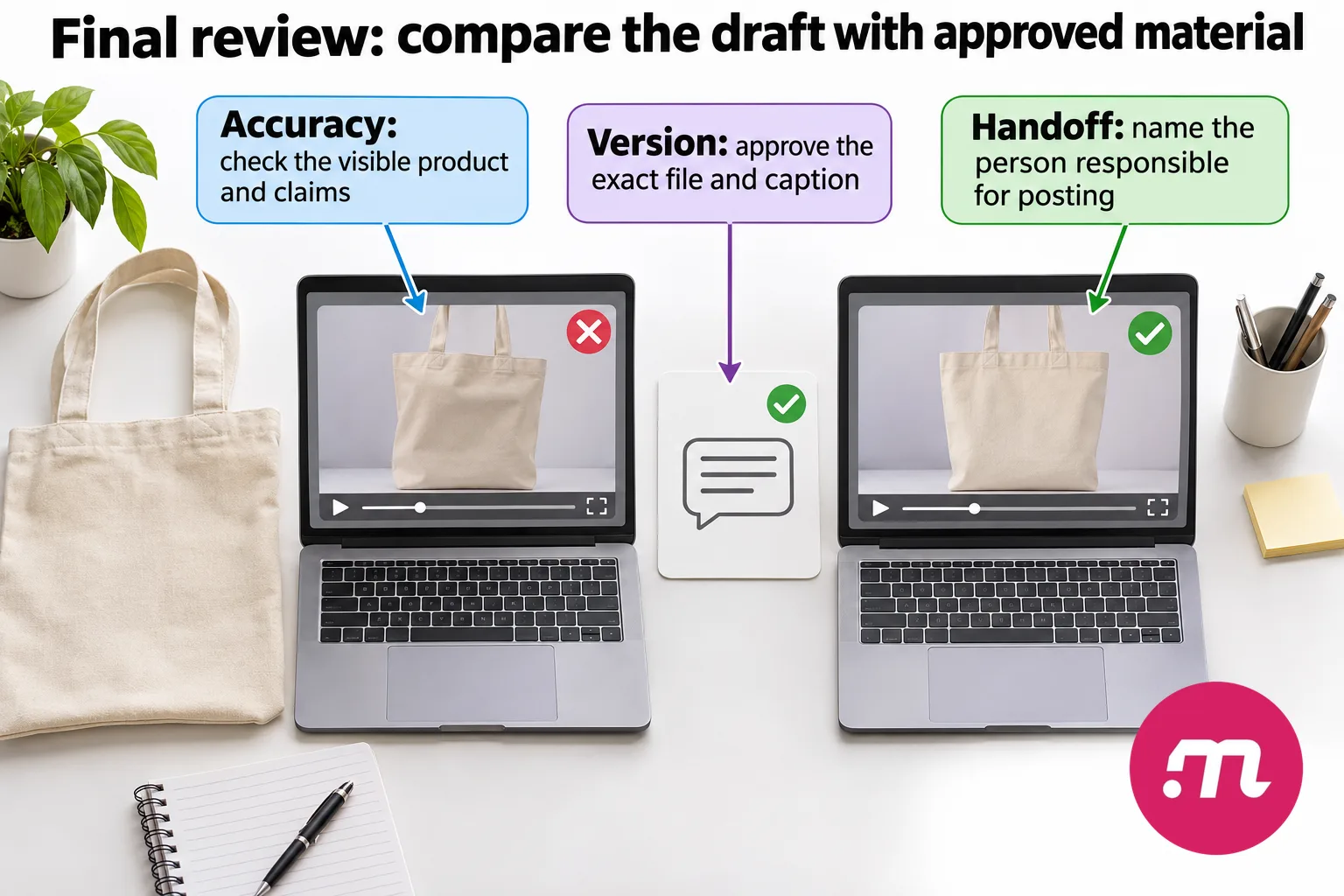
Check the finished asset and the handoff
- Confirm the actual product variant and every factual statement.
- Review the spoken words, captions and destination together.
- Check readable text, usable sound and the agreed export.
- Confirm the planned placement and recorded permissions.
- Approve the exact file version and caption before publication.
- Record any changes that require a new review.
A folder containing several files called final is an avoidable source of mistakes. Use recognisable version names and keep the approval decision with the selected material. We'd rather clarify the handoff than discover that the buyer published a rough export.
Keep production approval separate from publishing responsibility. If the creator will post, agree the account and intended slot. If your team will post, name the owner. An approved file on someone's laptop isn't evidence that the intended item appeared.
Plan disclosure alongside the creative
Use the current ASCI guidance
ASCI's influencer advertising guidelines require a clear disclosure where there is a material connection. That can include free products, not only money. The guidance calls for a prominent label, rather than something hidden in a bio, buried among hashtags or visible only after expanding the post.
ASCI also addresses language and different media formats. Assign disclosure review to someone before production, then check the finished placement against the current guidance. We'd include this in acceptance of the asset rather than leave it for a hurried caption edit.
Distinguish branded posts from ad permissions
If the assignment includes Facebook branded content, verify Meta's current account eligibility and tagging requirements before promising delivery. Treat the branded-post disclosure and permission to use content in advertising as separate checks. A creator-channel post does not settle the commercial usage terms by itself.
Meta's explanation of creator collaborations describes partnership ads that amplify material with a creator or partner's handle. It is a product explanation, not evidence that every account can use every option today. Check the actual account and current help guidance before adding this deliverable to a quote.
Don't ask for a fabricated personal review. If the creator hasn't used the product, commission a demonstration or explanation that accurately represents what they did. We'd change the concept before asking someone to imply an experience they cannot support.
Judge the work against the customer action
Use a measurement plan you can defend
For the tote comparison, inspect relevant product visits and questions about size. If a suitable clickable link is part of the placement, Google's campaign URL guidance recommends utm_source, utm_medium and utm_campaign. Agree consistent values and test the destination. Inspect the whole path. A tracking parameter helps identify referred traffic, but when you review the result, also check whether the destination loaded correctly and whether the product shown in the video was still available. Those observations don't establish that a sale would not otherwise have happened.
For paid tests, record advertising spend and the attribution method alongside revenue. Define the completed action and visits used for conversion rate. We'd avoid calling a creator successful or unsuccessful solely from likes, or quoting ROAS when the advertising cost and revenue basis are missing.
Keep wider case studies in perspective
Mommantum's Urban Vada Pav case study reports daily footfall moving from 40 to 210 and cost per walk-in from ₹220 to ₹58. The Jalvayu Wellness case study reports CAC moving from ₹920 to ₹310. The results describe broader marketing work. They don't isolate a creator's contribution, so we'd use them to discuss the business outcome and the surrounding workflow rather than promise that a new video will reproduce either case.
The useful lesson is to connect creative with the rest of the buying process. An accurate comparison can still send customers to an unavailable product. At Mommantum, we consider that destination and the business outcome alongside production quality; we'd fix the broken step before ordering more footage.
- Keep the brief, quote and usage terms together.
- Record the approved file and published placement.
- Note what customers still misunderstand.
- Use that observation to change the next assignment.
Conclusion: commission the job you actually need
Choose production or audience reach deliberately, then put the brief, use and review process in writing. Start with an assignment you can assess before committing to recurring work. Good creator selection leaves both sides clear about what will be delivered and how it can be used.
For help coordinating that first assignment, explore Mommantum's social media marketing services and book a free strategy call. Bring the product question, intended placement and proposal you want to compare. Start by settling the scope.
Frequently Asked Questions
Key takeaways and practical details on this topic.
A content creator makes material such as video, photography, graphics or articles for an audience or a commissioned business purpose. For a brand assignment, define the actual deliverables and placement before comparing portfolios. Making an asset, posting it to a personal audience and allowing advertising use are different scope decisions.
An influencer has an audience relationship that can be part of a brand collaboration's value. When buying a creator-channel placement, inspect relevant audience evidence and agree the post and disclosure details. For an asset-only production assignment, we'd focus first on the creator's craft, product explanation and delivery process.
A content creator assignment can focus on producing assets, while an influencer partnership also involves distribution to that person's audience. The roles can overlap in the same person. Write down which service you are commissioning, where the material will appear and whether any advertising use is part of the agreement.
A social media content creator can plan, film, photograph, edit or present material for social channels, depending on the agreed assignment. Ask which parts they handled in portfolio examples and which parts your quote covers. A comparison video needs product evidence and a review process as well as an engaging opening.
Content creator costs depend on production complexity, deliverables, distribution, revisions and intended use, so compare written quotes with the same scope. Request the breakdown in rupees and include shipping, props, travel and taxes where applicable. A production fee should not be treated as an automatic promise of unlimited editing or advertising use.
Revision arrangements should be agreed before the creator starts; there isn't a universal normal count for every project. Define included rounds and how feedback will be combined. A factual correction within the agreed brief is different from replacing the product after filming, and both sides should know how changed scope is handled.
ASCI's influencer guidelines require disclosure where a material connection exists, which can include free products or other benefits rather than only payment. Check the current guidance for the actual arrangement and format. Put disclosure review into the brief and inspect the finished post before accepting the placement.
ASCI calls for an upfront, prominent disclosure that viewers can understand, with guidance for language and different formats. Don't hide the message in a bio or among hashtags. Assign someone to check the current guidance and the actual finished placement, rather than assuming a private approval note reaches the audience.
Give your creator one consolidated response from a named approver, with each request tied to the agreed brief. Separate factual corrections from stylistic preferences and confirm whether new requests change the scope. Agree the revision process before work starts, then review the exact file version so old comments don't reopen settled decisions.
Compare your complete creator proposal by requesting separate confirmation of production, raw footage, editing and paid-media use. State the intended placements and duration, then compare offers against that same scope. The low headline fee doesn't tell you whether those uses are included, and a later extension should be settled before it begins.
A product replacement after filming can change the creator assignment rather than simply correct the existing draft. Compare the request with the approved brief, explain exactly what new footage you need and agree the revised scope and fee before work resumes. Clear sample confirmation before filming helps prevent this avoidable disagreement.
Check the recorded creator agreement for the intended placement, duration, territory, editing and paid use before reusing the video. Review the current product claims and destination as well. If the new use falls outside the recorded scope, agree the extension first rather than assuming possession of the file settles permission.
Ready to implement this for your brand?
Connect with our Jaipur growth studio to turn these strategies into revenue for your D2C or ecommerce business.